
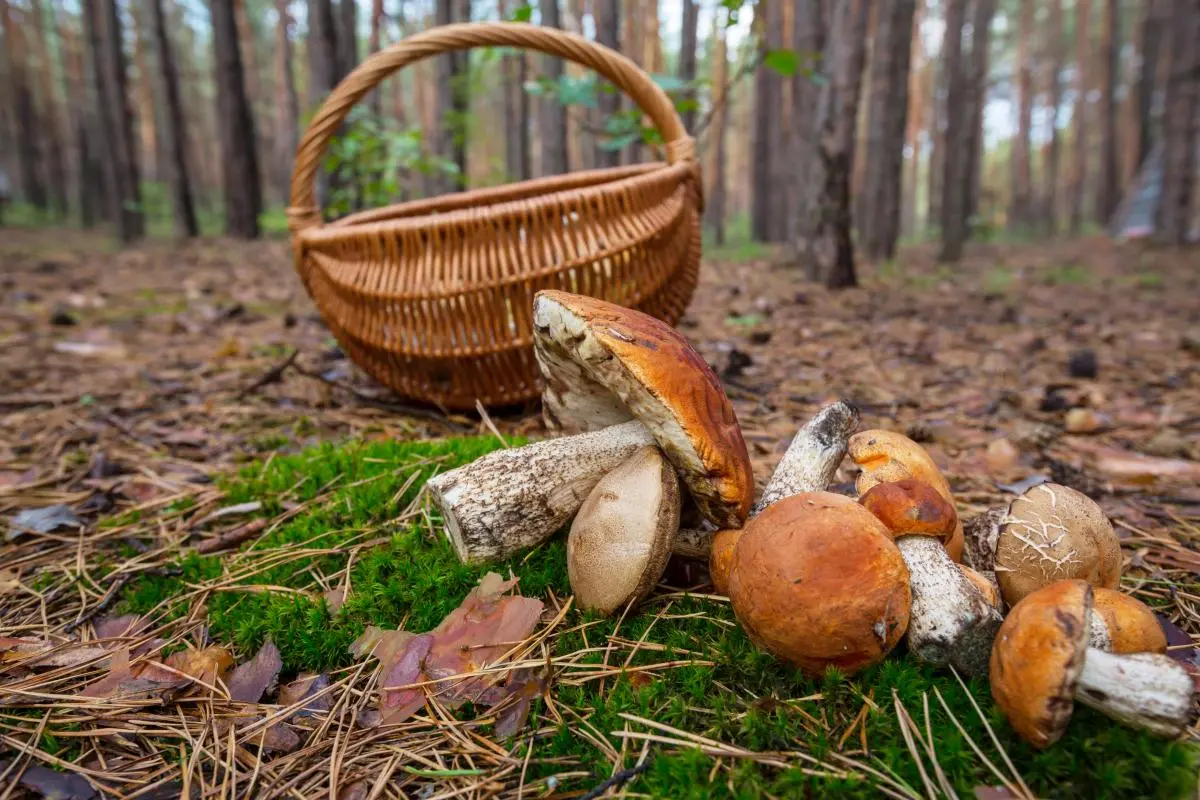
Mushroom dishes can be reheated the next day without the risk of food poisoning, provided they have been stored properly. The long-standing culinary rule against reheating mushrooms is not true: the danger lies not in reheating, but in the growth of bacteria in food that has been left out in a warm place for too long, according to RTL.
This warning isn’t without reason. Mushrooms contain a lot of water and spoil quickly, and at room temperature, microorganisms in cooked food multiply rapidly. Back when not every home had a refrigerator, leftovers from mushroom dishes did indeed pose a greater risk.
At the same time, high temperatures do not save a product that has already gone bad: the toxins produced by some bacteria are heat-resistant. Wild mushrooms are a separate issue. In Hungary, it is recommended to have your hand-picked harvest examined by a mushroom expert, as some dangerous species can easily be mistaken for edible ones.
“Neither cooking nor reheating makes a poisonous mushroom safe to eat,” the publication emphasizes.
Two hours in the refrigerator and two days to finish eating
The prepared dish should be cooled and placed in the refrigerator no later than two hours after cooking. It’s best to divide a large portion into small, shallow containers so it cools faster. Leftovers should be eaten within one or two days, and the refrigerator temperature should be maintained at around 4 °C.
When reheating, the dish must be heated through completely: aim for a minimum internal temperature of 74 °C. You should only reheat the portion that will be eaten immediately, as repeated cooling and reheating increases the risks. You should also not leave food warm on the stove: bacteria multiply most easily in a slightly warm environment.
It’s safer to throw away any food that has been sitting on the kitchen counter for several hours or stored under questionable conditions. An unpleasant odor, a slimy texture, or mold are clear signs. However, harmful bacteria do not always change the appearance or smell of the food, so you shouldn’t rely solely on your sense of smell or taste.
Why Do Fungi Behave Differently?
Laboratory data confirm that the risk depends on the type of mushroom and temperature conditions. American researchers studied how Listeria monocytogenes and Salmonella enterica survive on dried enoki mushrooms and wood ear mushrooms (muer) during soaking and subsequent storage. The study was prompted by disease outbreaks in the U.S.: in 2020, 36 people in 17 states fell ill after consuming fresh enoki mushrooms; 31 of them were hospitalized, and four died; and in 2023, there were five more cases. In the same year, 2020, dried wood ear mushrooms caused salmonellosis in 55 people across 12 states, according to Frontiers in Microbiology.
To verify this, a study was conducted: the mushrooms were dried, inoculated with bacteria, soaked in water at 5 or 25 °C for two hours, and then stored at 5, 10, or 25 °C for up to 14 days. Pathogens did not multiply on wood ear mushrooms under any conditions. No growth was recorded on enoki mushrooms at 5 °C either; however, at 10 and 25 °C, bacteria actively multiplied, especially when the mushrooms were soaked in warm water. Salmonella showed the highest count at 25 °C: 3.56 log CFU/g in a day and 9.48 log CFU/g after two weeks.
“The results indicate a noticeable difference in the survival and growth of pathogens on the two mushroom species studied and underscore the need to evaluate each product individually. These data can be used to develop recommendations regarding time and temperature controls for the safety of rehydrated mushrooms,” the study authors note.
Previous studies have shown that both pathogens can survive on dried mushrooms for at least 180 days at room temperature. The FDA’s Food Code currently contains time- and temperature-related requirements only for certain cut fruits and vegetables; there are no such standards for products rehydrated after drying, including mushrooms.