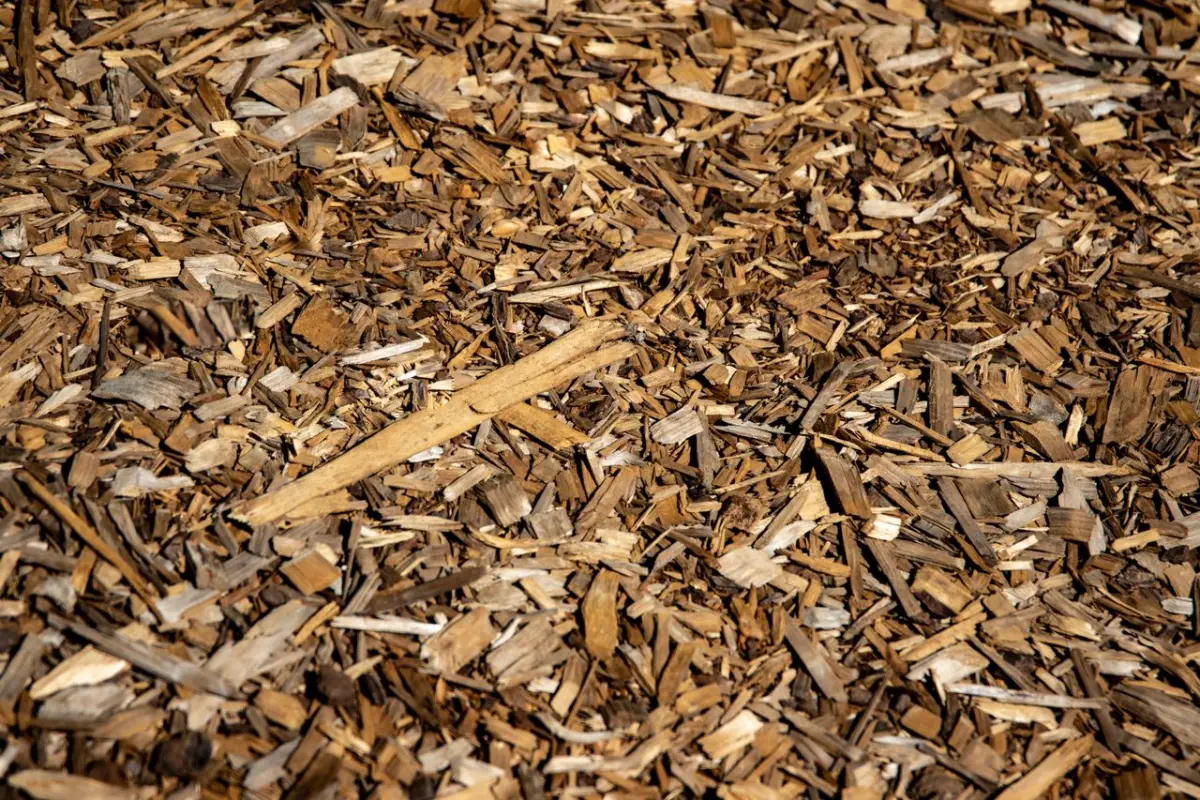
Cypress mulch lasts two to three times longer in flower beds than shredded mulch made from deciduous trees: it is replaced once every two to three years, whereas regular wood mulch can lose its properties after just one year. At the same time, the origin of such products is often impossible to determine, and some university programs advise gardeners not to use it at all, according to House Digest.
Mulch made from oak, ash, or pecan usually needs to be replenished at least once every 16 months. The lifespan of any mulch depends on the climate, amount of rainfall, layer thickness, and sunlight exposure. Cypress mulch consists of bark and wood and is mostly a byproduct of sawing cypress wood for furniture and building materials, although it is also made from fully felled trees.
The advantage of cypress lies in cypress oil. It acts as a natural preservative, slows down decay, and can protect plants from insects and fungal diseases, which is why the mulch is considered termite-resistant. The fibrous particles bind together and are not washed away even by heavy rain. However, cypress oil accumulates in the wood over decades, so there is significantly more of it in older trees.
The main risk lies in the unknown source of the raw material. A buyer of packaged mulch at a garden center or online cannot verify whether it is made from woodworking waste or from mature trees cut down specifically for mulch production in the swamps of Louisiana, Florida, Alabama, Georgia, and Mississippi. For this reason, the University of Florida’s Florida-Friendly Landscaping program does not recommend cypress mulch to gardeners.
Cypress on the label, pine in the bag
Even cypress enthusiasts may not get what they paid for. Researchers at Pennsylvania State University found that some packages labeled “cypress” contain only half the amount of cypress wood, and in some cases, none at all, according to Penn State University.
The study was conducted in response to complaints about misleading packaging and unethical business practices. The market is substantial: annual retail sales of mulch in the U.S. are estimated at $1 billion, and most of it is sold in 2-cubic-foot bags.
“Many mulch products claim to be made of cypress. But some of the largest mulch manufacturers have been accused of intentionally misleading consumers about the species composition, and it is difficult— if not impossible, to determine whether a product actually consists of the species listed on the package,” notes Judd Michael, a professor at the College of Agricultural Sciences.
The researchers tested 10 bags of mulch from a single national brand purchased in six states. They sifted the contents through a series of sieves, identified the wood species under a microscope, weighed the fractions, and used a mathematical formula to estimate the wood content ratios. According to a publication in the journal *Wood and Fiber Science*, the bag from Austin, Texas, contained about 50% cypress, with the remainder consisting of less expensive pine. No cypress was found at all in the bag from Laredo, while in the remaining eight, its proportion ranged from 30% to 60%.
The researchers attribute the motive for the substitution to cost considerations: raw materials for premium mulch are significantly more expensive for manufacturers than ordinary wood.
“Cypress is sold at a premium because of its natural color, resistance to rot, and resistance to insect damage. If mulch manufacturers add even a small proportion of non-cypress species to all their products, this deceptive practice will generate higher profits while harming consumers,” emphasizes Associate Professor Charles Ray.
According to Ray, manufacturers will have to significantly strengthen their quality control and procurement processes to more accurately comply with legal requirements regarding the species listed on the packaging. Michael adds that regulators, who protect the interests of consumers and the environment, need the help of forestry experts.
Environmental Costs and Alternatives
The issue of sustainable production has been raised for a long time. As early as 2006, the National Wildlife Federation warned that the wetlands along the Gulf of Mexico coast were disappearing at an alarming rate: in Louisiana alone, between 1930 and 2005, more than one million acres were converted to open water, and Hurricane Katrina destroyed another 64,000 acres. Cypress trees take a century to reach maturity and cannot reproduce in standing water, so a felled tree on the coast is unlikely to be replaced by a new one, according to National Wildlife.
These forests serve as a stopover for at least 60% of all bird species in the U.S., including great egrets, roseate spoonbills, and the vulnerable American spoonbills. Some of the wood is used to make flooring and furniture, but a significant amount ends up in yards across the country.
“Cutting down an 80- to 100-year-old cypress tree for mulch is like taking furniture out of the dining room and burning it for firewood—there’s a better use for it,” says John Day, an ecologist at Louisiana State University. In his view, the solution is simple: consumers should stop buying such products.
Production, expanded by the University of Florida, is no longer limited to sawmill waste. Rising demand has led to more active logging of small pond cypresses and trees that were previously considered too small for harvesting. Young wood lacks the natural resistance to pests found in older trees, and cypress trees themselves play an important ecological role in wetlands; therefore, the university’s extension service does not recommend purchasing this type of mulch, notes UF/IFAS.
Among the alternatives, experts suggest homemade compost, bark from pine or other coniferous trees grown on plantations, and fallen leaves. Shredded leaves, spread in a 7–10 cm layer in the spring, last for about four months. In a study by the Ohio Agricultural Research Center, composted yard waste increased the number of flowers on rhododendrons by 300%, whereas wood mulch did not produce the same effect.
“I tell people to collect every fall leaf, shred it, and use it as mulch. It will look great, and in a month it will be full of earthworms,” advises organic gardener and radio host Mike McGrath.