
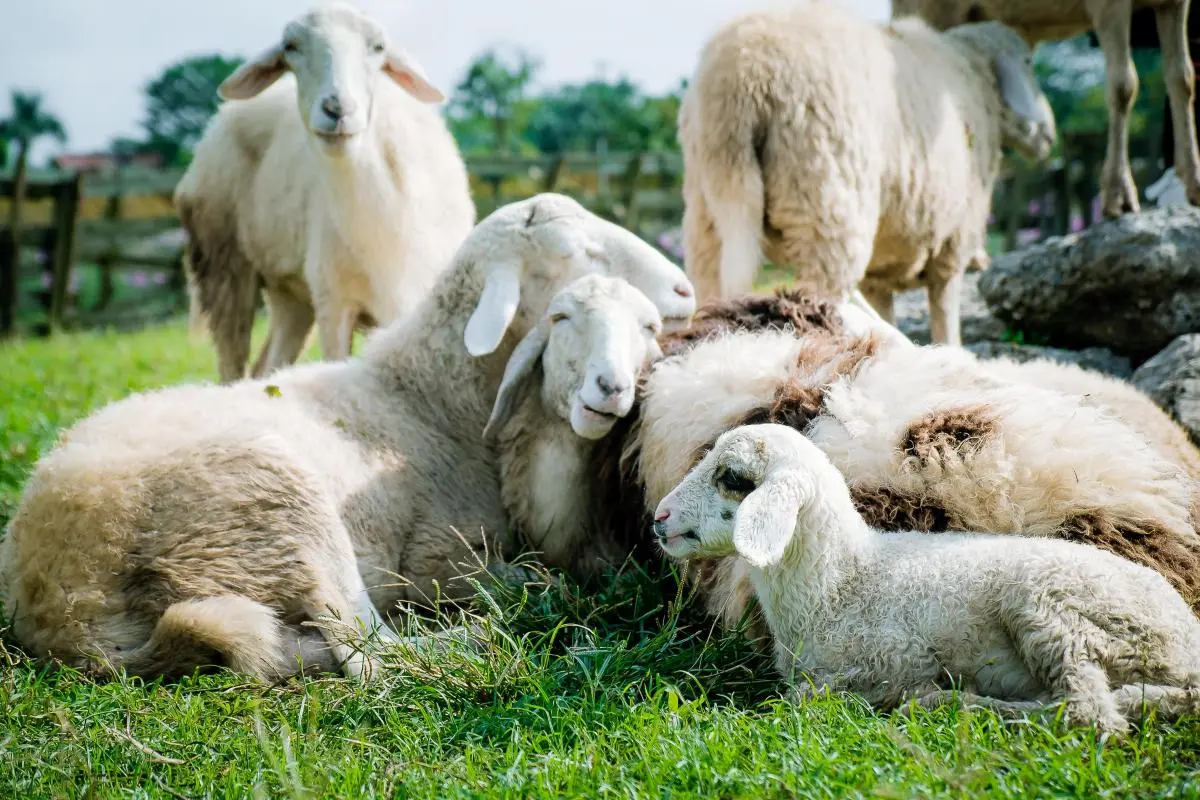
Volkswagen has replaced the lawn mowers at its plant in the Polish city of Wrzesnia with nearly a hundred sheep. The animals graze on the grounds of a solar park with over 31,000 panels, located next to the plant where 630 robots are in operation, according to Jurnalul.
The plant in Wrzesnia is the only one in the world where Volkswagen Crafter and MAN TGE vans are assembled. The flock arrived there in late April and will remain on the approximately 27-hectare site until fall.
The solar farm has an installed capacity of 18.3 MW. On sunny days, it can fully power the plant, and on an annual basis, it covers about a quarter of its energy needs. The sheep do not increase energy production, and Volkswagen has not disclosed how much the company saves compared to mechanical mowing.
The flock is under the supervision of scientists
The farm was built and is maintained by Quanta Energy. It is one of the largest solar installations at an industrial facility in Europe. The project has become the subject of research at the University of Life Sciences in Poznań: According to Joanna Składanowska-Baryza from the Faculty of Veterinary Medicine and Animal Sciences, this is one of the first studies of its kind at a large photovoltaic farm in Poland, writes Volkswagen Poznań.
Researchers are analyzing pasture quality, soil, and the microclimate in various areas of the farm, as well as the condition of the sheep themselves.
“We are investigating the impact of photovoltaic installations on animal welfare and behavior, as well as on the functioning of the entire ecosystem. In particular, we are examining whether the shade created by the panels reduces heat stress in the animals, thereby improving their comfort and living conditions,” notes Składanowska-Baryza.
The farm is home to sheep of the Greater Poland breed, which was developed specifically in this region. It was once one of the most common breeds in Poland, but is now protected under a genetic resource conservation program. The flock belongs to a sheep farm in Winnia Gura, and its owner, Justyna Nowak-Gajek, constantly cares for the animals.
“The animals have adapted very well to the new conditions. We can see that the flock feels safe—the sheep split into smaller groups and graze peacefully in different parts of the farm,” says Novak-Gaek.
Previous studies support this arrangement. While working at Wageningen University, Emma Kamperbeck found that sheep grazing among rows of solar panels spend more time grazing, consume more nutritious grass, rest more, and likely suffer less from the heat than animals on open pastures, according to New Scientist.
For the plant itself, the solar park is also important from a financial standpoint. Volkswagen Poznań CEO Stefanie Hegel emphasizes that the cost of solar energy remains stable for decades after the panels are installed. In contrast, commercial electricity prices from the grid in Poland have risen by an average of 6% per year since 2018, writes pv Europe.