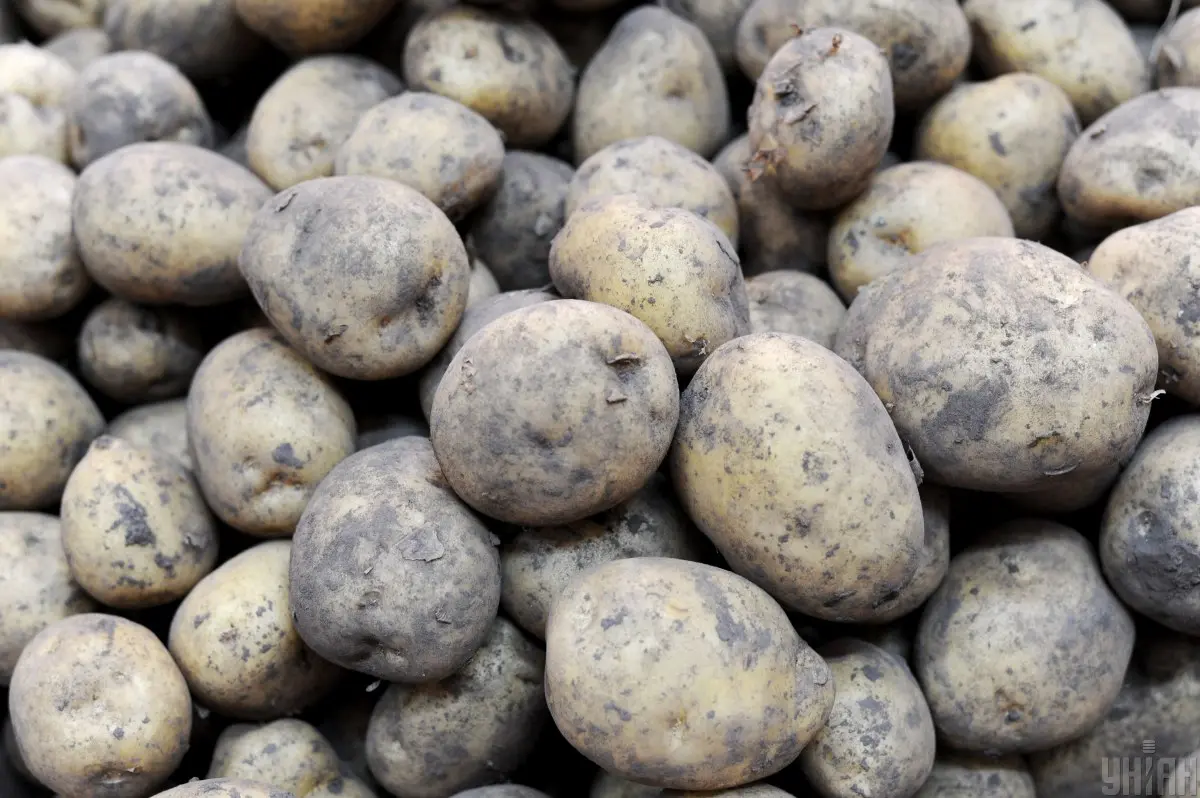
This winter, Ukraine risks facing a shortage of high-quality potatoes: the harvest in Europe has fallen by about 30%, and import options will remain limited. By February, the price of premium potatoes could reach 15–20 UAH/kg, whereas high-quality potatoes are currently selling for 8–9 UAH/kg, according to Agrárszektor.
Ihor Skurko, director of Chernihivelitkartofel, noted in a comment to AgroTimes that Europe harvested one of its weakest potato crops in the last three decades this year. European traders have already signed contracts for significant volumes of Egyptian potatoes, the harvest of which will begin in December. Therefore, Ukrainian importers should not count on large shipments from Egypt this season, and in western Ukraine, the supply of potatoes of adequate quality is also dwindling.
Other factors are also complicating imports: high prices on European markets, a shortage of truck drivers, logistical problems, and rising fuel costs. Batches that are non-standard in size or shape are currently selling for 3–6 UAH/kg, and traders are already noting limited supply in the higher quality categories.
Pressure on the industry is further exacerbated by problems with the harvest itself: dry rot is spreading, and shipments contain a high proportion of small potatoes. There is also a shortage of workers for sorting, with daily wages for such work already reaching 800–1,000 UAH. According to Skurka’s assessment, farms with modern storage facilities capable of maintaining product quality for longer periods will come out ahead.
The market is segmenting by quality
The Ukrainian Fruit and Vegetable Association (UFVA) predicted as early as late summer that there would be no physical shortage of potatoes in the fall, but that prices could rise by 25–40% in December–February. At the same time, UPAA Development Director Kateryna Zvereva took a cautious stance on pessimistic estimates of losses, as the mass harvest of mid-season and late varieties was still underway at that time, Agronews reports.
“The 2026 harvest will most likely be weaker than 2025, which was a very successful year for many producers, but it is premature to speak today of a nationwide drop by one-third,” Zvereva stated.
According to the expert, in September and the first half of October, the market will most likely be under supply pressure, but the situation will change by late fall. Produce from farms without storage facilities will gradually disappear from the market, storage losses will become apparent, and buyers will pay for consistent quality, size, variety, packaging, and regularity of supply. As a result, the price gap between potatoes “straight from the field” and those from professional storage facilities may be wider than usual.
The association considers the country’s stockpiles—which will carry it through to spring—to be the key issue of the season. The UPOA acknowledges the risk of increased imports from abroad in late winter if lower yields are confirmed or the proportion of potatoes suitable for long-term storage turns out to be smaller.
“Much will depend on how much high-quality marketable potatoes Ukraine will be able to preserve until March–May 2027. It is this figure that will largely determine both winter and spring prices and the need for imports,” Zvereva concluded.
Drought and Dependence on Imports
Farmers had been expecting a poor harvest since mid-summer due to the heat and lack of rain. Tetyana Oliinyk, deputy director of the Institute of Potato Growing at the National Academy of Agrarian Sciences of Ukraine (NAAS), reported in early September that yields were up to 30% below normal for some varieties at the institute’s demonstration field. The Lviv, Cherkasy, and Vinnytsia regions were hit hardest, where rainfall was significantly lower than usual, according to “Ob’yektiv.”
Irrigated farms are partially mitigating the situation: there, yields have fallen by only 15%. However, there are few professional producers with such infrastructure, so they are unable to boost nationwide figures.
“The enterprises located here—in Boryspil, Brovary—all these farms and companies are definitely using irrigation. Previously, the entire South was on irrigation, but now the South is falling behind,” Oliinyk emphasizes.
The area planted with potatoes this year is no smaller than last year’s, although it was reduced in the Chernihiv and Sumy regions due to hostilities, notes producer Anatoliy Bikin. In the fall, Oliinyk predicted a price of 15–18 UAH/kg, while in early September, large retail chains were selling potatoes for 12.50–24 UAH, depending on the variety.
The previous poor harvest season in 2024, caused by drought, heat, and a shortage of seed potatoes, had already forced Ukraine to sharply increase imports. From January through October 2025, the country imported 123.14 thousand metric tons of potatoes—5.1 times more than a year earlier—worth 66.1 million U.S. dollars. The main suppliers were Poland (36.9% in value terms), Egypt (13.7%), and the Netherlands (11.6%), according to Interfax-Ukraine.