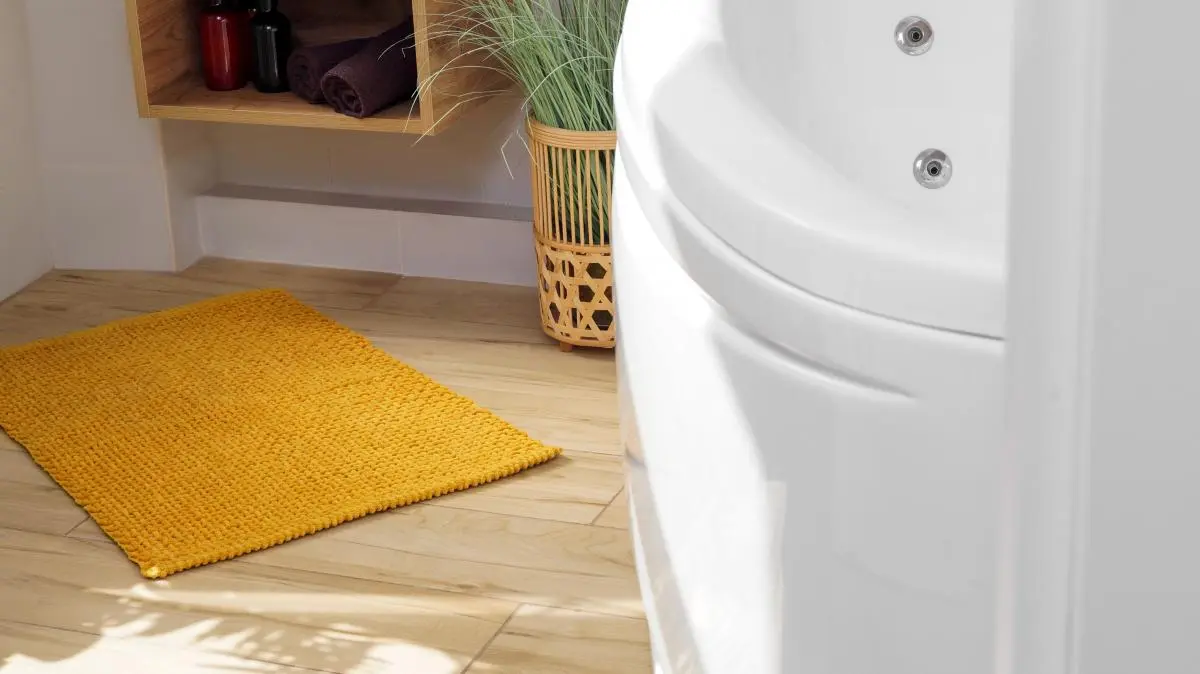
A damp bathroom mat can become a breeding ground for E. coli, Staphylococcus aureus, the fungus that causes athlete’s foot, and viruses that cause plantar warts. Therefore, it is recommended to wash it at least once a week, according to KertVár, citing data from the University of Florida’s Institute of Food and Agricultural Sciences (UF/IFAS).
According to the U.S. Environmental Protection Agency (EPA), material that dries within 24–48 hours generally does not develop mold. A mat that is stepped on with wet feet several times a day often doesn’t have time to dry before the next use. Dead skin, hair, and dust accumulate between its fibers, even if it appears clean on the outside.
UF/IFAS recommends washing the doormat weekly in hot water with a disinfectant. If it remains damp for a long time or has a rubber backing, it should be washed more frequently. In March 2025, only 24% of more than 2,000 British respondents washed their bath mats weekly, while nearly 16% did so only before guests arrived.
The Bathroom’s Germ Record
Microbiologist Jason Tetro, author of *The Germ Files* and *The Germ Code*, is convinced that the toilet isn’t where most microorganisms in the bathroom live. According to him, the decisive factor is the surface area on which bacteria, viruses, and fungi can settle, writes HuffPost.
“When you look around the bathroom and search for the item with the largest surface area, you’ll see something incredibly obvious… the bath mat,” Tetro emphasizes.
Its fluffy pile and ability to absorb water create ideal conditions for microbes. In addition, when the toilet is flushed, splashes containing fecal particles can travel up to six feet (about 1.8 meters) and land on the bath mat. “These fecal microbes can potentially cause infections and other problems,” the scientist warns.
The expert advises closing the toilet lid before flushing, drying off in the bathroom so the mat absorbs less water, and, upon leaving, hanging it on the edge of the bathtub or shower stall so it dries faster.
What to Use Instead of a Mat
You shouldn’t give up the mat entirely: otherwise, water will run onto the floor, posing a slip hazard and leading to mold growth under the tiles. Teak slats are a recommended alternative: this wood is resistant to rot and mold, and water drains through the slats. Tetro also considers wooden or stone mats to be a good choice, as they absorb less moisture.
Diatomaceous earth mats absorb water quickly, but there are safety concerns regarding them. In December 2020, a major Japanese retailer recalled approximately 2.4 million of these products because broken or crushed mats could release asbestos. Therefore, before purchasing, it is recommended to verify that the manufacturer has confirmed the product is asbestos-free.
For those who prefer a textile mat, it’s recommended to have two and rotate them. Under a rubber-backed mat, you should wipe the floor dry; otherwise, mold may form in the grout between the tiles. The EPA also recommends turning on the exhaust fan or opening a window while showering and maintaining indoor humidity at 30–50%.