
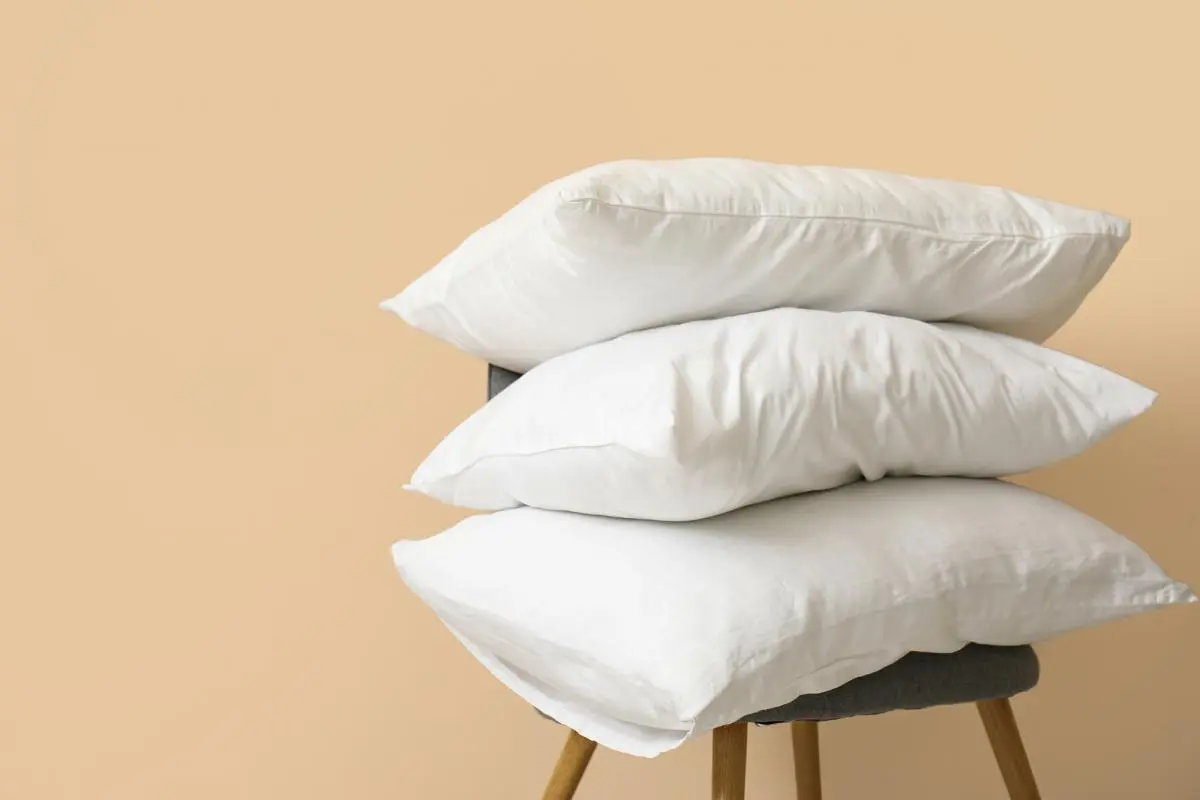
Yellow stains appear on white pillows even when pillowcases are changed regularly: sweat, skin oils, and other residues gradually soak into the fabric. In most cases, they can be removed by thorough cleaning and complete drying. You should replace a pillow when it has lost its shape, retains odors, or is no longer comfortable, according to Lovedeco.
Yellowing is exacerbated by creams, lotions, hair oils, and makeup residue, which are harder to wash out. Another subtle habit is sleeping with wet hair. Moisture lingers in the filling for several hours and can cause unpleasant odors, stains, and even mold.
It’s recommended to check the label before washing. Pillows with synthetic fillings are usually machine-washable, while down and feather pillows require special care, and memory foam pillows should not be put in the washing machine. Pre-treat stains with a 3% hydrogen peroxide solution: leave it on for 15–20 minutes, then blot with a damp cloth. An alternative is an enzyme-based cleaner, and for severe yellowing, a chlorine-free oxygen bleach will work.
Wash on the delicate cycle at 30–40 °C with an extra rinse cycle and about half the usual dose of liquid detergent, as excess detergent does not rinse out well from the filling. The most important step is thorough drying: the pillow may seem dry on the outside but retain moisture inside. It’s recommended to flip and shake it every hour while drying.
Most pillows should be replaced every 1–2 years. Signs that it’s time for a replacement include clumping, loss of firmness, a lingering odor after washing, and signs of mold.
Viral Life Hacks vs. Proven Methods
The pillow-whitening methods popular on TikTok mostly fail to remove stubborn stains. This was demonstrated by a test of five viral life hacks and three professional methods conducted by a Tom’s Guide journalist. The best results came from 3% hydrogen peroxide followed by a machine wash; baking soda added directly to the drum came in second. Shaving cream didn’t remove the stains at all, and vodka only freshened up the smell.
Dermatologist Shams Kanwal warns against experimenting with items from your first-aid kit or kitchen cabinet.
“I would be cautious, because these household products were not developed or tested as full-fledged fabric cleaners. Standard laundry methods are more reliable because they’re designed to remove sweat, sebum, saliva, cosmetics, and other residues from the fabric and wash them away,” Kanwal emphasizes.
The doctor advises following the label’s instructions and not using the pillow until it is completely dry.
“The safest approach is to use the warmest permissible water temperature, an appropriate detergent, a thorough rinse, and careful drying to ensure the pillow does not remain damp,” the dermatologist notes.