
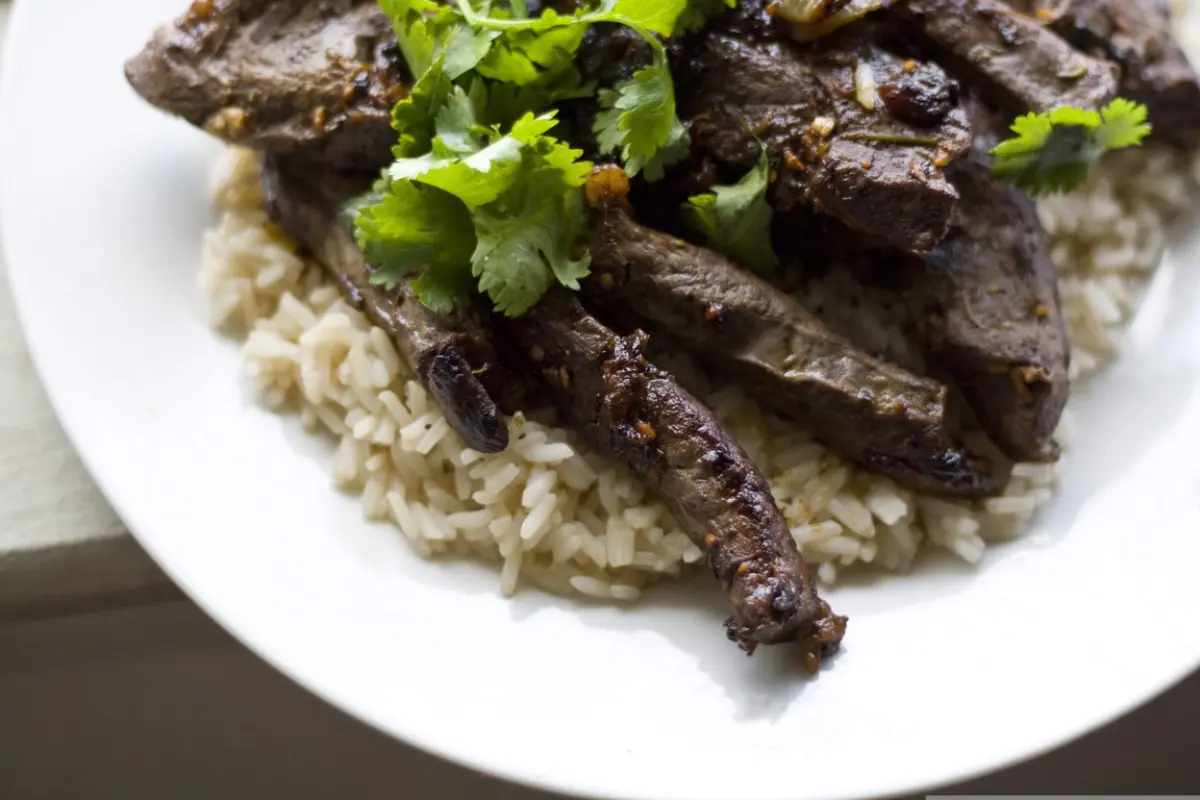
Beef heart costs about 20–30 zlotys per kilogram in Poland, whereas high-quality tenderloin, roast beef, or entrecôte can cost anywhere from a few dozen to over a hundred zlotys. Despite its affordable price and high nutritional value, Poles still view this product as dog food, while in France and Italy it is served as a delicacy, according to WP Kuchnia.
Technically, the heart is classified as an offal, but biologically, it is a dense muscle with no internal fat. It contains a lot of easily digestible protein with minimal calories, as well as heme iron, zinc, selenium, and B vitamins, particularly B12. In addition, the heart is the richest natural source of coenzyme Q10—an antioxidant that supports the functioning of mitochondria and the circulatory system.
It’s hard to find heart in supermarkets, so it’s best to look for it at butcher shops or markets. A whole heart weighs 1.5–2 kg, and once cleaned, it’s enough for a hearty meal for the whole family.
From Parisian bistros to Roman trattorias
Heart doesn’t taste like liver or kidneys: it lacks bitterness and a metallic aftertaste, and it resembles lean game meat. Chefs recommend only two extremes: sear it very quickly over high heat—no longer than a minute on each side—or braise it for about two hours. Any approach in between will result in tough meat.
In France, the heart has become a symbol of the trendy “nose-to-tail” approach, which involves using the entire carcass. In Parisian bistros, it’s pan-seared in thin steaks with butter, garlic, and thyme, and served with a pepper sauce. In Rome, the heart is part of the “quinto quarto” tradition: it is sliced thinly, grilled on a rack for a few dozen seconds, and drizzled with olive oil and lemon juice.
The name “quinto quarto,” meaning “fifth quarter,” comes from the ancient Roman system of meat distribution. The best cuts of the carcass went to the nobility, the clergy, the bourgeoisie, and the army, while the poor received the leftovers: the brain, lungs, and heart. One of the classic dishes of Rome’s Testaccio neighborhood, “coratella,” consists of heart, lungs, and esophagus stewed with artichokes, according to Great Italian Chefs.
What Chefs and Scientists Say
American chef Ben Ford, one of the earliest advocates of “nose-to-tail” cuisine, calls beef heart one of his favorite ingredients and regrets that it isn’t very popular in the U.S. According to him, the heart tastes more like a steak than like kidneys. Before cooking, it’s often soaked in milk to tenderize the fibers and mellow the bloody aftertaste, Yahoo reports.
“I’m still drawn to ingredients that need a little help or that benefit from a special cooking technique,” Ford admits.
Researchers at Colorado State University also confirm the nutritional value of offal. They analyzed the composition of beef offal, particularly hearts, and found that each meets at least one criterion for a “good” or “excellent” source of nutrients according to FDA standards, according to a publication in the journal *Nutrients*.