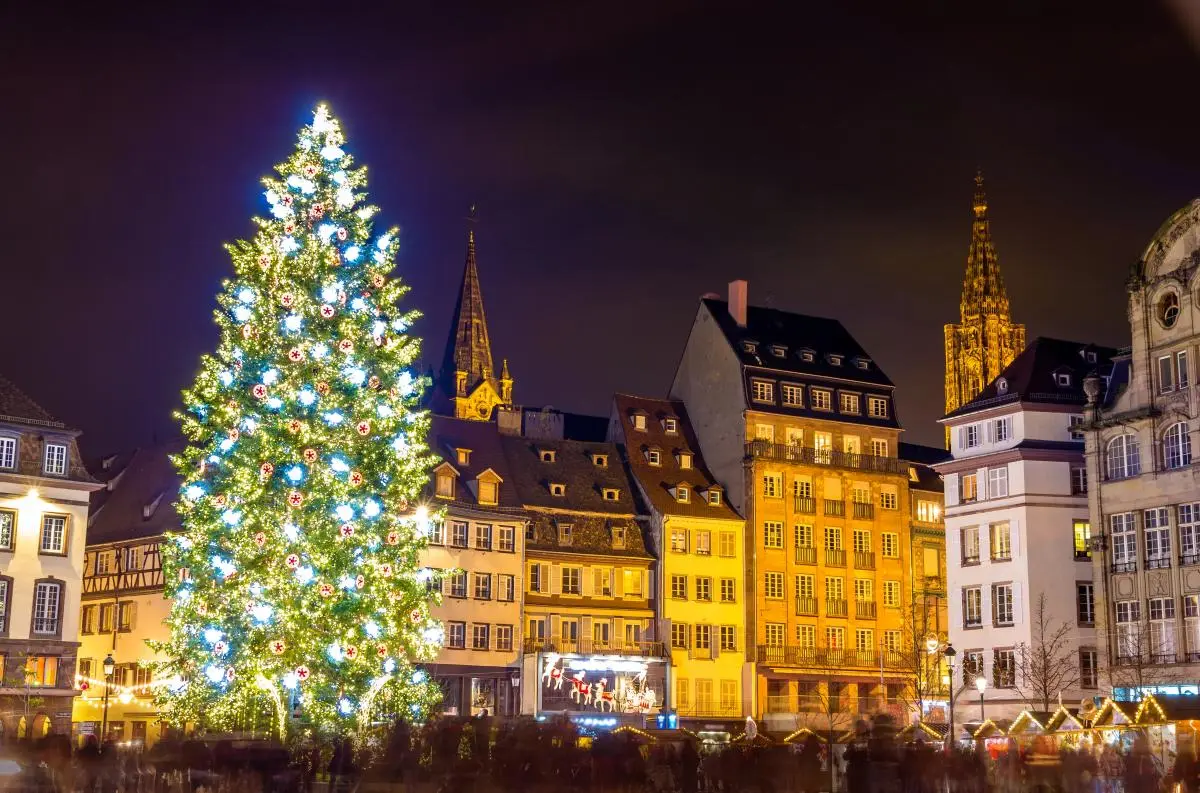
Clean the house, weave a wreath from evergreen branches, and place tangerines on the table: to welcome Christmas in an atmosphere of abundance, experts advise starting as early as November. The magazine offers eight symbolic rituals to prepare for the holidays, according to Vanidades.
The magazine lists decluttering as the first step. Even before putting up the Christmas tree, you should go through your drawers and closets, donate unwanted items that are still in good condition, throw away broken ones, and tidy up the area near the entrance. They suggest hanging a wreath made of pine, eucalyptus, or rosemary on the front door. In European traditions, evergreen branches symbolize the continuity of life and renewal in winter. In some Asian cultures, tangerines and oranges on the table are associated with wealth and joy.
Other rituals include:
- lighting a gold candle and writing down your resolutions for the coming year, without leaving the flame unattended;
- decorating the Christmas tree with red and gold ornaments, “attaching” a specific wish to each one;
- writing a letter of gratitude;
- placing cinnamon at the entrance;
- set the holiday table with cards bearing words such as “health” or “peace.”
In the article, the authors advise formulating specific steps. For example, instead of “I want prosperity,” it’s better to write “get my finances in order.”
The magazine cautions that these customs are part of folk beliefs and do not guarantee material results: their value lies in the meaning each person attaches to them. There is no set date for the rituals; they can be introduced gradually throughout November and December.
Why Do People Have “Strange” Habits?
Despite the apparent irrationality of such actions, scientists see real benefits in them. Dimitris Xigalatas, an anthropologist and cognitive scientist at the University of Connecticut, president of the International Association for the Cognitive Study of Religion, has dedicated his academic career to the study of rituals, according to his profile on UConn Today.
“Rituals are things that, at first glance, make no sense from the perspective of human behavior, but are deeply meaningful to people,” Xigalatas emphasizes.
His research has shown that participants in collective rituals have lower cortisol levels, which corresponds to lower stress levels, and often build networks of social support. Holiday customs, according to the scholar, can be at once beautiful and whimsical, symbolic, and sometimes arbitrary.
Many popular Christmas traditions, including decorating evergreen trees, feasting, and exchanging gifts, do not have Christian roots. They are observed by both Christians and non-Christians, and the custom of decorating a Christmas tree originated in Germany, according to Britannica.