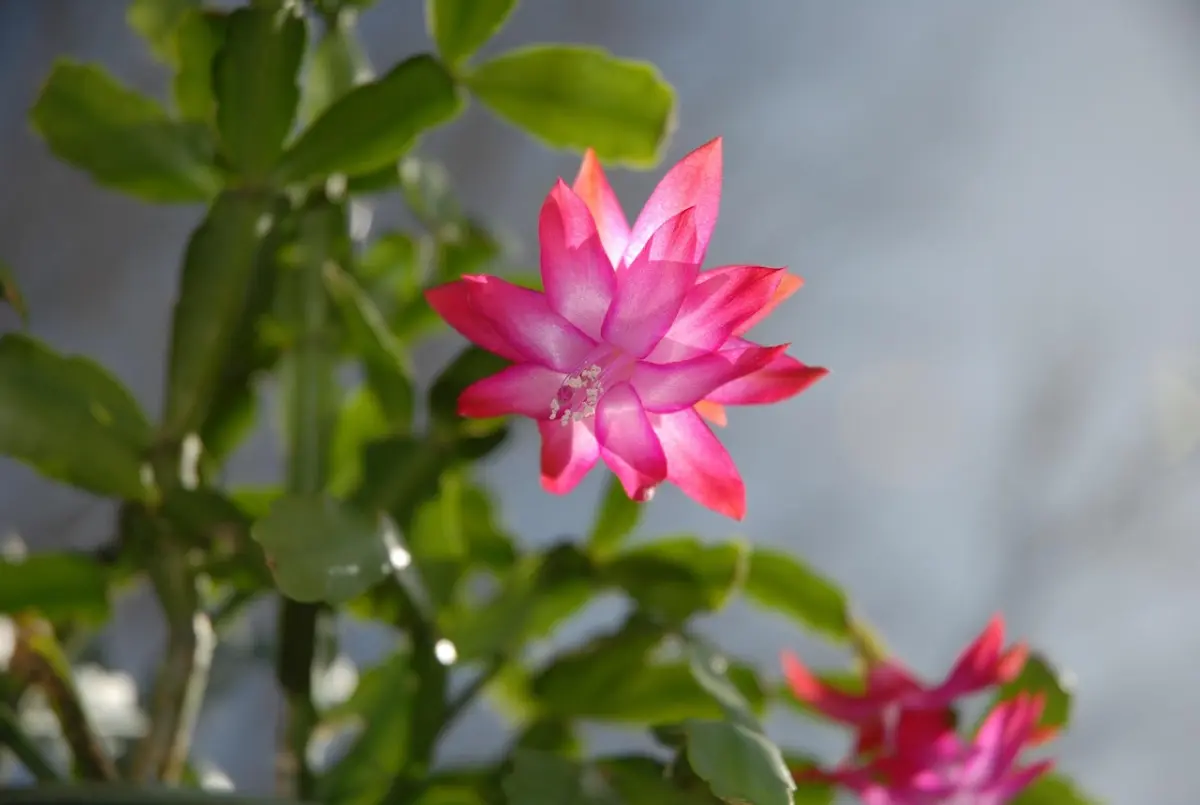
The best place for a Christmas cactus, or “Thanksgiving cactus” (Schlumbergera truncata), is near an east-facing window, where the morning sun won’t scorch the stems. It’s also important to keep the plant away from heaters and drafts and not to move it once buds appear, according to Homes and Gardens.
Unlike desert cacti, Schlumbergera is native to the tropical forests of Brazil, where it grows in the shade, in diffused light, and in humid air. Creating these exact conditions at home helps prevent the stems from turning yellow and the buds from falling off prematurely.
A living room with a stable temperature of about 16–21°C is also suitable, with slightly lower temperatures at night. A north-facing window is also acceptable, although in a dark room, it’s best to place the pot closer to the window. Direct sunlight from south- and west-facing windows should be filtered with a sheer curtain.
The plant thrives in high humidity, so a bright bathroom with a window or a kitchen is suitable, provided the pot is placed far from the stove and hot appliances. In dry homes, a humidifier or a tray with wet pebbles will help, but the bottom of the pot should not touch the water.
Intense direct sunlight, hot, dry air from radiators and fireplaces, cold windowsills, and constantly dark corners are harmful to the cactus. You can place it in the center of the dining table as a festive decoration, but not for long, since there’s usually not enough light there.
Darkness and cool temperatures signal flowering
Short daylight hours and cool temperatures trigger the formation of flower buds. At temperatures below approximately 15.5°C, the plant forms buds regardless of the length of the day. However, if light lasts more than 12 hours a day, flowering will not occur. Buds appear after about six weeks under these conditions. The common advice to let the soil dry out in the fall, as researchers have found, actually reduces the number of flowers: 1.5 flowers per segment compared to 2.5 in plants with consistently moist soil, according to the University of Arkansas.
Horticulturist Jennifer Fishburn advises providing the plant with 12–15 hours of darkness daily for five to six weeks, along with cool nights. A room without artificial lighting at night, such as an empty bedroom, is suitable for this purpose, according to the University of Illinois.
“Don’t let the soil dry out during flowering. The buds will fall off if they get too much light, are exposed to drafts or sudden temperature changes, or if the soil becomes too dry,” Fishburn emphasizes.
She also warns that a lack of blooms can be caused by interrupted nights or high temperatures. The most common disease affecting poinsettias, root rot, is caused by overwatering.