
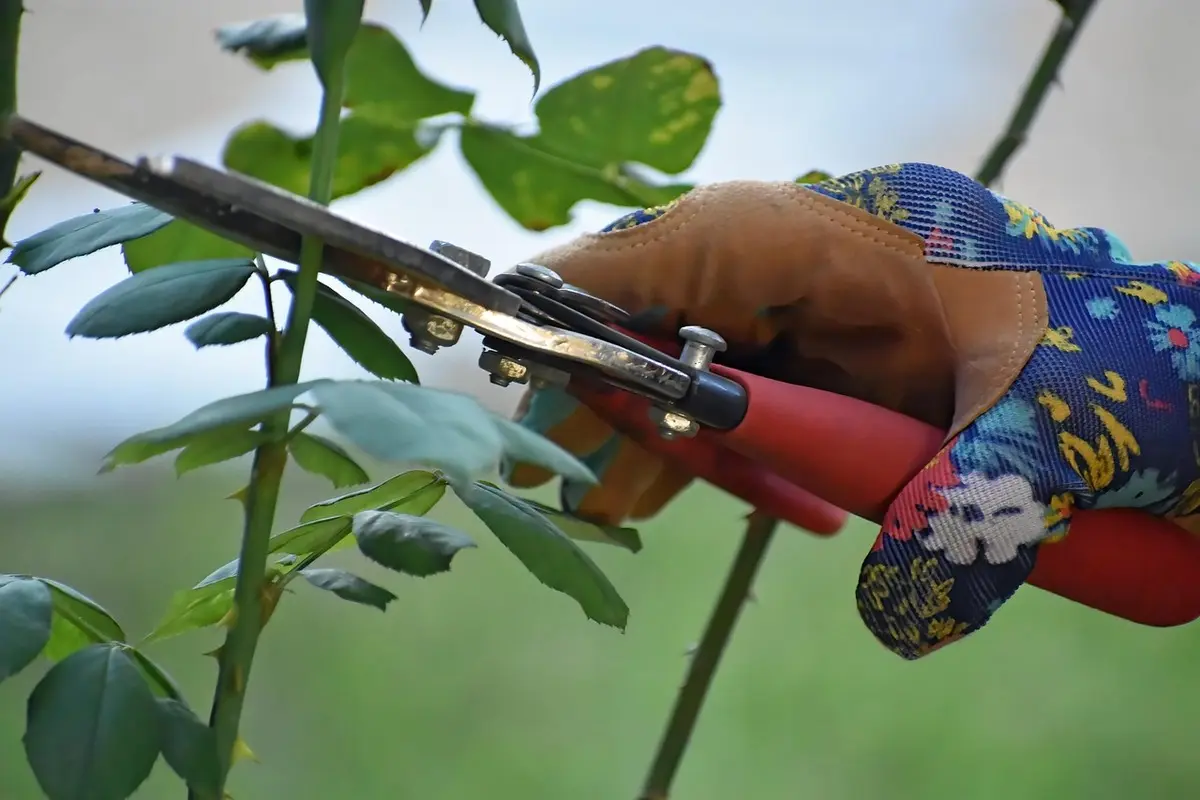
Fall pruning of roses before the first frost should be only preliminary, not thorough: cutting the shoots back too much at this time can make the bush vulnerable to cold weather. The main purpose of this procedure is to remove any remaining flowers and reduce the bush’s wind resistance, according to Positivr.
If a rose is not pruned, it wastes energy on forming rose hips instead of storing nutrients. Tall branches swaying in the wind gradually weaken the bush, and its roots may become exposed. There’s no need to search carefully for buds in the fall, as you would in the spring.
“The principle is very simple: prune the entire bush, without specifically looking for buds or eyes, to about knee height, or slightly higher if necessary,” the article states. This guideline applies only to classic shrub roses. It is not suitable for climbing, miniature, or standard varieties.
The Dangers of Overzealous Pruning
The most common mistake is treating the fall pruning as a substitute for spring pruning. Pruning too drastically in the middle of fall weakens the plant: during a temporary thaw, early buds may begin to sprout, which will later be destroyed by frost. Formative pruning—which involves thinning out the center of the bush, removing dry branches, and selecting skeletal shoots—should be done in late winter or early spring.
Work should be done in dry weather using clean, sharp, and disinfected tools. Fallen leaves at the base of the bushes must be carefully collected: pathogens that cause black spot and powdery mildew overwinter in them. Infected plant debris should not be added to the compost.
The University of Maryland provides similar guidance on pruning height. They recommend shortening tall shoots to about 30 inches (about 76 cm) before winter so that winter winds do not shake the bush. Climbing roses are an exception. In the spring, some varieties are pruned a second time, more severely, according to the University of Maryland Extension.
Less pruning is better
Brianna Reed, a senior gardener at Longwood Gardens, also told Martha Stewart that the fall pruning is primarily a way to prepare for the cold. It should be done after the roses have finished blooming and slowed their growth, but before the harshest weather sets in. You should not pick up your pruning shears during or immediately after a frost.
“Tall, untidy shoots are more susceptible to damage from winter winds, so pruning them helps protect the plants during the cold months,” Reed notes.
The main rule, according to the expert, is moderation. It’s best not to touch healthy green wood unless absolutely necessary.
“Since pruning roses often stimulates new growth, the fewer cuts you make at this time of year, the better,” Reed emphasizes.