
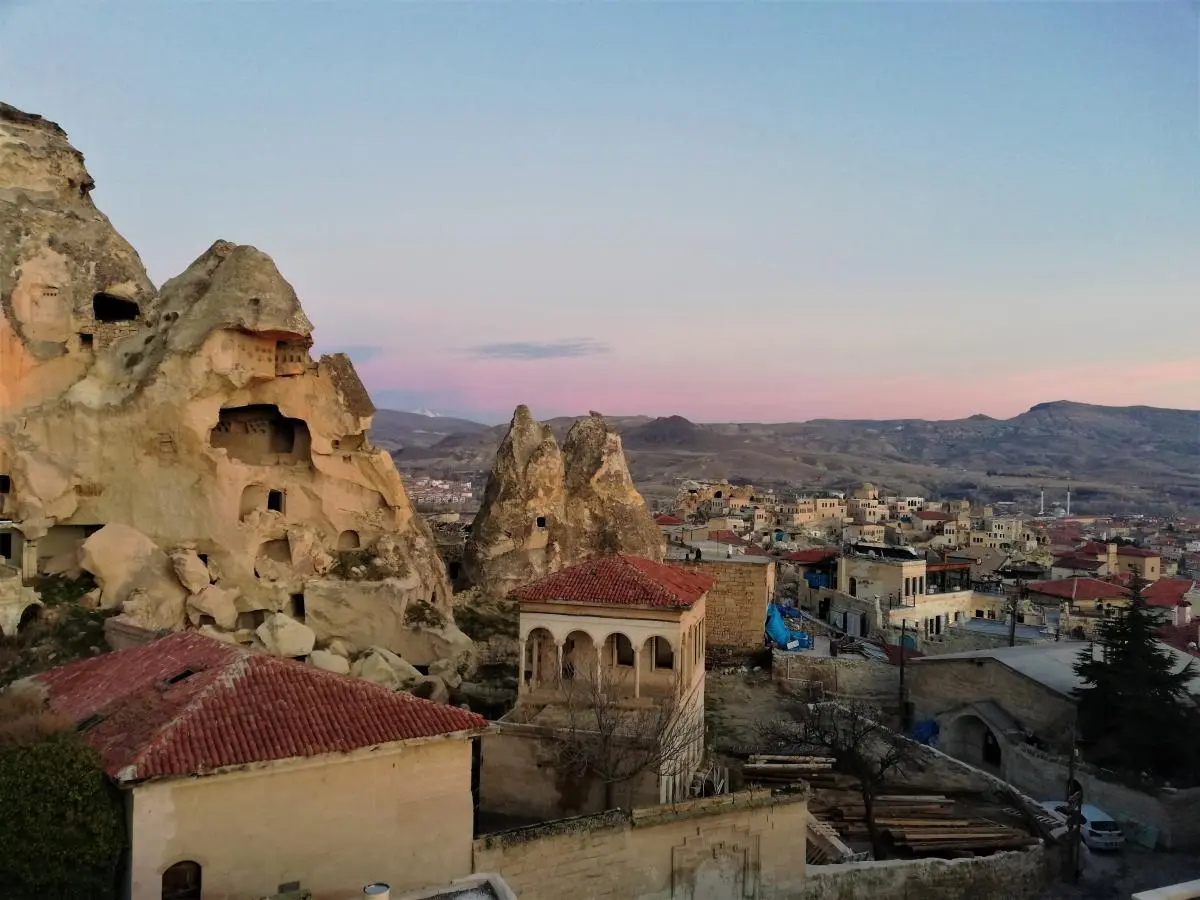
In Cappadocia, Turkey, lies the ancient underground city of Derinkuyu: 18 levels, a depth of about 85 meters, and enough space for 20,000 people, along with livestock and food supplies. The modern world only learned of its existence in the 1960s, when a local resident broke through a wall in his basement during renovations and stumbled upon a secret room leading to a network of tunnels, according to the Daily Mail.
The complex dates back to the Byzantine era, between 780 and 1180. It contained dining halls, churches, stables, cellars, a missionary school, and even a room for boiling molasses. A 55-meter-deep ventilation shaft supplied fresh air and also served as a well.
The underground cities were carved out of soft volcanic tuff. Residents took refuge there from the Persians, Arabs, and Seljuk Turks, as well as from the summer heat, since it remained warm underground during the winter. Derinkuyu has been open to visitors since 1965, but only 10% of the site is accessible. Admission costs 13 euros, and you can get there by bus from Göreme.
Missing Chickens and 600 Entrances
One theory is that the city was discovered in 1963 thanks to chickens: the birds disappeared into a crack that had formed during the renovation of a house. Subsequently, more than 600 entrances to Derinkuyu were discovered in private homes. It is the largest excavated underground city in the world, and in 1985, the region was added to the UNESCO World Heritage List, according to the BBC.
Cappadocia passed from one conqueror to another over the centuries, so the city served primarily as a temporary refuge. Andrea De Giorgio, an associate professor at Florida State University, points to a period when the underground population reached its peak.
“The successive changes in empires and their impact on the landscapes of Anatolia explain the turn to underground shelters like Derinkuyu. However, it was during the Islamic raids that these dwellings were used to their fullest extent,” De Giorgio emphasizes.
The defenses were thought out down to the smallest detail: narrow, low corridors forced intruders to move bent over and one at a time, while the levels were separated by half-ton stone discs that could only be moved from the inside. Air flowed in through more than 50 ventilation shafts.
“Life underground was probably very difficult. The residents relieved themselves into sealed clay jugs, lived by torchlight, and buried their dead in specially designated areas,” explains guide Suleiman.
Tunnels connected Derinkuyu with other underground cities, including Kaymaklı. Christians took refuge there as early as the 14th century during Timur’s invasion, and the city was finally abandoned in 1923, when Turkey deported the Christian population to Greece, according to History Hit.