
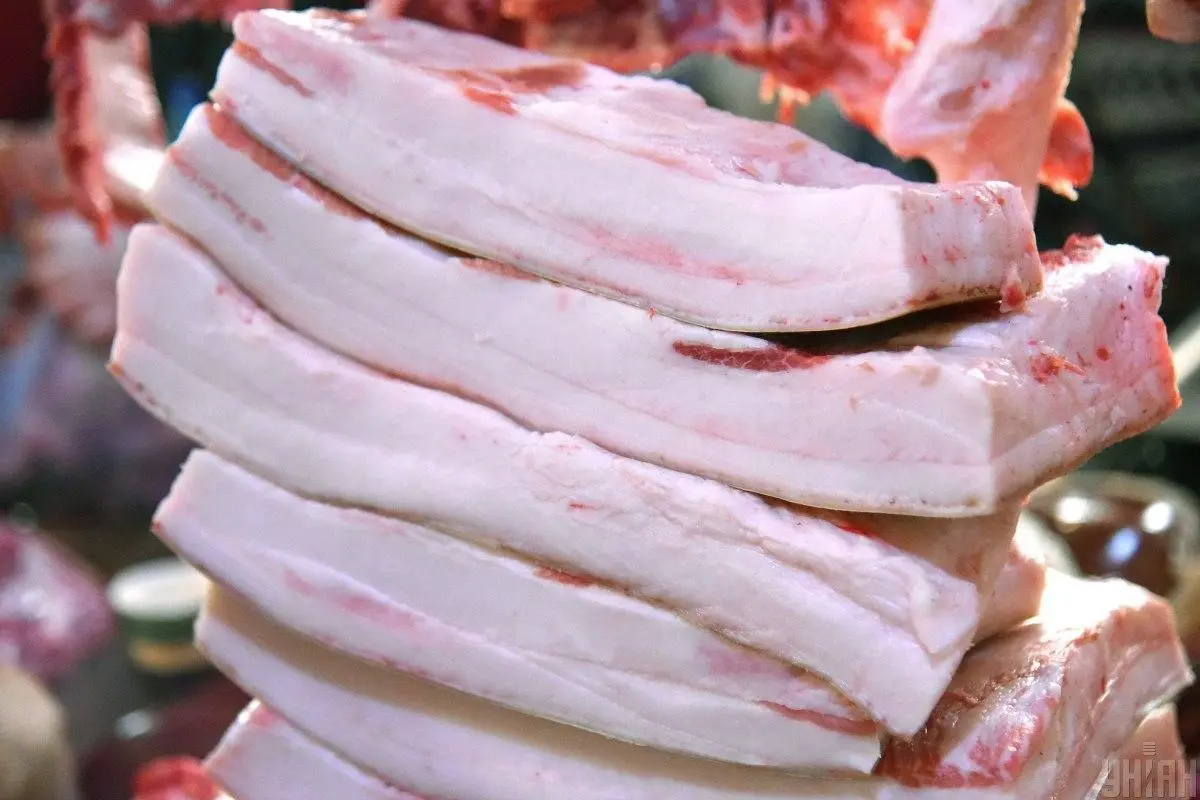
Fresh, unsalted lard in the refrigerator should be used within about 3–5 days; for longer storage, it is best to freeze it: at a temperature of about -18°C, it will retain its quality for several months. Newsweek Romania cites this guideline for fresh pork, referring to recommendations from the U.S. Department of Agriculture (USDA).
The shelf life depends on the method of preparation, the amount of salt, the refrigerator temperature, and the packaging. Salt helps preserve homemade lard, but it doesn’t make it last forever. Smoked store-bought lard should be stored according to the instructions on the package. Sliced lard should be eaten sooner than a whole piece, because the cut surface is more exposed to air and outside odors.
The coldest shelf, farthest from the fish
Do not leave lard exposed on a plate or simply on a shelf. Wrap it in parchment paper or plastic wrap, or better yet, store it in a container with a tight-fitting lid. This prevents the product from absorbing odors from other foods, such as fish, onions, and smoked meats.
The refrigerator temperature should not exceed 4°C. The door is not suitable for storage due to frequent temperature fluctuations. It is recommended to cut off only the portion you plan to eat and immediately return the rest to the refrigerator.
Before freezing, divide the lard into small portions and wrap them in plastic wrap or special freezer bags, removing as much air as possible. Label each package with the date. It retains its best flavor for 3–6 months. Thaw the product slowly in the refrigerator, not on the kitchen counter, and do not refreeze it.
Lard and the Risk of Botulism
Properly rendered lard is free of moisture and impurities, so it can be stored for a long time even at room temperature, notes Jared Gibbard-Swanson, an expert with the OSU Extension service at Oregon State University. However, he warns against the long-standing practice of preserving other foods in fat, according to Ask Extension.
The danger comes from the bacterium C. botulinum, which multiplies on meat and vegetables in the absence of oxygen and at moderate temperatures.
“If you submerge other foods in lard, you’re reintroducing moisture and creating an environment where C. bot can multiply and produce toxins,” Gibbard-Swanson warns.
The expert advises keeping low-acid foods covered in oil or fat in the refrigerator for no longer than 4 days. According to him, even a single drop of moisture surrounded by fat can be enough for botulinum toxin to form. Unlike a jar of dried meat, you won’t notice any condensation in a layer of lard.
Korean scientists have also confirmed the crucial role of temperature. They stored pork lard for 204 days at temperatures ranging from 10 to 45°C and concluded that temperature control is a key factor in determining its shelf life, according to a study published on PMC.