
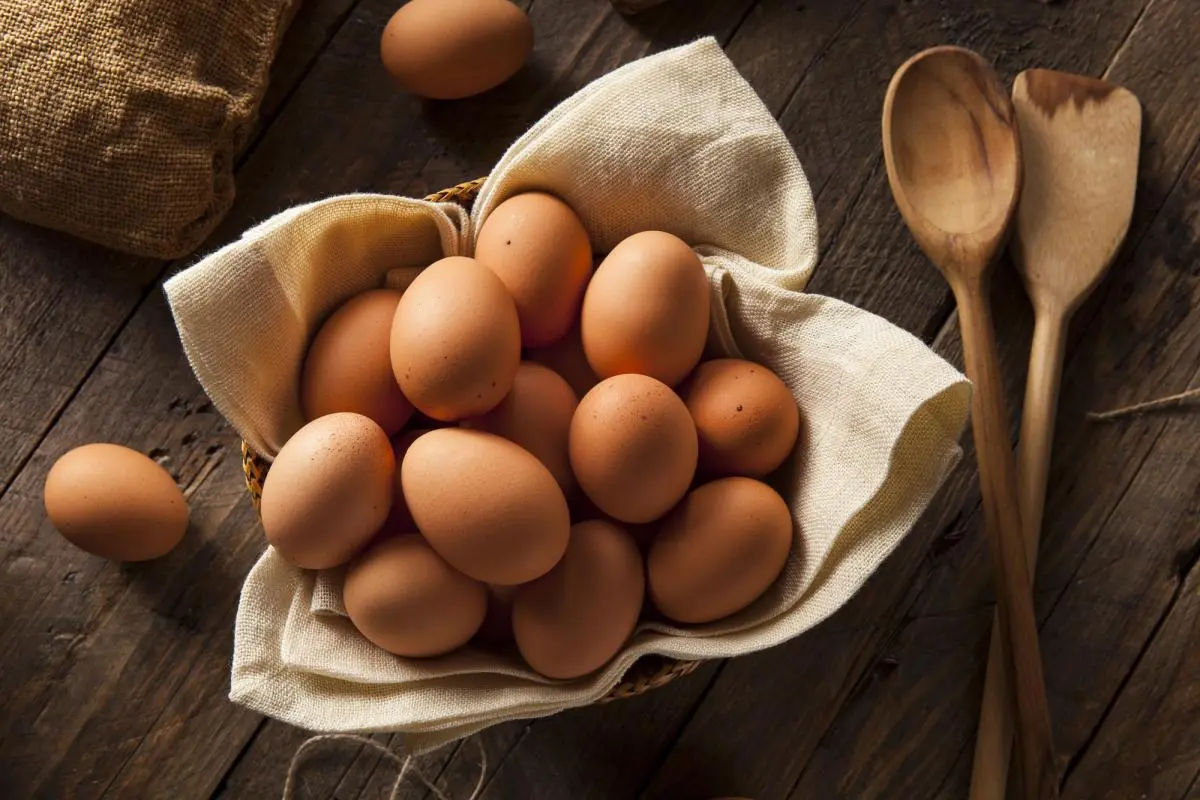
In stores across the European Union, eggs are sold unrefrigerated; however, once you get home, you should immediately place them in the refrigerator and store them there until use. According to EU regulations, fresh Class A eggs cannot be stored at artificially lowered temperatures below 5°C. At the same time, manufacturers advise on the packaging to keep the product cool after purchase, according to dobrzemieszkaj.pl.
This contradiction stems from sudden temperature fluctuations. If a cold egg is placed in a warm, humid room, water condenses on the shell, which is a hygiene concern. Leaving an egg on the kitchen counter for a few dozen minutes won’t make it unfit for consumption, but it’s not advisable to keep it in a warm place for too long or to repeatedly move it from a cold to a warm environment and back.
The best place for eggs is the inner shelf of the refrigerator, not the door, where the temperature fluctuates the most. It is recommended to store eggs in the cardboard carton they came in from the store: it protects the shell from cracks and odors that the egg can absorb through microscopic pores. Eggs should not be washed before storage, as this destroys the cuticle, a natural membrane that prevents microorganisms from penetrating the egg.
The American approach was tested in a laboratory
In the U.S., Canada, Japan, and Scandinavia, on the other hand, eggs are washed and refrigerated. Scientists at the Agricultural Research Service of the U.S. Department of Agriculture spent 15 weeks comparing 5,400 eggs stored using four common methods worldwide. According to researcher Dina Jones, the cuticle dries out and falls off after the egg is laid, and from an evolutionary perspective, it is necessary for the embryo to breathe, not to protect against salmonella.
Chilled eggs performed best: after 15 weeks, they maintained an average grade of A regardless of whether they had been washed. Unwashed eggs stored at room temperature dropped from grade AA to B in just one week and lost a total of 15% of their weight.
“Essentially, the key point is that egg quality remains high in the refrigerator and deteriorates rapidly without it,” Jones emphasizes.
Vincent Guionne, a veterinarian and scientific advisor to the International Egg Commission, believes that both approaches work, but it’s important to stick to one of them consistently. With continuous cooling, the shelf life increases from about 21 to nearly 50 days, according to WAMC.
“Once you start cooling, it must continue throughout the entire supply chain, from the farm to the store. Because if you stop—if the eggs are cold and you put them in a warm environment—they’ll start to sweat,” warns Gionne.
How Long You Can Store Them and What to Watch Out For
Even a refrigerator doesn’t completely stop eggs from aging, so it’s important to check the date on the package. In the EU, the minimum shelf life cannot exceed 28 days from the date of laying. For a home test, it’s recommended to submerge an egg in water: a fresh egg lies horizontally on the bottom, an older one stands upright, and a spoiled one floats.
Dishes that aren’t fully cooked, such as homemade mayonnaise, tiramisu, or eggnog, require special caution, as raw eggs can be a source of salmonella. It’s best to use pasteurized eggs for these recipes. Children, pregnant women, the elderly, and people with weakened immune systems are at the greatest risk.