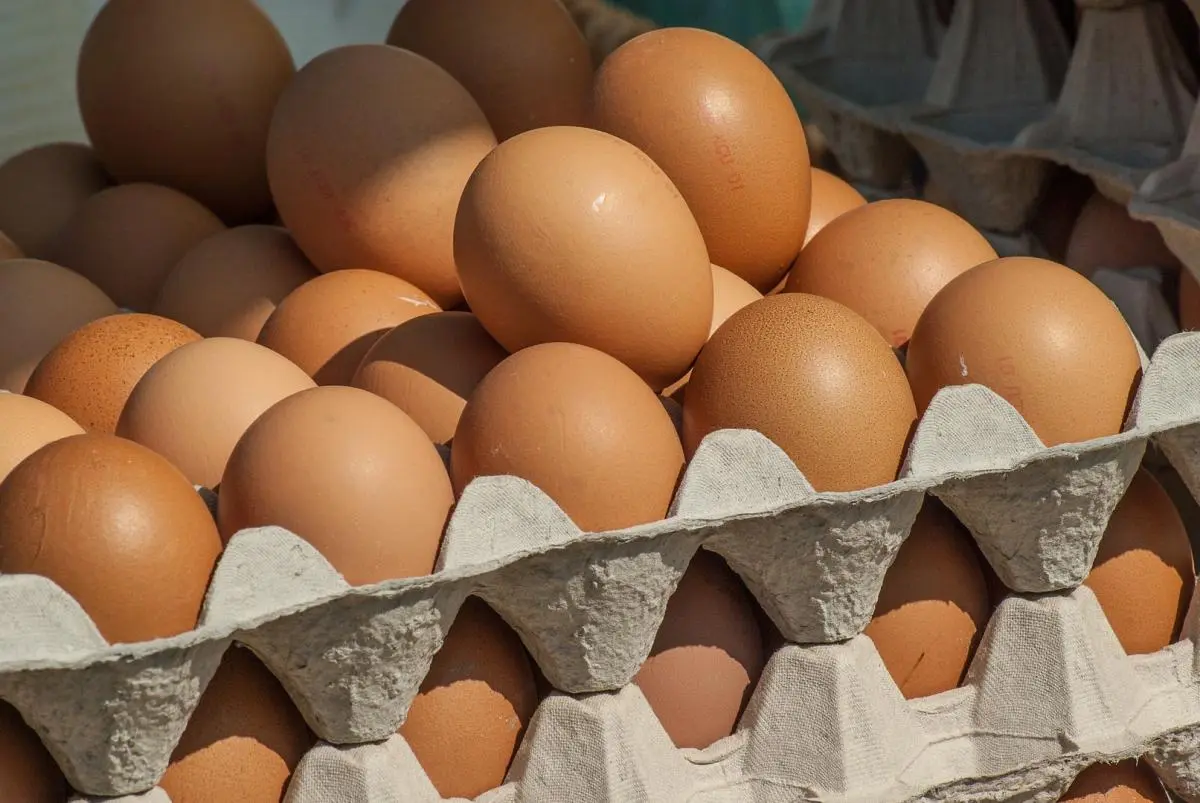
Eggs bought at the store should be stored in the refrigerator at home. At a temperature of 4–8 °C in their cardboard carton, they stay fresh for three to five weeks; at room temperature, they last only one or two weeks, and in a room warmer than 25 °C, they can start to spoil in just a few days, according to ChilliZET.
In many supermarkets, eggs are displayed on regular shelves, but this doesn’t mean you can store them the same way at home. Stores maintain stable temperature, humidity, and ventilation, and their stock is quickly sold out and restocked. Apartments are warmer, temperatures fluctuate, and there is no professional ventilation. Unwashed eggs have a natural protective layer on their shells that prevents microorganisms from penetrating, but they last much longer in the cold.
27 Weeks in the Cold and in the Warm
Scientists from the Agricultural Research Service of the U.S. Department of Agriculture confirmed the advantage of refrigeration. They stored unwashed, washed, and washed and oil-coated eggs at 4 °C and 22 °C for 27 weeks. At room temperature, most samples dropped from Grade A to Grade B within a week, lost a significant amount of weight, and their quality could only be assessed up to the eighth week. When refrigerated, unwashed and oil-coated eggs maintained Grade A for all 27 weeks, while washed eggs retained Grade A for up to 18 weeks, according to the USDA ARS publication.
Why the Refrigerator Door Isn’t Suitable
The shelf on which the eggs are placed also matters. Food technologist and nutritionist Jennifer Pallian advises keeping them in their original packaging in the coldest part of the refrigerator and not leaving refrigerated eggs on the counter for more than two hours. She does not recommend washing store-bought eggs at home, as water can draw bacteria through the pores of the shell, according to Simply Recipes.
“The door is the warmest part of the refrigerator, and the temperature there fluctuates every time you open it,” Pallian emphasizes.
Vincent Guionnet, a veterinary avian specialist and scientific advisor to the International Egg Commission, warns that sudden temperature fluctuations harm the product, as he told NPR.
“Once you start the cooling process, it must continue throughout the entire supply chain, from the farm to the store. Because if you stop it—if the eggs are cold and you place them in a warm environment—they’ll start to sweat,” notes Guionnet.
Such eggs may develop mold. At the same time, with continuous cooling, the shelf life increases from about 21 to nearly 50 days.