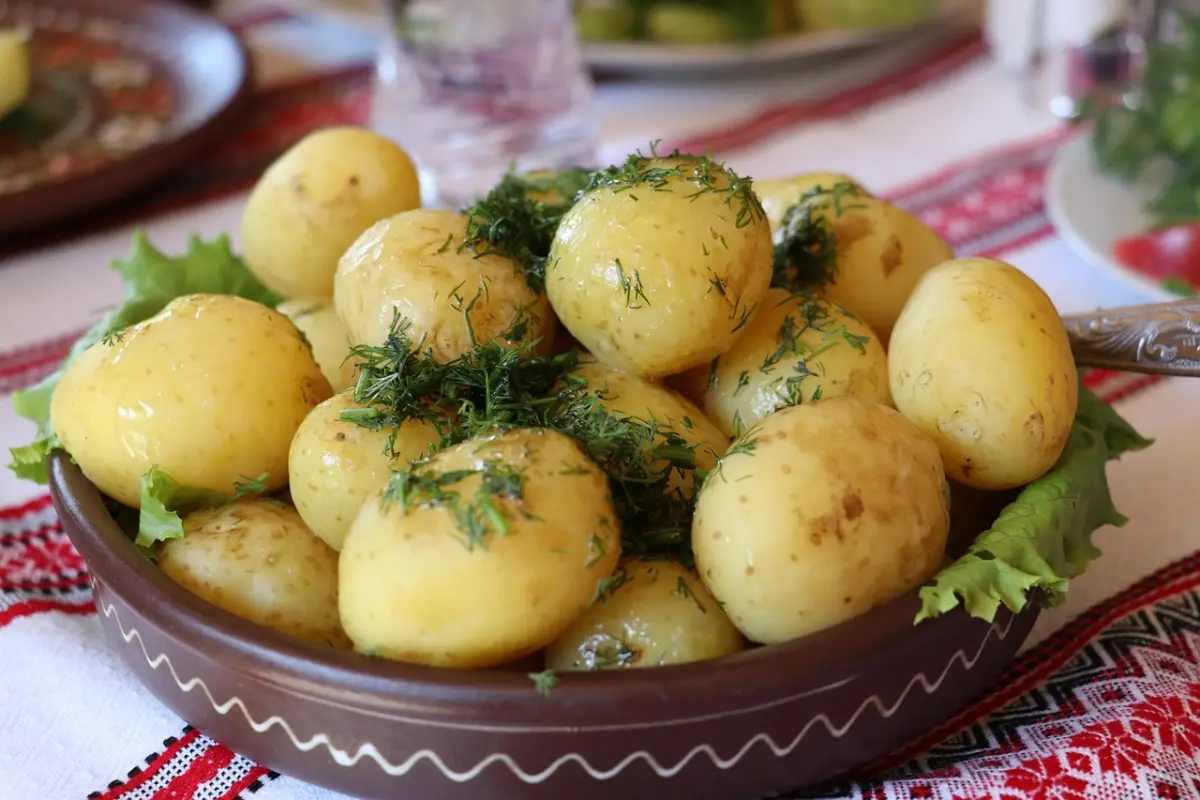
Potatoes for boiling should be placed in cold water, not boiling water: this is the method unanimously recommended by four chefs who were asked about the correct way to start cooking. According to them, this method helps achieve an even texture, reports Ziare.com.
The problem arises when cold potatoes are added to a pot of already boiling water: the outer layer begins to cook instantly, while the center remains cold.
“You can end up with potatoes that are overcooked on the outside before they’re even tender in the center,” warns Dennis Little, a chef with over 45 years of experience.
Daniel Gianetos, a chef trained in France, adds that with this method, the potatoes can absorb too much water and start to fall apart before they’re cooked through. A cold start eliminates this problem because “the potatoes and water heat up together, so the heat has time to reach the center,” he emphasizes. Another chef, Perez Kennilly, is convinced that this method simply yields a better texture.
Professional tip: salt, low heat, and the fork test
It’s recommended to cut the potatoes into uniform pieces so they cook evenly. Little also rinses the cut potatoes to remove excess starch from the surface, which can make them sticky. Next, the potatoes are covered with cold, salted water so that the water level is about 2.5 cm higher than the potatoes. Chef Kaufman uses one tablespoon of kosher salt for every 950 ml of water.
Once the water comes to a boil, reduce the heat immediately so that it simmers gently. “Boiling over high heat will cause the potatoes to fall apart and become mushy,” Kaufman notes.
Start checking pieces that are 2.5–5 cm in size after about 10 minutes; larger pieces and small whole potatoes may take 15–20 minutes. Little advises focusing on texture rather than the clock: the potatoes are done when a knife or fork slides into the center with almost no resistance.
When Boiling Water Is Still the Way to Go
Starting with cold water is considered the most reliable method for mashed potatoes, potato salads, and most classic recipes. The exceptions, according to Little, are very small cubes or potatoes that are briefly blanched before frying. However, for regular boiled potatoes, the cold-water method remains “the simplest and most reliable.”
Chef and cookbook author Marisel Gentile extends this rule to other starchy and firm root vegetables, such as yucca, carrots, and parsnips. At the same time, she says, green vegetables require the opposite approach. “Plunge green vegetables, such as broccoli, peas, or green beans, into boiling water so they retain their bright color and crispness,” Gentile advises in a comment for The Takeout.