
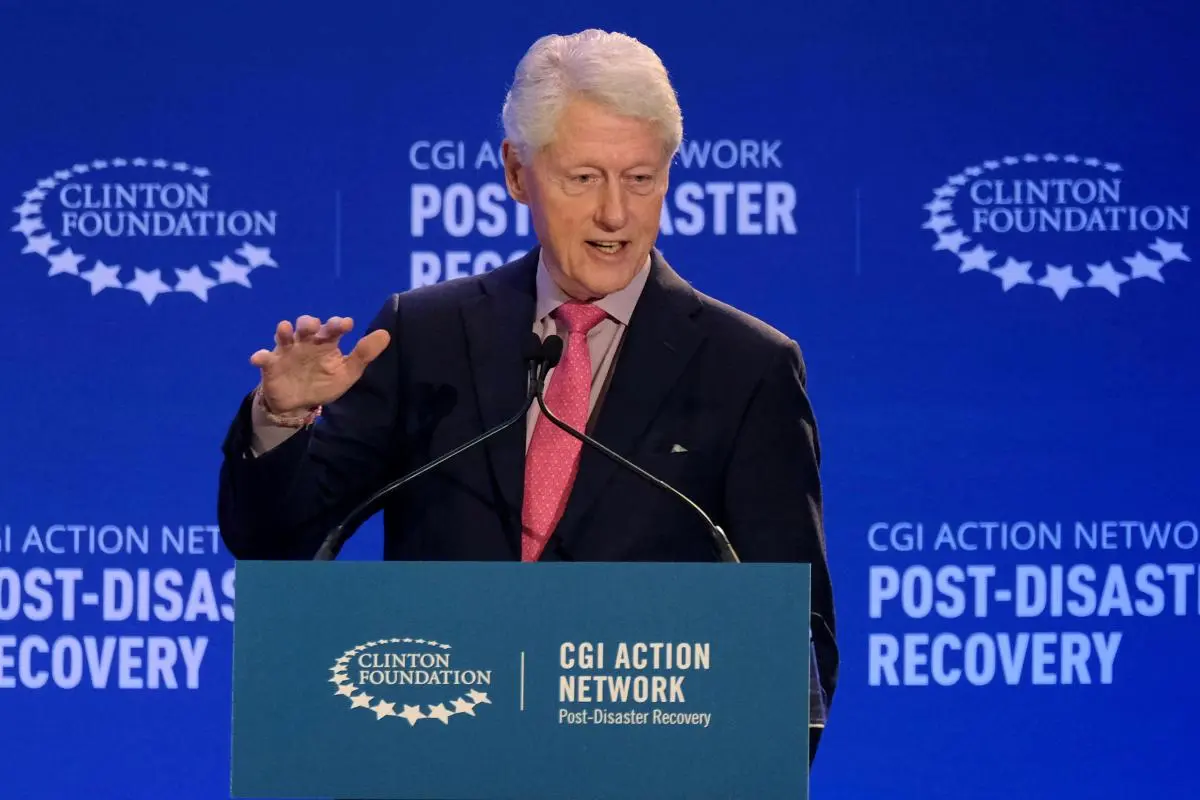
Former U.S. President Bill Clinton accused Donald Trump of betraying national interests and refusing to support Ukraine in favor of Vladimir Putin. During a campaign event in Florida, the 80-year-old politician emphasized that the current White House occupant treats international partners with contempt, and that the energy deal he signed with Moscow definitively demonstrates a shift in Washington’s foreign policy course, according to Portfolio.hu.
Clinton’s critical remarks concern Trump’s recent decision to allow Russian diesel fuel to be supplied to global markets. This move was a response to Kyiv’s refusal to halt strikes on Russian oil refineries, which provoked a sharp reaction from the Ukrainian leadership, DW reports.
“I think our team is simply being used as a cover. This is definitely unfair,” said Ukrainian President Volodymyr Zelenskyy, describing Washington’s actions as a weak decision by strong partners.
Energy Policy and the Election Context
The Trump administration justifies its actions by citing the need to lower fuel prices for American farmers and truck drivers. The president signed an executive order that temporarily suspends the federal tax on diesel fuel and allows the use of so-called “red” diesel for any purpose through the end of the year, according to The White House.
Experts link this move to the approaching U.S. midterm elections, scheduled for November 3. Analysts suggest that the White House is trying to find a “scapegoat” for high inflation and energy prices by shifting the blame onto Ukraine, while the real goal is to manipulate market expectations.
Historical Commitments and Security Guarantees
Discussions regarding aid to Kyiv have deeper roots, dating back to the signing of the 1994 Budapest Memorandum. At that time, the U.S. committed to respecting Ukraine’s sovereignty and territorial integrity in exchange for Ukraine’s renunciation of the world’s third-largest nuclear arsenal, according to Brookings.
Despite the current tensions, some observers advise the Ukrainian government to avoid radical steps and maintain channels of communication with its American partners. It is expected that once the election cycle is over, the White House’s rhetoric may change, as a complete withdrawal of support for Ukraine would be perceived as a sign of weakness in the eyes of other global players, particularly China.