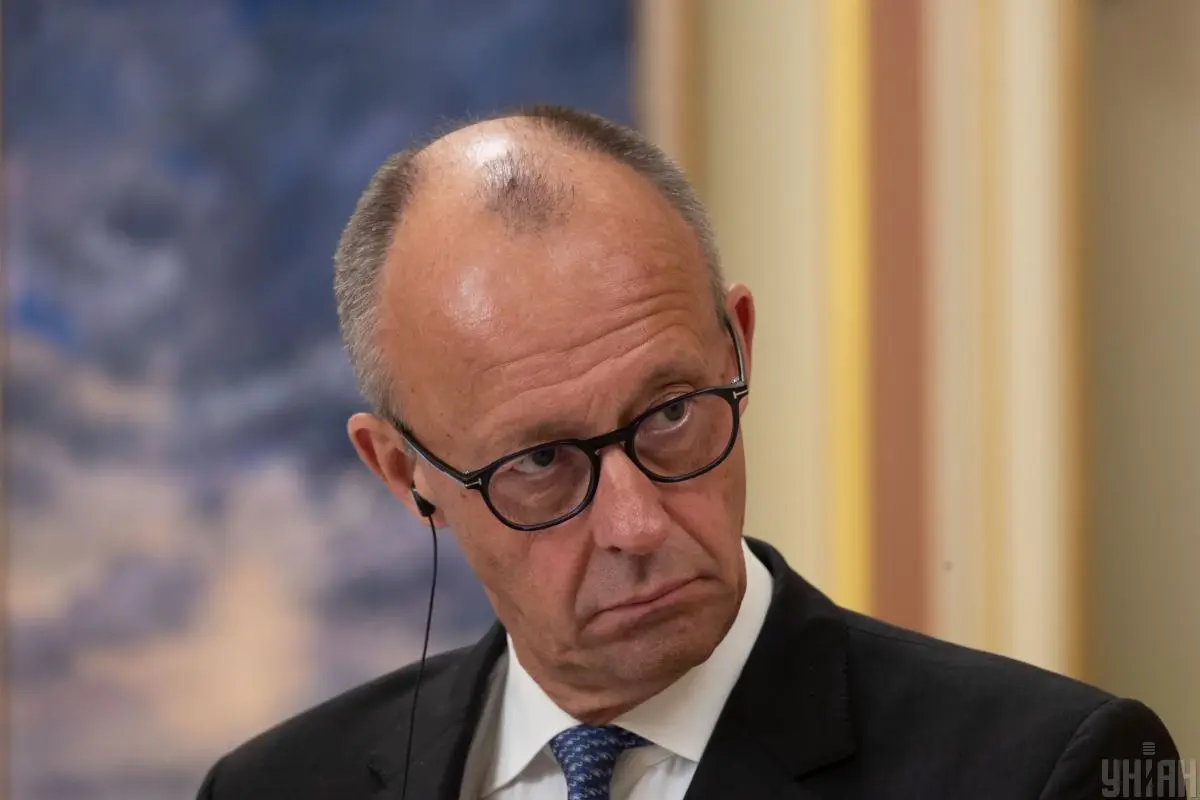
German Chancellor Friedrich Merz has threatened to block the European Union’s next seven-year budget for 2028–2034 if all member states do not agree to provide financial support to Ukraine in 2027 and beyond. He set out this condition in a letter to European Council President António Costa, according to UNN, citing the Financial Times.
Due to the war, Ukraine faces a funding shortfall of 70 billion euros next year. Berlin issued this ultimatum ahead of the EU leaders’ meeting in Dublin, which will take place on Thursday and Friday.
Merz explicitly linked any further budget agreements to each country’s participation in providing aid to Kyiv.
“The collective commitment of all of us, without exception, to make a fair contribution toward covering Ukraine’s (financial) deficit is a necessary prerequisite for resolving this issue and discussing any other matters, especially those with financial implications,” the chancellor’s letter states.
He also emphasized that a solution is needed that all member states will support and that will provide Ukraine with a stable, long-term financing outlook starting in 2028, specifically to pay interest on its outstanding debts.
Who Doesn’t Want to Pay
Last December, EU leaders agreed to a 90 billion euro loan for Ukraine. The EU promised to cover two-thirds of the new deficit, or about 45 billion euros. The European Commission is exploring options, including the issuance of additional joint debt obligations. Leaders are expected to reach an agreement by the end of the year.
At the same time, Hungary, Slovakia, Bulgaria, and the Czech Republic have made it clear that they will not participate in further aid to Kyiv. Last year, Hungary, Slovakia, and the Czech Republic already secured an exemption from paying interest on the 90 billion euro loan.
Germany is the largest net contributor to the EU budget, while these four countries are net recipients. Berlin also wants decisions on funding for Ukraine to be made by a qualified majority rather than unanimously. This would prevent individual countries from blocking such decisions.
The German government is convinced that Kyiv’s needs should be incorporated directly into the bloc’s future multiannual budget.
“Financial support for Ukraine from all EU member states is a necessary condition for the successful conclusion of (EU budget negotiations),” said a German government representative.
The Irish Presidency and the Deadline
Ireland holds the presidency of the EU Council from July 1 to December 31, 2026. Among its priorities, Berlin and Dublin have cited the timely conclusion of negotiations on the new budget, which they plan to finalize by the end of 2026. During a meeting with Irish Prime Minister Micheál Martin, Merz emphasized that support for Ukraine must not waver, as Kyiv urgently needs funds to defend itself against Russia, according to the German government.