
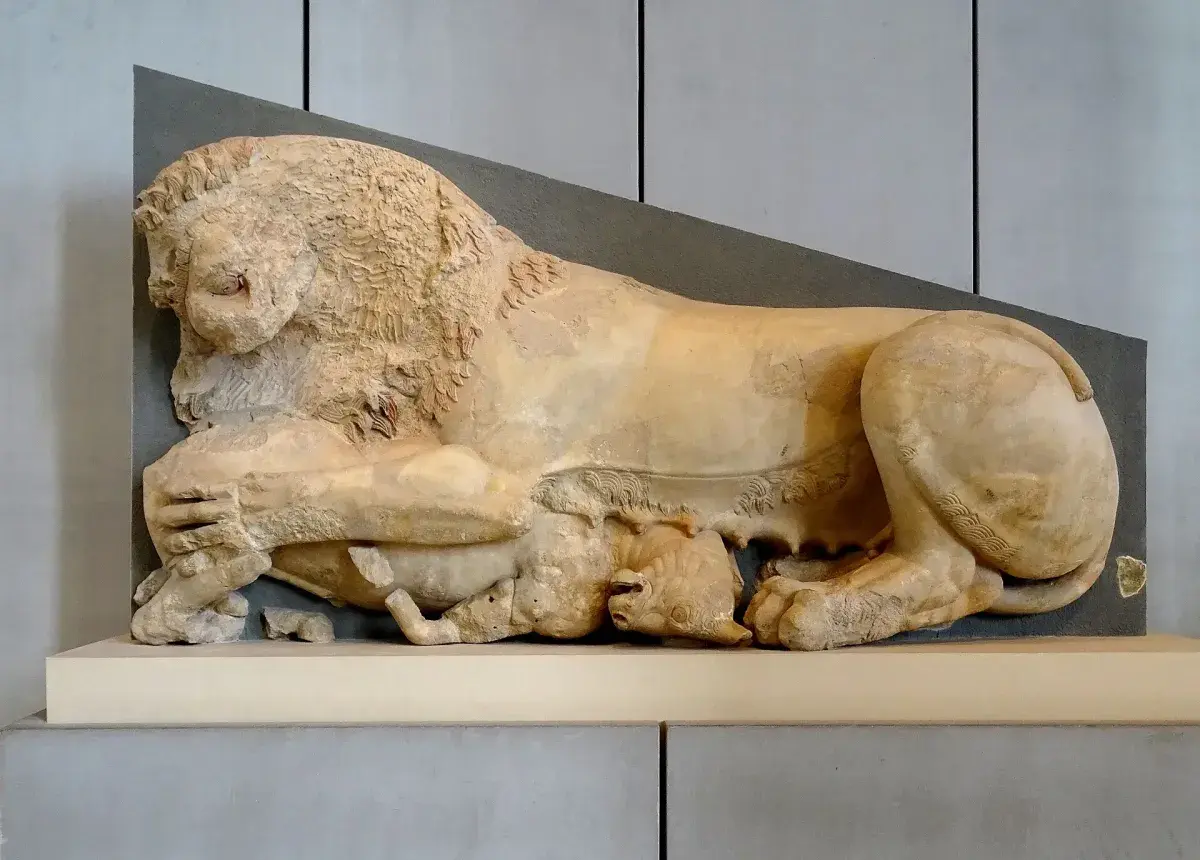
A marble fragment that a Chilean family had believed for nearly a century to be a piece of the Parthenon has been returned to Greece. It turned out that it originated from an older sanctuary. According to a preliminary assessment by Greek archaeologists, the carved stone belonged to the Hekatompedon, the first monumental temple on the Acropolis, built around 570 B.C., reports Futura Sciences.
The artifact was found at the foot of the Parthenon by Italian naval engineer Gaetano Tosti-Croce when his ship docked in Athens in the 1930s. He later settled in South America, and for decades the stone adorned the family’s living rooms in Viña del Mar, Santiago, and Villarrica. Guests were shown it as an authentic piece of the most famous ancient temple.
After his parents’ death in 1994, the relic was inherited by their son, Enrico Tosti-Croce. The engineer, now in his eighties, decided to return the fragment to Athens after being moved by news of Greece’s campaign to recover the Parthenon marbles from the British Museum.
A lotus from the roof of the oldest temple
The fragment weighs 1.2 kg. Despite decades spent on a shelf as a home decoration, the outline of a carved lotus flower is still clearly visible on it. After examining the fragment, the Greek Archaeological Service wrote a letter to Tosti-Croce with its initial findings.
The pattern matches the decoration on the stone gutters that encircled the roof of the Hekatompedon: they featured alternating oval palmettes and lotus flowers. The Parthenon was built more than a century later, between 447 and 438 B.C. The Greek Ministry of Culture describes the fragment’s connection to the Hekatompedon as probable but not definitively proven.
What Remains a Mystery
The ministry has not released a full technical report, so the attribution relies primarily on stylistic comparisons with known fragments of the Hekatompedon. It is also unknown how the Archaic fragment came to be at the foot of the Parthenon. The circumstances of its removal from the Acropolis can be reconstructed only from the family’s recollections.
The fragment was handed over to the Ephorate of Antiquities of the City of Athens for permanent state custody and further scientific research. The voluntary return does not resolve the broader legal dispute between Greece and the British Museum, but it does add another documented artifact from the Acropolis to the national collection.