
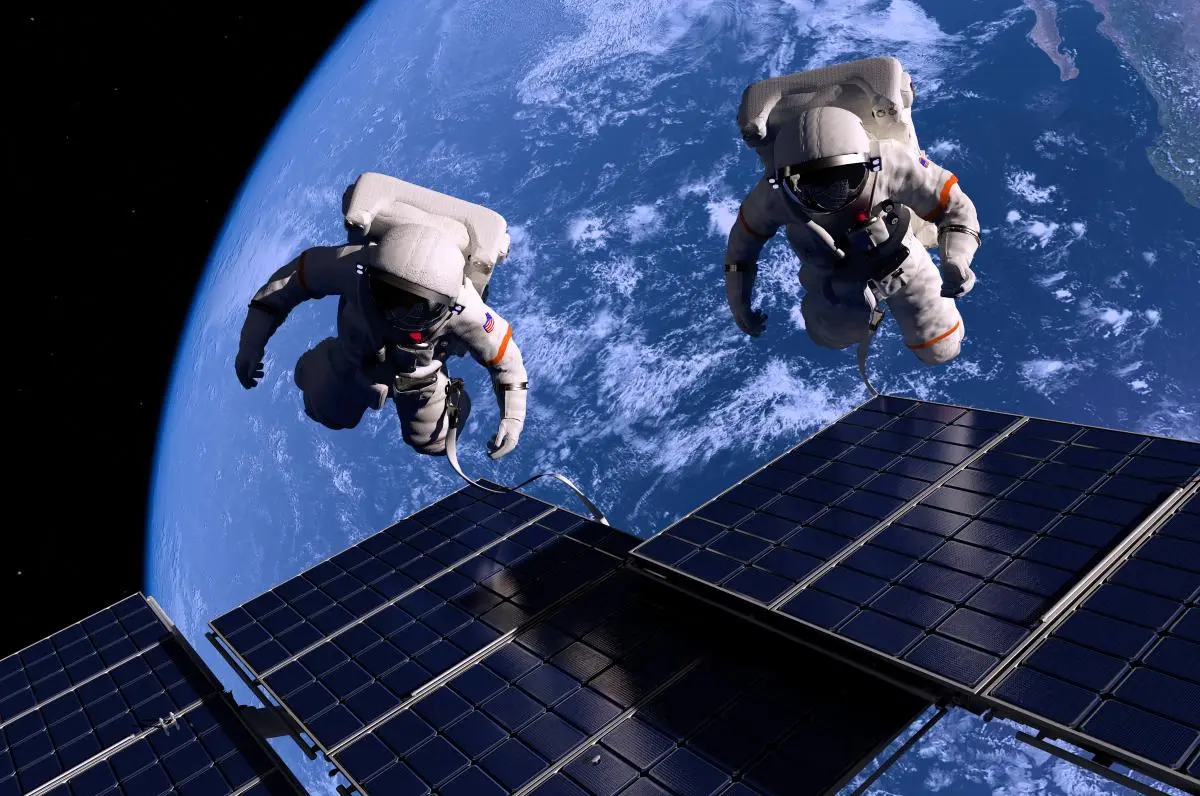
In 1971, Apollo 14 astronaut Stuart Rouse took tree seeds with him into lunar orbit; these seeds later grew into hundreds of saplings that were planted across the United States. While Alan Shepard and Edgar Mitchell were working on the lunar surface, Rusa orbited the Moon in the Kitty Hawk command module with seeds of incense pine, sycamore, liquidambar, sequoia, and Douglas fir, according to Futura-sciences.
Before joining NASA, Rusa worked as a parachute firefighter for the U.S. Forest Service, so the agency agreed to partner on the experiment.
Approximately 500 seeds of each species were selected for the flight. They were sealed in plastic bags and placed in a metal container in the pilot’s personal kit. From January 31 to February 9, 1971, the seeds orbited the Moon 34 times, according to NASA’s website.
An Accident Upon Return
The project nearly failed immediately after landing: during a standard decontamination procedure, the container depressurized, and the seeds spilled out. Researchers feared that the sudden pressure drop had destroyed them. The first sprouts appeared, but due to improper conditions, almost all of them died. The remaining seeds were sent to research stations in Gulfport, Mississippi, and Placerville, California, where they grew into hundreds of healthy seedlings.
The project leader, geneticist Stan Krugman, who personally selected the seeds, made no secret of the experiment’s dual purpose.
“It was part science, part publicity stunt. Scientists wanted to find out what would happen to these seeds if they were sent to the Moon. Would they sprout? Would the trees look normal?” Krugman told NASA in 2002, according to Space.com.
Some of the “space” saplings were planted alongside control trees. Decades of observation revealed no physical changes: the trees grew just like their Earth-based counterparts.
Lost Monuments
In the mid-1970s, the saplings were handed over to state forestry departments in time for the 200th anniversary of the United States. A sycamore was planted in Washington Square in Philadelphia on May 6, 1975, and a balsam fir near the White House in January 1977. Some of the trees were sent to Brazil, Switzerland, and Japan. A single registry of planting sites was never created.
It wasn’t until 1996 that NASA scientist David Williams began compiling a list of these trees. Many of them have already disappeared due to development, disease, or severe weather. Among those lost are the sycamore in Philadelphia and the pine tree near the White House.
“I think that when people learn about the heritage of these trees, they usually take steps to preserve them. That’s why we want to find as many of them as possible in the near future,” Williams emphasized.
The Artemis I mission carried on this tradition: in 2022, the Orion spacecraft delivered thousands of seeds to lunar orbit. From these, a new generation of saplings has already been grown for schools and parks across the country.