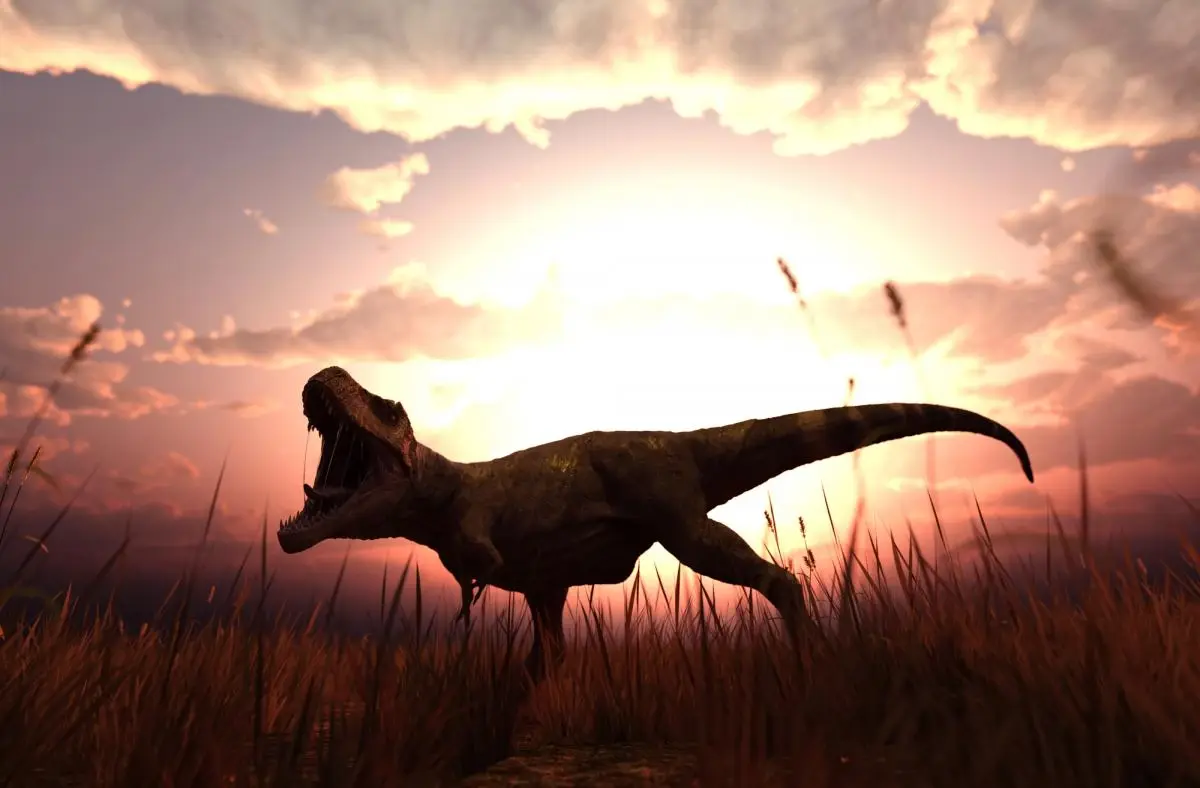
A skull fragment that had been sitting in a drawer at the Natural History Museum in London for nearly a century turned out to be the remains of a new species of dinosaur, *Invictibellatrix amberina*. This is the first megaraptor found in Europe: a long-clawed predator about the size of a large tiger, according to Futura.
Megaraptors were bipedal carnivores and close relatives of tyrannosaurs. The new species lived in what is now Britain during the Early Cretaceous period, about 120 million years ago. The museum acquired the fossil back in 1924, and the name Invictibellatrix translates to “unconquered female warrior.” The study by a team from University College London was published in the journal Royal Society Open Science.
Lead author Cassius Morrison compared the threat this predator posed to humans with that of the Tyrannosaurus rex.
“It wasn’t the apex predator of its time, but for humans, this dinosaur would have been more dangerous than T. rex. We would have been the perfect-sized prey, weighing about a third of its body mass. They would definitely have hunted us,” Morrison emphasized.
According to his estimates, Invictibellatrix was 3–4 meters long and slightly more than 1.5 meters tall, with feathers and claws 10–20 cm long. Its prey included small dinosaurs, lizards, and mammals.
A Century Without a Description
The fossil was discovered at the base of a cliff at Sadmore Point on the southwestern coast of the Isle of Wight by amateur paleontologist Reginald Walter Gooly. The museum acquired it along with more than a thousand of his other specimens after the collector’s death. Shortly thereafter, a cast of the braincase was made, but a scientific description was never published, according to Earth.com.
“It’s a real mystery that this fossil went unnoticed for so long and lay in a drawer for nearly 100 years,” Morrison notes.
Researchers scanned the fragment using a CT scanner and created 3D models of the bone and the cranial cavity. Comparisons with Tyrannosaurus, Spinosaurus, raptors, and other predatory dinosaurs allowed the researchers to classify the find as a megaraptor. The animal likely weighed 200–300 kg.
“Despite more than 200 years of collecting, the Isle of Wight continues to surprise us with new dinosaur species, and finds of predatory dinosaurs, such as Invictibellatrix, have been particularly rare,” notes senior author Paul Barrett of the Natural History Museum.
The Journey from Asia to Gondwana
Modeling suggests that Invictibellatrix descended from an Asian population of megaraptors that migrated to Europe around 130 million years ago. Later, members of this group became the apex predators of Gondwana, with claws reaching up to 35 cm in length.
“This new species is the first evidence that megaraptors were also present in Europe and that they reached Gondwana via this route, rather than by hopping from island to island further south,” says co-author Charlie Sherer, a UCL graduate student.
Back in 2025, Morrison and Sherer, as part of a larger team, published a biogeographic study. It suggested that megaraptors may have been distributed worldwide even before the separation of Laurasia and Gondwana, and noted that the group’s origin remains unclear due to the fragmentary paleontological record, according to a publication in PubMed Central.