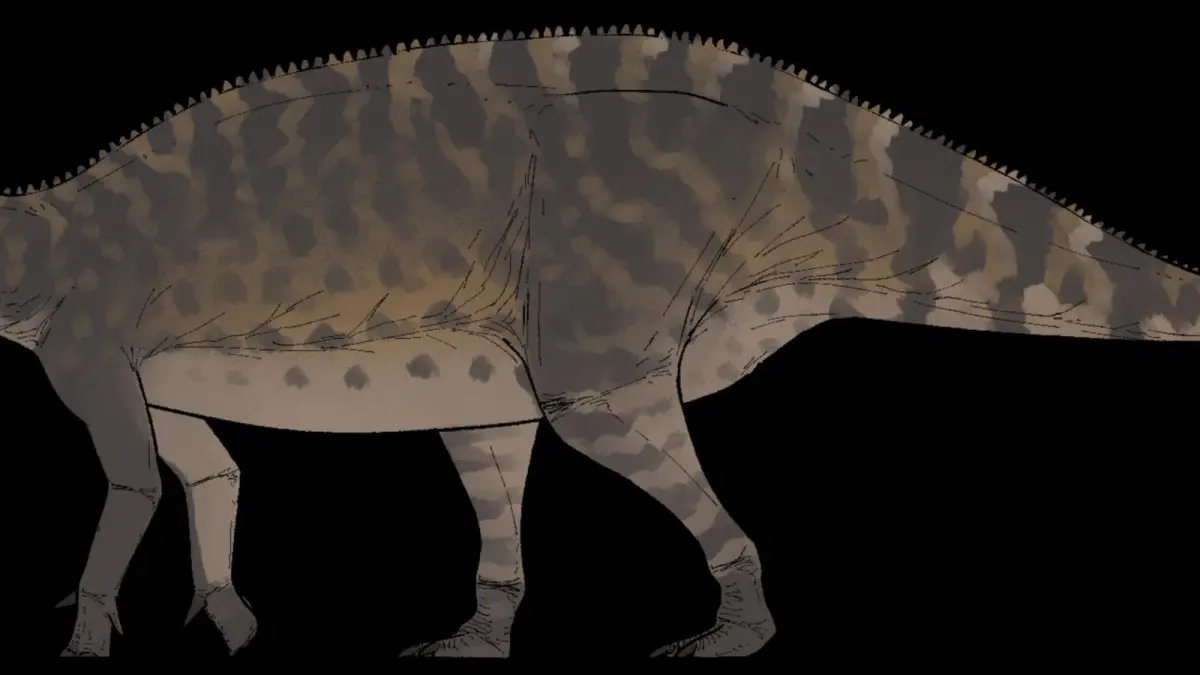
Paleontologists have described a new genus and species of herbivorous dinosaur from the iguanodont group—Paludohadros proudlovii. A partial skeleton was discovered back in 2001 at the Smokejacks brickworks in the British county of Surrey, and a description of the find has just been published in the Journal of Systematic Paleontology, according to Sci.News.
The animal lived in the marshy lowlands of southern England about 125 million years ago, during the Early Cretaceous period. Iguanodonts are herbivorous dinosaurs known for the spikes on the thumbs of their forelimbs. The specimen found was about 5 meters long and weighed 1.5–2 metric tons, making it about the size of a rhinoceros. Its bones had not yet fully matured, so it was likely a young dinosaur that could have grown to twice its current size.
The study was led by Ricardo Sakamoto, a graduate student at the Natural History Museum in London and the University of São Paulo. This is the first species he has described. “I still remember the incredible moment when I realized that this was a new species that no one had identified before,” the scientist recalls.
Paludohadros proudlovii is currently the only valid iguanodont taxon from the Barremian layers of the Wild Clay Formation. Previously, representatives of this group in the region were known only from older Valanginian deposits. Iguanodonts from the roughly contemporaneous Wessex Formation on the Isle of Wight belong to other taxa, suggesting that these formations may have formed at slightly different times, according to the scientific article.
Named After a Factory Manager
The species was named after Will Proudlaw, the manager of a brick and tile factory in Everest, where the skeleton was found. He died at the age of 35, before the excavations began. The genus name derives from the Latin *palus*, meaning “marsh”: at that time, southern England was covered in marshy wetlands, according to ITV News.
According to his widow, Rachel Proudlaw, her husband had always been interested in fossils and eagerly anticipated what he might discover beneath each layer of clay he removed. “Unfortunately, this dinosaur wasn’t discovered until a year after his death, but since then, its story has become a part of our lives,” she said.
As part of his dissertation, Sakamoto plans to study the Museum of Natural History’s collection of iguanodonts. He does not rule out the possibility that other, as-yet-unidentified species may be found there.
Possible Discovery of a Baryonx
The skeleton lay just 100 meters from the spot where the remains of the large predator Baryonx were once found. The senior author of the study, Professor Susanna Maidment of the Natural History Museum and the University of Birmingham, suggests a connection between these finds.
“Although Baryonyx is best known for feeding on fish, this dinosaur’s last meal also included a juvenile Iguanodon. We can’t say for sure what species it belonged to, so perhaps Barionx ate the remains of young Paludohadros proudlovii or even hunted them when the opportunity arose,” notes Maidment.
Baryonyx reached 10 meters in length and weighed about 2 metric tons. It had a crocodile-like snout and a claw about 31 cm long, and in addition to hunting, it fed on carrion, according to the Museum of Natural History.