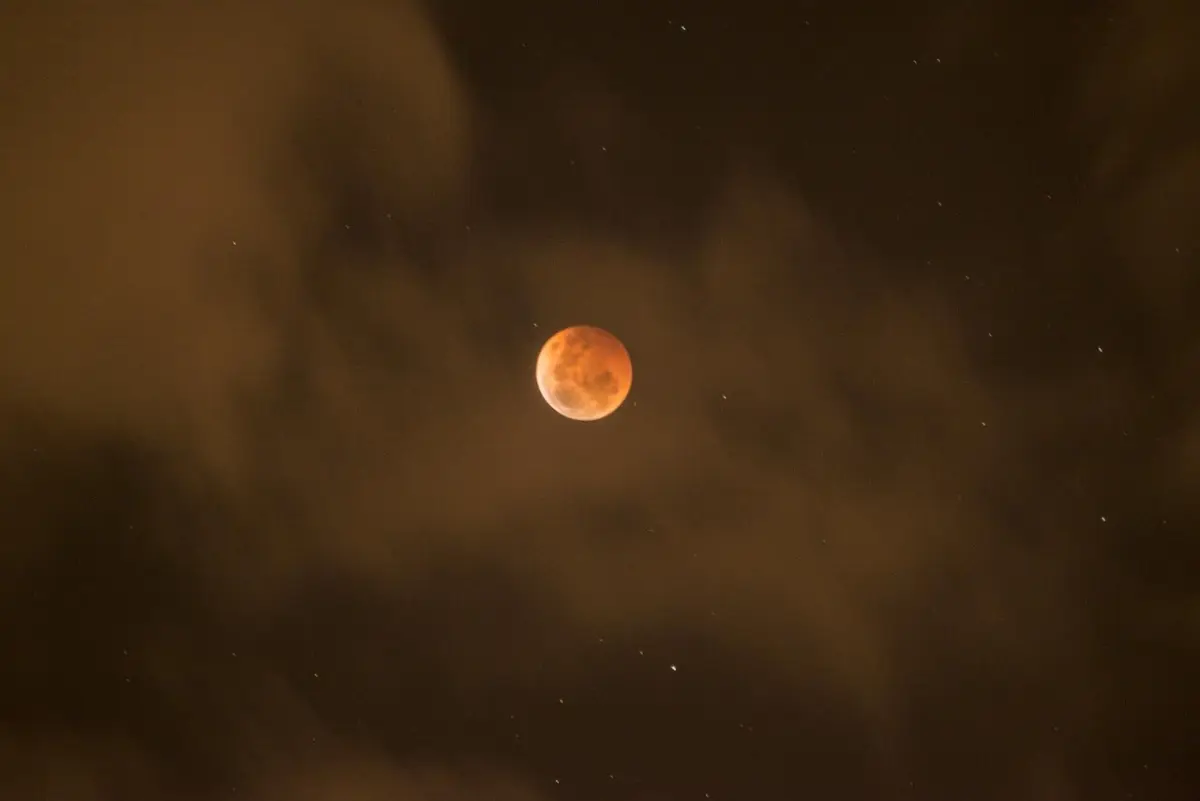
An international team of scientists has determined how much faster the Earth rotated 2,700 years ago. To do this, they had to correct an error of eight kilometers in the coordinates of the ancient Chinese capital, Qufu. A reconstruction of the total solar eclipse on July 17, 709 B.C. yielded a value of ΔT ranging from 20,264 to 21,204 seconds. In addition, it provides possible evidence that the Sun was emerging from a prolonged period of low activity at that time, according to ScienceDaily.
The event was recorded at the court of the Principality of Lu in the “Spring and Autumn Annals,” compiled 200–300 years after the eclipse. The original entry is succinct: “The Sun was completely eclipsed.” This event is considered the oldest written record of a total solar eclipse that can be reliably dated.
Of particular interest is a later source from the Han Dynasty, which adds an unusual visual detail to this event.
“This record is remarkable not only for its age but also for a later addition in the *Hanshu* (Book of Han), based on a quotation written seven centuries after the eclipse. It describes the eclipsed Sun as ‘completely yellow at the top and bottom.’ This addition is traditionally associated with a record of the solar corona,” notes the study’s lead author, Hisashi Hayakawa of the Institute for Space-Earth Environmental Research at Nagoya University.
The corona is the outermost layer of the Sun’s atmosphere, which becomes visible from behind the Moon’s edge when the Moon is positioned between the Earth and the Sun. If the interpretation of the ancient text is correct, this is “one of the oldest surviving written descriptions of the solar corona,” Hayakawa emphasized. The Principality of Lu, where the chronicle was kept, was a vassal state of the Zhou dynasty, according to Space.com.
The Eight Kilometers That Changed the Calculation
At first, the historical record contradicted modern astronomy. Based on existing estimates of the Earth’s rotation in ancient times, a total eclipse should not have been visible from Qufu. The M+21 model, with a ΔT of approximately 20,170 seconds, yielded a maximum phase of only 0.994 for the city. The discrepancy turned out to be due to an inaccurate location: previous studies used the coordinates N35°53′ E117°02′ or N35°65′ E117°05′. According to archaeological data, the city from the Lu era was located on the north bank of the Xiao River, so its true location is N35°36′ E116°59′, the authors of the article in *Astrophysical Journal Letters* report.
The researchers also resolved a dispute regarding the date. Some scientists had attributed the event to 713 B.C., but at that time, the only total eclipse occurred over South America—that is, on the opposite side of the planet. Instead, on July 17, 709 B.C., the Moon’s shadow crossed China. According to calculations, the total phase in Qufu lasted just over a minute, from 07:33:04 to 07:34:17 Universal Time.
The refined geolocation opened up several avenues of analysis at once.
“This correction allowed us to accurately measure the Earth’s rotation during the total eclipse, calculate the orientation of the Sun’s axis of rotation, and model the appearance of the corona,” says Hayakawa, who holds doctoral degrees in solar physics and Eastern history.
The Earth rotates unevenly: its motion is gradually slowing down, in part due to tidal friction caused by the Moon’s gravity. Therefore, 2,700 years ago, a day was slightly shorter. The new ΔT limits for 709 B.C. are slightly higher than previous estimates. Accordingly, the authors adjusted the values for the eclipses of 600 and 548 B.C. as well, so that Qufu would fall within the total phase.
“This new dataset corrects coordinate errors in previous studies of Earth’s rotation. In addition, it improves the accuracy of dating and reconstructing historical astronomical events,” noted co-author Mitsuru Soma of the National Astronomical Observatory of Japan.
Chinese sources have already been used for similar calculations. Around 1200 B.C., scribes in Anyang recorded eclipses on divination bones, and in the 1980s and 1990s, astronomers at NASA’s Jet Propulsion Laboratory used these records to estimate the planet’s rotation speed. If the Earth had been rotating at the same rate back then as it does now, these eclipses would have occurred thousands of kilometers away from Anyang. From this, scientists concluded that over the course of 3,200 years, the day has lengthened by 47 thousandths of a second, according to NASA Science.
The Sun After the “Great Minimum”
The eclipse of 709 B.C. occurred shortly after the end of the so-called Neo-Assyrian, or Homeric, Grand Minimum, which lasted from approximately 808 to 717 B.C. During such periods, sunspots become rare, and the usual 11-year cycle is almost smoothed out. The irregular “yellow” structure described in the study, according to the authors, indicates significant magnetic activity. It is likely that the Sun was near the peak of its cycle at that time.
This conclusion is consistent with data that researchers previously obtained from a completely different type of natural archive.
“This unique historical insight into the possible structure of the solar corona is critically important both as a point reference for reconstructions of solar activity based on tree rings and ice cores, and for independently testing models of solar activity,” notes co-author Matthew Owens, a professor of space physics at the University of Reading.
During photosynthesis, trees absorb radioactive carbon, which is preserved in their annual rings. The amount of radioactive carbon depends on the cosmic ray flux, and an active Sun weakens this flux with its magnetic field. However, the authors caution that the description of the corona appeared centuries after the event and lacks a clear source, so it cannot serve as definitive proof.
Such ancient accounts have been preserved thanks to a state tradition: specialists who observed the sky served at the courts of the dynasties. Unusual phenomena were considered signs that the emperor had disrupted the proper order.
“Some of our ancestors were very skilled observers. When we combine their meticulous records with modern computational methods and historical evidence, we can potentially uncover new information about our planet and our star, which is thousands of years old,” noted co-author Men Jin of Lockheed Martin’s Solar Physics and Astrophysics Laboratory.