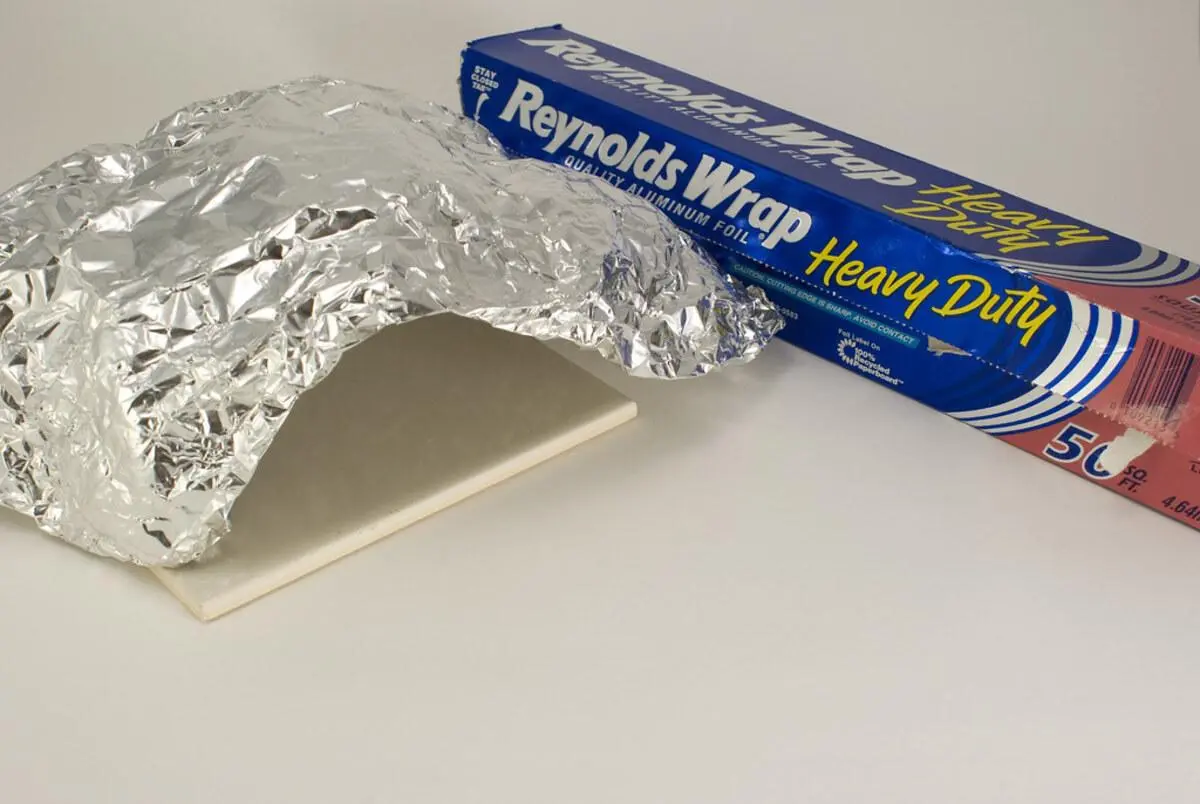
The shiny and matte sides of aluminum foil work equally well when cooking. According to Martha Stewart, which side of the foil you place against the food has no effect on the outcome in home cooking.
The debate among cooks has been going on for a long time. Some are convinced that the shiny side should face the food so that it directs heat inward. Others recommend leaving it facing out for better insulation, like a thermal blanket. Both theories are based on the assumption that the shiny surface reflects heat significantly better.
The publication’s editorial team rejects this assumption. “In short: no. It doesn’t matter. The difference between them is purely cosmetic, and in everyday cooking, both sides serve the same purpose,” the authors of the article emphasize.
According to the publication, both sides effectively reflect infrared radiation, and the difference between them under real-world conditions is negligible. Moreover, aluminum foil does more than just reflect heat: it restricts air circulation, traps steam and moisture, and distributes heat evenly. Therefore, you can line a baking sheet, cover a casserole, or wrap leftovers using either side.
Where Did the Two Different Sides Come From?
The difference arises during production. Aluminum is rolled into thin sheets using large rollers, and to prevent the metal from tearing, two layers are pressed together simultaneously. The sides that come into contact with the rollers turn out shiny, while those pressed against each other become matte.
This technology is also confirmed by an encyclopedia: foil with a shiny surface on one side and a matte surface on the other is produced by rolling two sheets together. In addition, it can be painted, embossed, or coated with a plastic film, according to Britannica.
When the Side Does Matter
The exception is nonstick foil, which is coated with a special layer on only one side. In this case, the manufacturer specifies which side to place against the food, and these instructions should be followed: it is the coating itself that matters, not the shine.
The reflectivity of the surface may play a more significant role only in industrial insulation or certain scientific applications. The publication also explains why foil is often placed with the matte side up in cooking videos: this reduces glare under bright lighting, meaning it’s purely a visual choice.