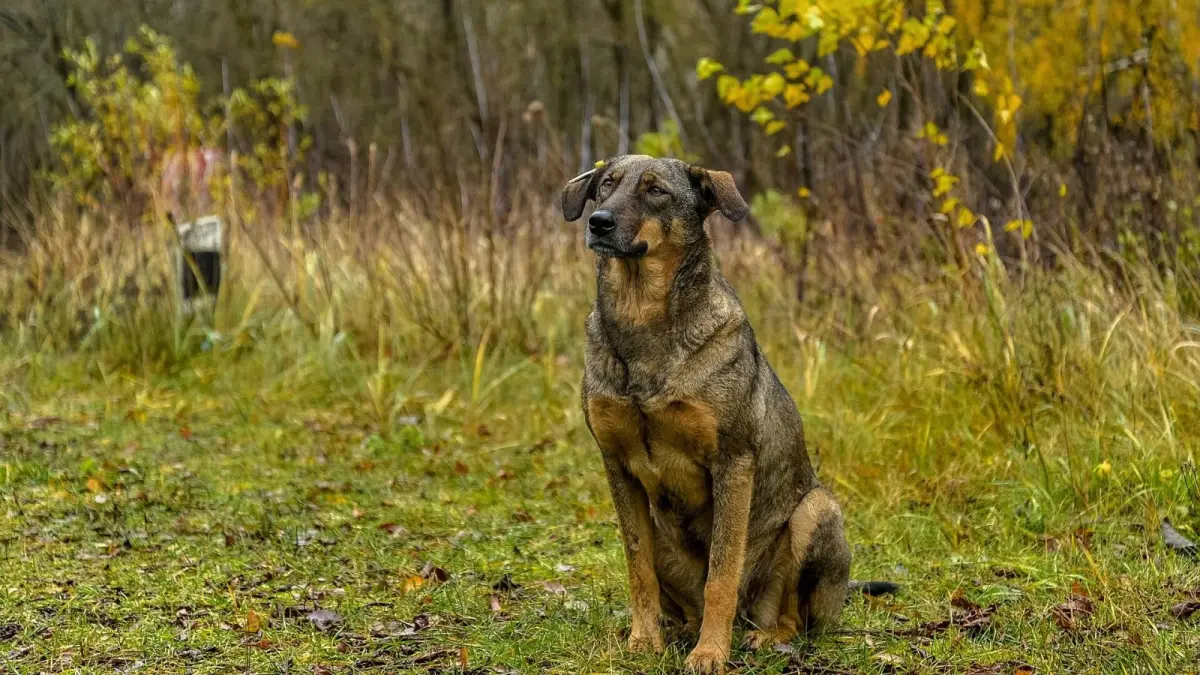
Genetic differences between dogs living near the Chernobyl Nuclear Power Plant and their relatives in the city of Chernobyl most likely arose as a result of natural selection, rather than radiation-induced mutations or random changes in the gene pool. At the same time, scientists cannot yet confirm that radiation was the specific cause of this selection, according to Descopera.
Researchers from North Carolina State University (U.S.) sought to explain why the two neighboring populations differ so greatly genetically. Megan Dillon, a research associate at the university, notes that the new study answers questions that remained after the team’s previous research. At that time, the scientists found that the two dog populations, despite living very close to one another, exhibited significant genetic differences not caused by mutations.
The researchers analyzed the genomes of 63 animals: 33 dogs from the area near the plant and 30 from the city of Chernobyl. For comparison, they used the genomes of dogs from the Galápagos Islands, another isolated population. Genetic analysis revealed a decline in the dog population near the Chernobyl Nuclear Power Plant approximately 35–40 generations ago, which coincides with the accident and the culling of animals by cleanup workers.
However, there was more evidence supporting directed natural selection than random genetic drift. The effective population sizes of the two populations do not differ significantly, meaning that the dogs near the plant did not experience a particularly severe “bottleneck.” Furthermore, Chernobyl’s urban dogs are genetically closer to Galápagos dogs than to the animals at the plant, so isolation alone does not explain the differences.
Cancer and DNA Repair Genes
More than 100 regions showing signs of natural selection were identified in the dogs’ genomes. These are associated with cancer development, DNA replication and repair, the cell cycle, and the immune system. Such changes may indicate adaptation to an environment with elevated radiation levels, but scientists cannot prove this. Another theory is that no new traits emerged over 35 generations, and that the animals that survived the initial radiation exposure already possessed favorable genetic diversity from the outset.
In an article published in the journal *Genes*, the authors emphasize that the exclusion zone is contaminated not only with radioactive isotopes but also with heavy metals, organic compounds, pesticides, and asbestos. The dog populations live about 16 km apart, yet they differ more significantly than groups of free-roaming dogs separated by much greater distances in Eastern Europe, the study states.
The differences between the populations were first described during an analysis of blood samples from 302 dogs in the exclusion zone. At that time, scientists found minimal gene flow between the two groups, partly due to the physical barriers surrounding the station.
“I was quite surprised by the almost complete divergence between the two populations—the fact that they have existed in relative isolation for quite some time,” noted Timothy Musso, a biologist at the University of South Carolina, as reported by nauka.gov.ua.