
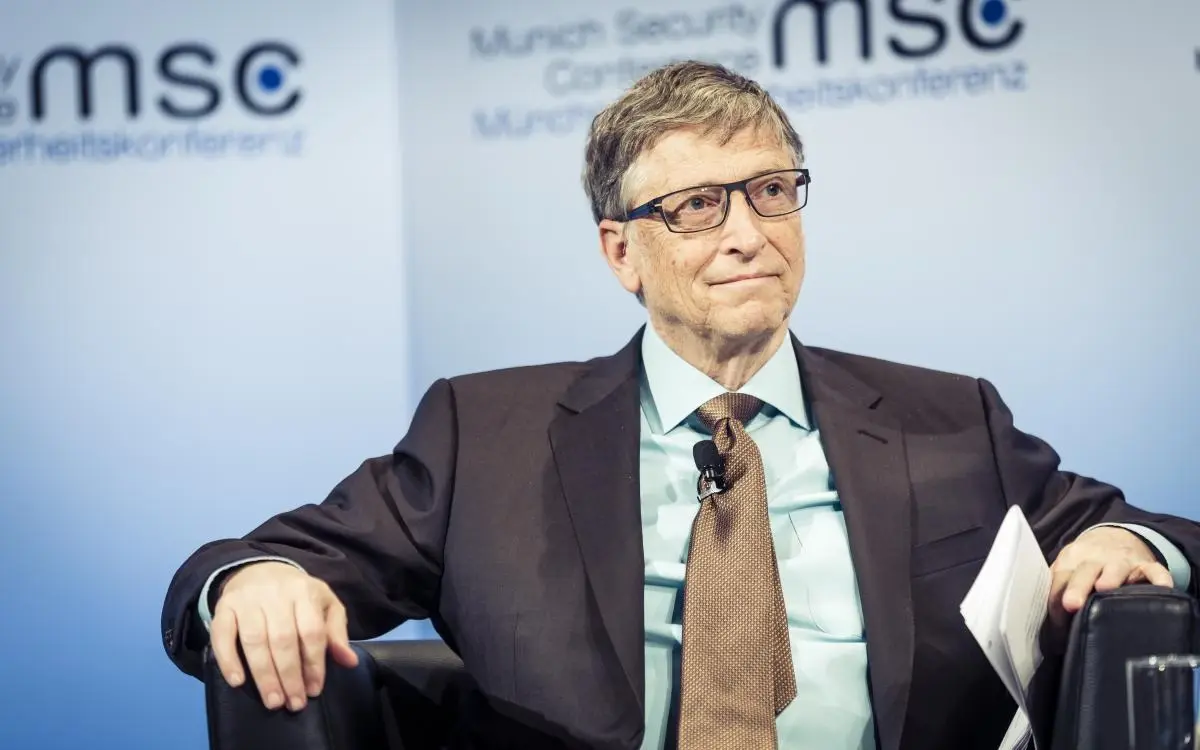
Microsoft founder Bill Gates believes that artificial intelligence will not be able to completely take over work in four professional fields: programming, biology, energy, and professional sports, according to WP Finanse.
He is specifically referring to the complete replacement of humans. Gates does not claim that technology will not change these industries at all, but he believes they will still need specialists.
Why We Should Be Cautious About Predictions
Economists have long been studying which professions will withstand automation. David Autor, a professor of economics at the Massachusetts Institute of Technology (MIT) and co-director of the new Stone Center for Inequality and the Future of Work at MIT, urges caution in assessing how the labor market will change, according to MIT Spectrum.
“We should be modest when predicting the future. It’s very easy to see what can be automated and replaced, but we’re not as good at saying, ‘Here are the new things we’ll create,’” Othor emphasizes.
According to him, for decades, computers have performed best at tasks that are easy to formalize. That’s why jobs involving repetitive tasks were the first to be at risk. Generative AI works differently.
“It isn’t particularly strong when it comes to rules and procedures. It’s much better at assimilating tacit knowledge, recognizing patterns, and drawing conclusions from unstructured information—that is, things that historically only humans could do, not machines,” the economist notes.
It both devalues and enhances
Together with MIT researcher Neil Thompson, Otor analyzed four decades of U.S. labor market data. The researchers concluded that AI simultaneously devalues expertise and makes it more valuable.
An example of the first scenario is taxi drivers. They used to need to know maps and routes inside and out, but navigation apps removed that barrier: the profession became more accessible, yet wage growth slowed. In contrast, in finance and the laboratory sciences, AI has taken over support tasks, while the expertise of specialists has only become more valuable.
“Salaries tend to rise, but employment does not,” warns Otor.
The economist proposes developing AI as a tool for collaboration that expands human capabilities rather than replacing them. In his view, the trajectory of technological development is largely determined by human intentions.
“Many people are far more fatalistic than they realize. But it’s not AI that determines our future—it’s us,” Otor is convinced.