
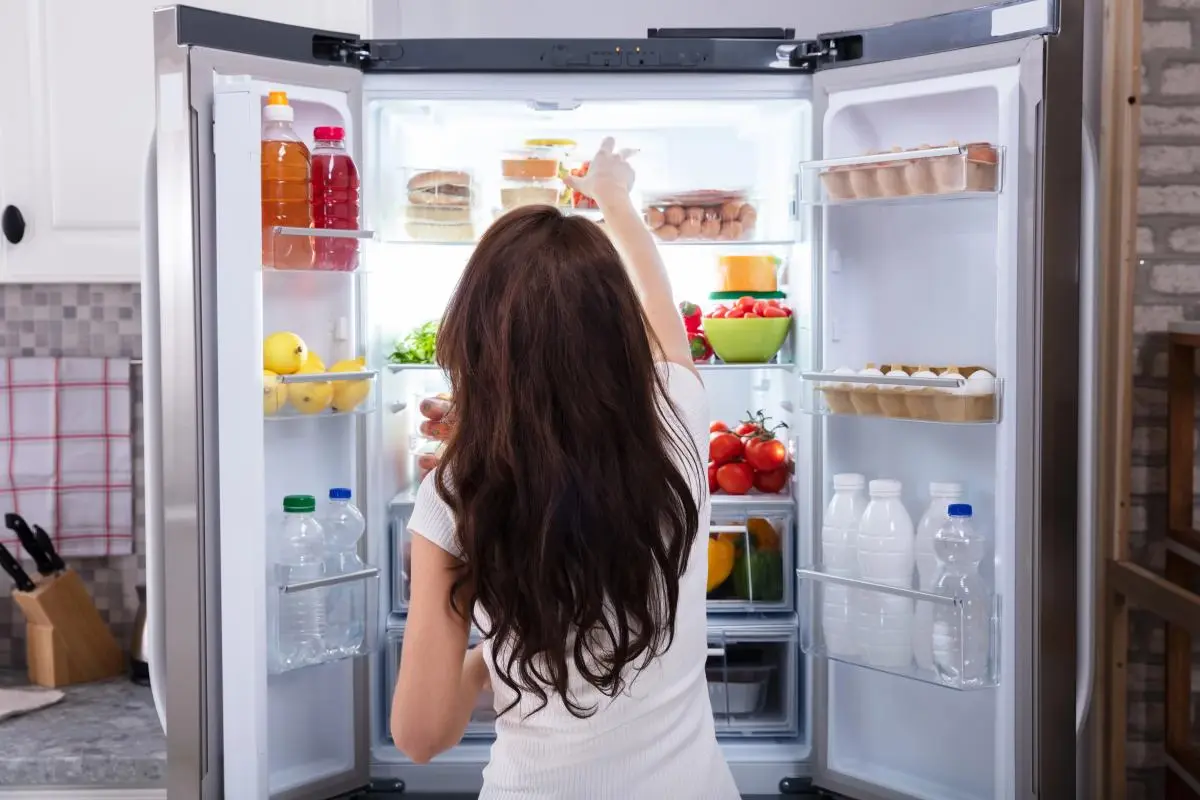
You shouldn’t change your refrigerator settings when winter sets in: the temperature inside should be kept constant, regardless of the weather outside or whether the heat is on. The optimal temperature range for storing food is 3–4 °C, and for the freezer, it’s −18 °C, according to EVZ, citing the BBC.
Many people reduce the cooling power in winter to save electricity, or believe that the cold outside will help preserve food. However, a refrigerator operates in a closed space where the temperature is quite different from that outside. If the appliance is placed near a radiator or oven, it has to work harder.
It is recommended to check the actual temperature with a special refrigerator thermometer. The built-in display does not always show the correct temperature, especially in models with numbered temperature settings.
Half of all refrigerators run too warm
A Slovenian study, conducted primarily in the winter from November 2019 to January 2020 in 50 households, revealed just how widespread this problem is. In only 20% of refrigerators was the average daily temperature below 4 °C; in 30%, it ranged from 4 to 6 °C; and in half, it exceeded 6 °C. The researchers did not find any reference thermometers in any of the homes, and only 16% of the refrigerators had temperature displays. The age, type, and load of the refrigerator did not significantly affect the results; therefore, the authors consider thermostat settings to be the key factor, according to an article published on PMC.
The researchers note that, according to recommendations from the World Health Organization (WHO) and the Food and Agriculture Organization of the United Nations (FAO), the temperature in a refrigerator should not exceed 6 °C, and it is preferable to keep it between 2–4 °C. Overloading the refrigerator is also dangerous: in overcrowded refrigerators, the risk of cross-contamination of food increases.
Experts at the Good Housekeeping Lab also recommend keeping the temperature constant year-round, within the range of 35–38 °F (approximately 1.7–3.3 °C). For models with a mechanical dial, the middle setting is usually optimal—for example, 5 on a scale of 1 to 10—but Good Housekeeping emphasizes that you should verify the result with a thermometer.
What Else to Check
Raw meat and fish should be stored in sealed containers on the bottom shelf, dairy products on the middle shelves, and fruits and vegetables in special drawers. The door is the area with the greatest temperature fluctuations, so it’s best to store sauces and beverages there, rather than perishable foods.
Don’t pack the refrigerator to capacity, put hot food inside, or leave the door open for long periods. You should also make sure the door gasket is clean and fits snugly, and that the appliance is placed at the manufacturer’s recommended distance from the wall and heat sources.