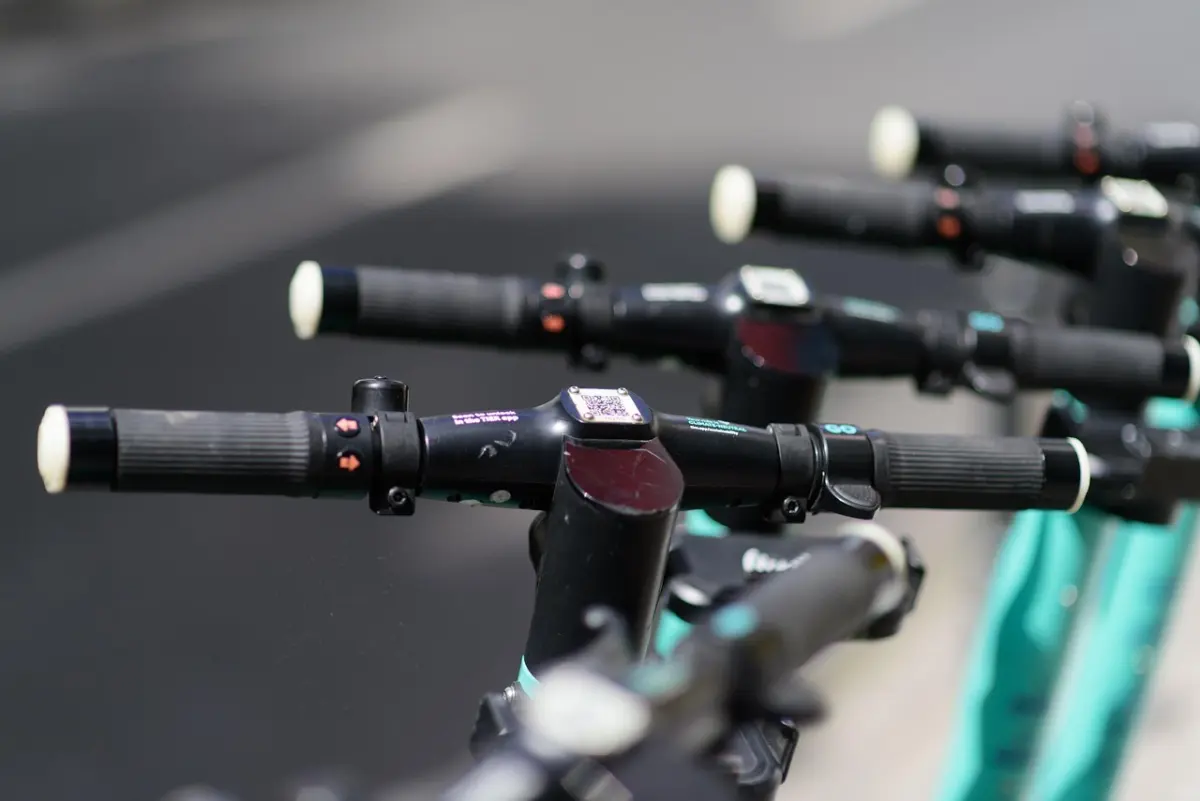
Firefighters in Hungary are urging people never to leave electric bicycles, electric scooters, and other devices with lithium-ion batteries charging unattended, especially at night. The emergency services reiterated this warning after an electric bicycle caught fire in the town of Sentesh in July. If something happens at night, people won’t notice the danger in time, according to Kertészkedj.
This problem has long been a concern in London as well. In 2025, the capital’s fire department responded to 206 fires involving electric bicycles and scooters. This is a record number in the history of such incidents, and two people died. For the most part, these fires occur specifically while the devices are charging.
The danger of charging at night lies not in the time of day itself, but in the fact that the owner is asleep. A fire from a lithium-ion battery spreads quickly and is accompanied by thick, toxic smoke. A scooter charging in the entryway blocks the evacuation route. Hungarian rescue workers advise letting the battery cool down after a ride, using only the original CE-marked charger, and placing the device on a solid, non-flammable surface. It’s best to charge large devices outside the home, and a smoke detector should be installed in any room where charging occurs regularly. Damaged batteries must not be disposed of in household trash or battery recycling bins.
A Minute to Save a Life
On October 11, a three-year-old girl and her 22-year-old mother died in Philadelphia. A fire in a home in the Kensington neighborhood started from an electric bike battery that was in a second-floor bedroom. There were no working smoke detectors in the home. The city’s fire department responds to an average of nearly one incident involving lithium-ion batteries each week, according to Billy Penn.
Researchers at the Fire Safety Research Institute (FSRI) recreated household e-bike fires in the laboratory. In these experiments, the flames spread to furniture and building materials so rapidly that people had almost no chance of escape.
“During our experiments, we saw that people might have as little as a minute to escape their homes,” emphasizes FSRI research director Adam Baroui. He advises against charging devices overnight or unattended and recommends avoiding cheap, non-genuine batteries.
Philadelphia Fire Commissioner Dan McCarthy takes an even stricter stance on charging devices at home.
“Right now, to be honest, I’m uncomfortable recommending charging them at home at all, even though I own three e-scooters myself,” admits McCarthy.
In New York, a law has been in effect since 2023 requiring that electric bicycles, scooters, and their batteries sold in the city have safety certifications. According to the New York City Fire Department (FDNY), the number of deaths in such fires dropped from 18 in 2023 to one in 2025. According to Baroui, mandatory certification has helped reduce risks, although this result cannot be attributed to a single measure alone.
Third-party chargers also pose a risk. In September 2025, an electric scooter battery exploded in a home in Ludlow, Massachusetts, while being charged with a non-genuine charger purchased online. The residents managed to escape, but the home sustained significant damage, according to the Massachusetts Department of Fire Services.
“Always use equipment recommended by the manufacturer when charging lithium-ion batteries. Non-genuine accessories may be incompatible with the battery and are linked to an increasing number of fires,” warns State Fire Marshal John Downey.