
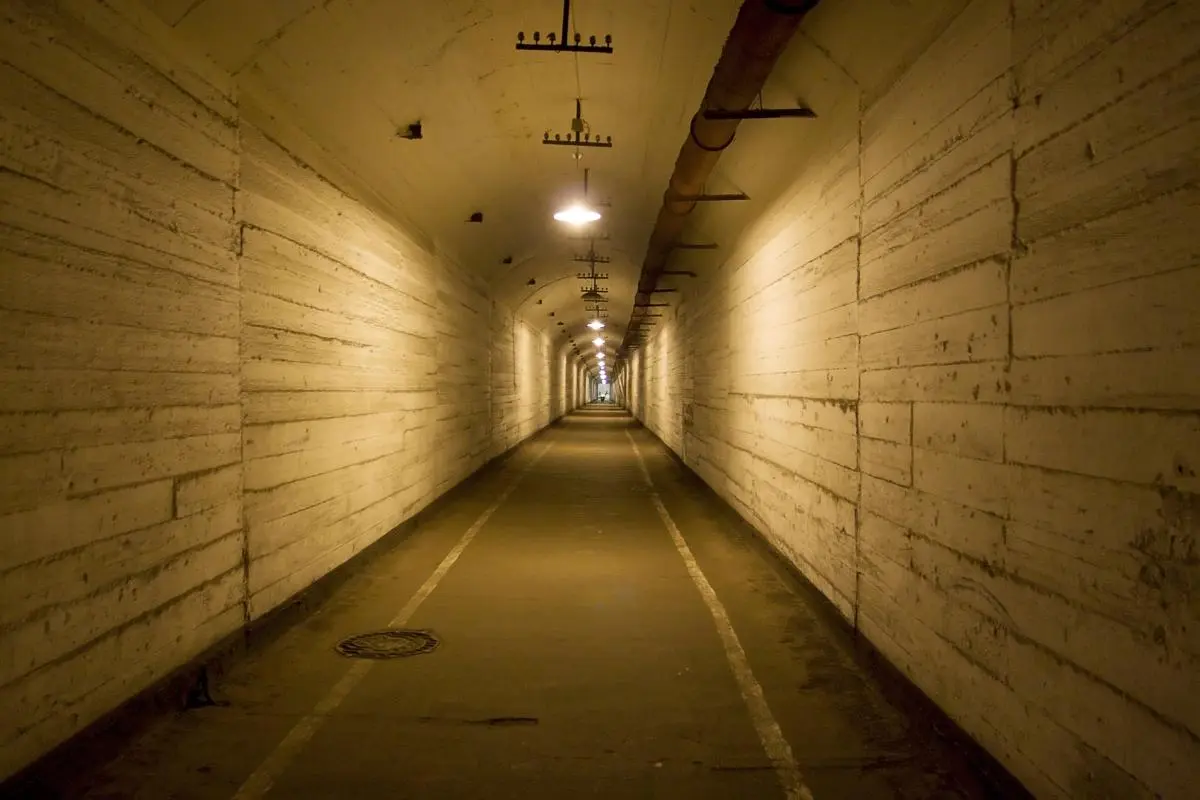
Starting Friday, November 13, visitors can explore a World War II command bunker that was kept secret for decades. The structure is hidden four meters underground in the White Cliffs of Dover. The Fan Bay plotting room was built on the orders of Winston Churchill, and it was here that the first ground-based artillery guidance system with a computing machine was installed, according to The Guardian.
The concrete bunker served as the “brain” of the artillery battery that defended Dover and fired on German ships in the English Channel. In 1957, it was secretly decommissioned; it remained classified until 1981 and was not rediscovered until 2017. John Barker, who led the excavation for the National Trust, was the first to enter.
“For an archaeologist studying conflict, it was a Tutankhamun moment. We’d done all this research on the people who served there, and suddenly you’re standing in their office. It was a thrilling moment,” Barker recalls.
The Prime Minister’s Order and 164 Days of Construction
Shortly after his “We shall fight on the beaches” speech, Churchill arrived on the Kent coast. He was alarmed that enemy ships were passing unhindered through the English Channel. Dover itself was regularly coming under fire from German artillery in occupied France at the time.
“We must fight for control of the straits with artillery, destroy enemy batteries, and fortify our own,” Churchill wrote in a memorandum in July 1940.
The Prime Minister demanded that the most advanced technology be used and that progress reports be submitted weekly. The guns, which locals nicknamed “Churchill’s darlings,” were ready in 100 days, and the bunker was completed in just 64 more days. The hastily drilled holes for cables in the walls and floor still serve as a reminder of the rush.
The Fan Bay battery became fully operational on February 28, 1941, and in June of that year, Churchill personally inspected it, according to HistoryExtra.
Not a Map, but a Computer
The bunker’s main piece of equipment was a 1.8-meter-tall electromechanical fire-control console. It calculated the positions of moving ships at the moment the shells struck and transmitted commands to the gun crews. In 1957, the machine was deliberately destroyed to prevent it from falling into enemy hands.
Data from here was transmitted to three 6-inch guns located approximately 300 meters from the bunker. Each of them had a range of 14 miles—more than half the width of the English Channel, notes Current Archaeology.
“We tend to imagine planning tables as glamorous Wrens [members of the Women’s Royal Naval Service] moving markers around on a map, like in war movies. But this isn’t a map—it’s actually a state-of-the-art electromechanical computer, and it’s absolutely unique,” Barker emphasizes.
Up to 10 people worked in the bunker at any given time, though only a few are known by name. Among them was actor Wallace Eaton, who later starred in the comedy series *Up Pompeii*. Barker is calling on the families of those who served at Fan Bay to come forward.
“What we know about it is based on a manual and faint marks on the floor. I would very much like to hear from anyone who knows that their relatives served at Fan Bay, because the records are scant,” says the archaeologist.
The bunker can only be accessed through a National Trust-led tour, descending through a manhole in a field. The interior has not been reconstructed but preserved in the condition in which it was found. Inside, old newspapers, shoes, official notices, and chalk inscriptions on the walls of the service tunnels have been preserved.