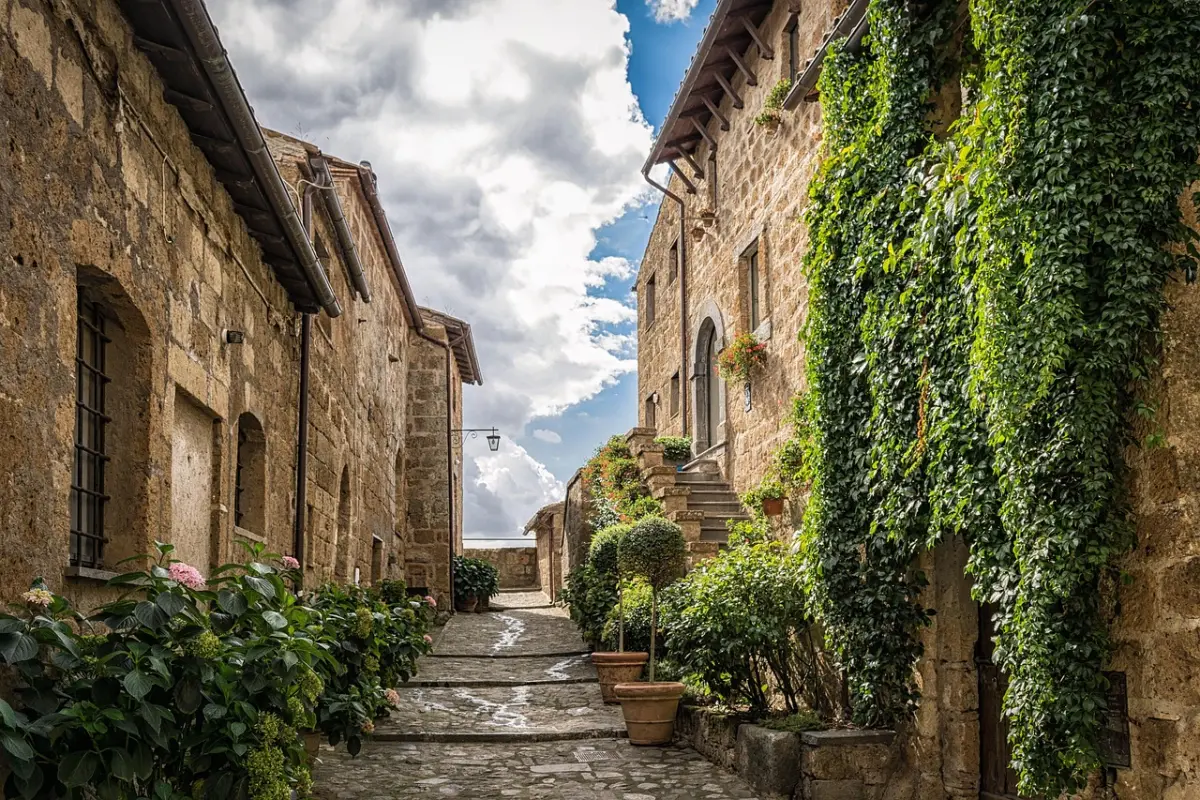
In 2026, new towns will join Italy’s “1-euro homes” program, but buyers will have to meet strict conditions and cover significant costs. Currently, more than 60 towns are participating in the initiative, ranging from Sicily, Sardinia, Abruzzo, and Basilicata to Tuscany and Piedmont, according to Kertvár.
In this way, local authorities are trying to attract new residents to historic town centers that have been depopulated due to migration. In Sicily, the list includes, in particular, Ganci, which was the first to join the program, as well as Mussomeli, Troina, Salemi, Caltagirone, and Naro, where the program launched this year. In Sambuca di Sicilia, the starting price at auction has already risen to 3 euros, while in Termini Imerese, sales have been suspended due to a lack of available properties.
The terms are largely the same: a renovation plan must be submitted within one year, and the work must be completed within three years. The buyer pays a deposit of between 1,000 and 5,000 euros, which is refunded upon completion of the renovation, and also covers notary fees and registration costs. The Superbonus tax credit, which many buyers had previously counted on, is no longer available.
Naru: Everything Needs Renovation
The medieval town of Naru in the province of Agrigento has become the latest participant in the program. Applications from Italians and foreigners are accepted through a multilingual online platform. All listings reviewed by journalists are marked as “in need of renovation.” In addition to notary, registration, and cadastral fees, the buyer pays for design work, bringing the house up to safety standards, and complying with landscaping regulations, according to Euronews.
Where the Idea Worked and Where It Didn’t
The idea was proposed by art historian Vittorio Sgarbi, who, in 2008, while serving as mayor of Salema, decided to sell abandoned houses for a symbolic price. Dozens of municipalities followed his example, but the best results were achieved in Sicily, writes Il Sole 24 Ore.
The current mayor of Salemi, Vito Scalisi, says that of the 30 properties put up for sale, 12 were sold for 1 euro on the condition that they be renovated within three years. Success, he says, came after the procedure was simplified.
“That first tender was too complicated for foreigners: we simplified it, and there was a boom,” Scalisi notes.
The most striking example is Sambuca, where 230 homes have been sold since 2019. Mayor Giuseppe Cacoppo notes that the buyers are predominantly freelancers and young people who work remotely.
“Many foreigners have fallen in love with this corner of Sicily, and along with that, interest in local food and wine has grown,” says Cacoppio.
However, the program hasn’t taken root everywhere. In Borgomessa, Piedmont, it was discontinued long ago without yielding any results, and in Corleone, Sicily, the initiative still exists only on paper. In contrast, in Zungoli, Campania, eight or nine houses have already been renovated, and the number of children in the local preschool has risen from four to 19.