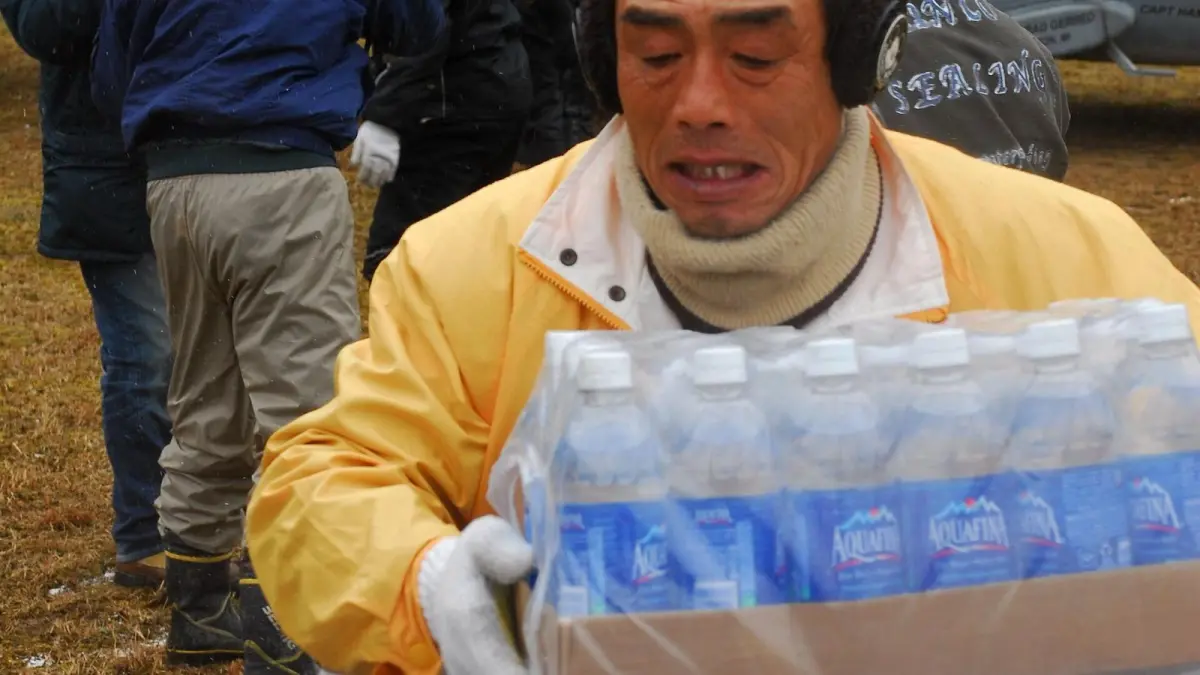
The Japanese government has urged citizens to stockpile supplies sufficient for at least three days—and preferably a week—in case of earthquakes, tsunamis, or volcanic eruptions. Tokyo has joined a wave of similar calls initiated a few days earlier by the United Kingdom, according to Polsat News.
Japanese authorities have established a separate agency for disaster prevention. Citizens are advised to keep water and food at home in case a natural disaster cuts off roads to their homes and rescue workers are unable to reach those affected quickly.
From London to Amsterdam
The British “Be Prepared” campaign urges people to have a 72-hour supply of essentials. According to The Guardian, the government is concerned about the consequences of the climate crisis, dependence on technology, and threats from hostile nations. The list of essentials includes water, non-perishable food, flashlights, batteries, blankets, fully charged portable chargers, radios, first-aid kits, and baby formula.
Following London’s lead, citizens in France, Denmark, and Sweden have been urged to stock up on supplies for three to seven days. The Netherlands has even specified the amount of cash to keep on hand in case of an emergency: 70 euros per adult and 30 euros per child.
The British campaign is designed to last three years, and the current recommendations are just the first phase. Among the free measures is registration with the Priority Services Register, which helps gas, water, and electricity providers identify customers who need additional support. More than 500 organizations, ranging from charities to businesses, have already agreed to help spread the word, according to the UK government.
Security Minister Dan Jarvis explains why the government needs households to be prepared.
“By taking simple steps to be prepared for everyday emergencies, such as severe storms, people can reduce the strain on emergency services, helping them prioritize those who need more support during an emergency,” Jarvis emphasized.
“Light-years” behind neighbors
According to Defense Minister Wes Stritting, the advice is not based on any specific intelligence but is aimed at generally strengthening the country’s resilience. In addition to water and food, the government advises keeping wet wipes, cash, and an extra supply of medication on hand, the BBC reports.
Disaster planning expert Professor Lucy Easthope, who has been urging the government to launch such a campaign for about 16 years, believes that the UK lags “light-years” behind its neighbors. By comparison, Germany recommends having a 10-day supply.
“This is one area where I can quite confidently say that we are playing catch-up on a massive scale,” Easthope noted.
The 72-hour benchmark is also included in the EU Preparedness Strategy, which the European Commission presented in March 2025. The document calls on citizens to maintain a minimum three-day supply of essentials and also provides for the introduction of an EU Preparedness Day, according to the European Commission.