
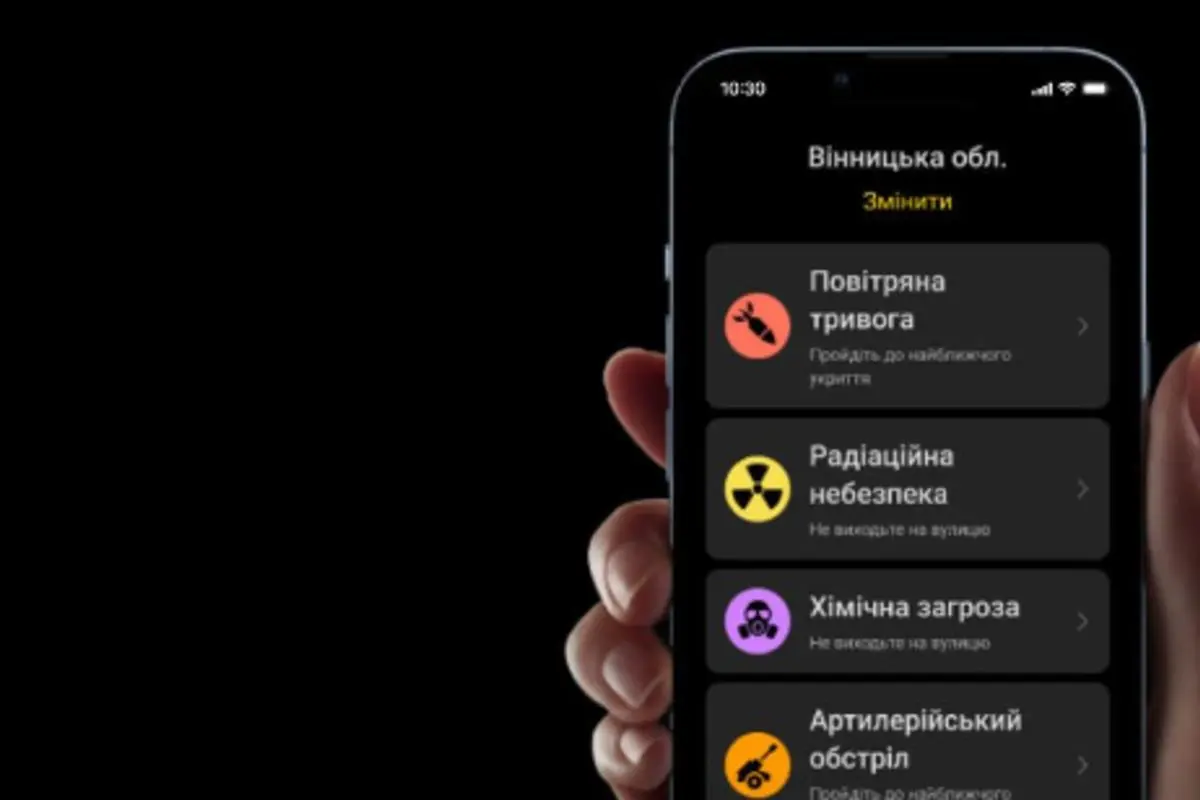
On the night of November 2, millions of Ukrainians and Russians received false alerts on their phones warning of an imminent nuclear strike. According to the authorities, hackers compromised the air raid alert apps in both countries. In Ukraine, the alerts were sent via the “Air Raid Alert” app, which, according to The Daily Telegraph, has 46 million downloads and 7 million daily users, Breitbart reports.
The first message warned of a radiation threat in Kyiv and urged people not to go outside. The next message, written in Russian, claimed that a nuclear alert had been declared throughout Ukraine due to a strike by an “Oreshnik” missile. This was followed by messages about a chemical threat in the capital and alleged street fighting.
The Air Force quickly debunked the hoax and urged citizens to remain calm. The SPRAVDI Center for Strategic Communications accused Russia of the hack. According to the capital’s authorities, a separate app for Kyiv was operating normally.
“The air raid alert app appears to have been compromised. There is no radiation threat! Please remain calm and follow updates on our channel,” the Air Force emphasized.
The alerts began around 10:45 p.m. Kyiv time. One of the messages referenced the Hitcorecorp Telegram channel, and the pro-Russian channel Mash claims that this group has claimed responsibility. The app’s developers temporarily suspended its operation, called the incident a cyberattack, and strengthened security measures. In the Lviv region, some sirens and loudspeakers broadcast a “radiation hazard” alert. On Monday, Ukraine’s State Emergency Service (SES) reported that the national alert system was functioning normally.
There was no panic among Ukrainians: people online widely joked about the obvious hoax, particularly the fact that the warning was issued in Russian. “No one was particularly surprised. They might as well have thrown in a dinosaur attack,” wrote one user, X.
A fake alert in Moscow as well
Subsequently, Russia’s Ministry of Emergency Situations reported a “large-scale cyberattack” on its app, which caused false information about the launch of nuclear warheads across Russia to be sent to the public. The ministry did not name those responsible, emphasized that the app is only a supplementary service, and reported that it had resumed functioning. It is not yet known whether these two incidents are related.
According to The Times, residents of Moscow and other Russian cities were advised to urgently stock up on three weeks’ worth of food and take shelter, and some of the messages contained profanity. The fake alerts in Ukraine came during a real, large-scale attack: Russia launched 193 drones, 154 of which were shot down or neutralized.
The cyberattacks occurred a few hours after the end of a six-day humanitarian ceasefire in the Kherson region. It was brokered with the involvement of Melania Trump and Pope Leo XIV. During the ceasefire, nearly 800 people were evacuated from the occupied town of Oleshky, according to her.