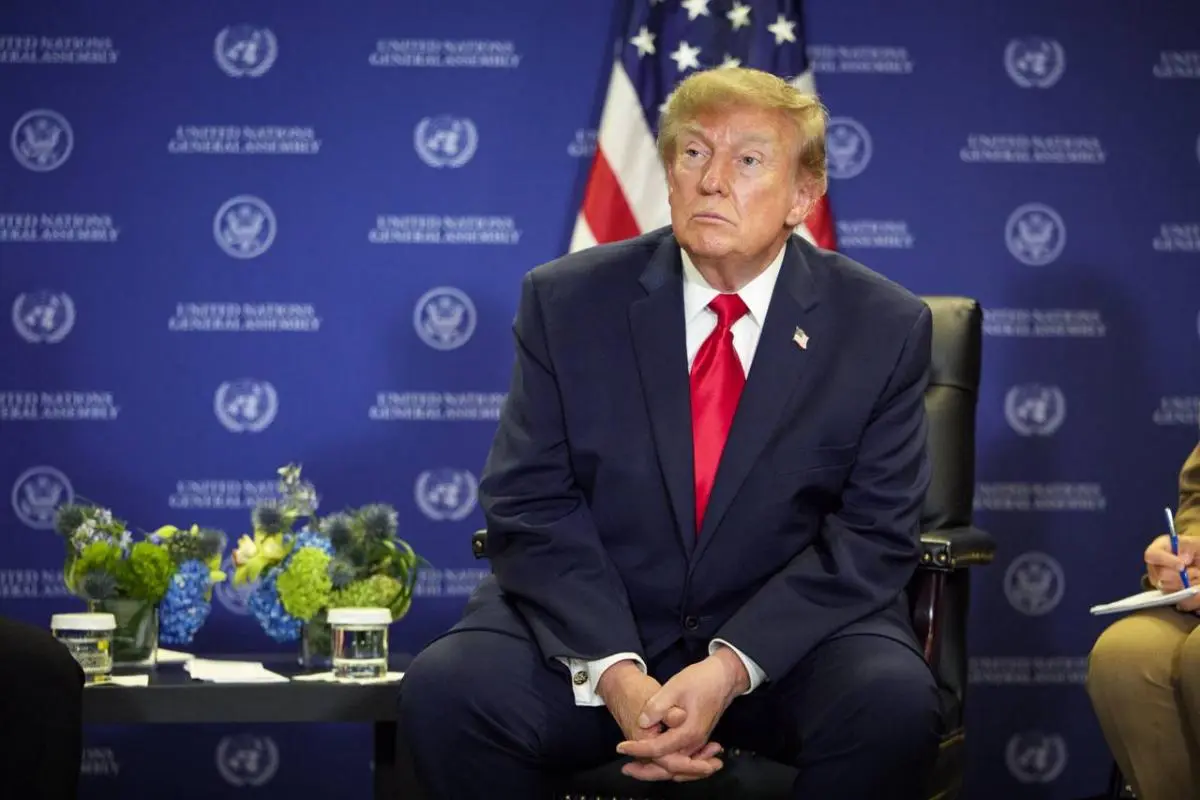
U.S. forces in the Middle East are ready to launch new military operations against Iran within 96 hours of an order from President Donald Trump. Sufficient forces have already been deployed in the region for this purpose, and the scale of the strikes could go far beyond the current “lawn mowing,” reports Shelter, citing CNN and two U.S. officials.
In Washington, “lawn mowing” refers to maintaining the status quo: precision strikes on radars, launchers, and other targets that Iran is capable of quickly restoring. The U.S. has been operating under this strategy ever since Trump suspended full-scale military operations earlier this year. Current and former officials familiar with internal planning discussions acknowledge that the next phase will require significant effort.
Some of CNN’s sources are convinced that the question is no longer whether Trump will give the order, but only when. In their assessment, the operation could begin at any moment before the end of the year, most likely after the U.S. midterm elections.
At the same time, Washington is ramping up economic pressure. The new sanctions target individuals, networks, and 17 vessels transporting Iranian oil, petroleum products, and petrochemicals. The restrictions are intended to reduce the revenue that Tehran channels toward the war, its missile program, and cyberattacks.
Elections as a Timer for Escalation
U.S. analysts are noting a number of signs of preparations: the deployment of additional troops and equipment to the Middle East, warnings to U.S. citizens in the region, and heightened readiness of the Israeli military. Suzanne Meloni, director of the foreign policy program at the Brookings Institution, links these developments to the November 3 election, since Trump has publicly promised not to launch attacks before the election and would hardly benefit politically from doing so, TVC News reports, citing AFP.
“I’m now betting on the likelihood of strikes shortly after the midterm elections,” Meloni noted.
The U.S.-Israel war against Iran, which began in late February, is unpopular among Americans primarily due to the sharp rise in fuel prices and could become a liability for the Republican Party. Since early September, the parties have not carried out strikes against major ground targets. The standoff has boiled down to strikes on commercial vessels: the U.S. is trying to enforce a blockade of Iranian ports, while Tehran seeks to control the Strait of Hormuz.
Meloni points out that the blockade is causing Iranians increasing hardship, but at the same time ties up a significant portion of the U.S. Navy.
“Essentially, the situation in its current state is not sustainable. There must be some kind of resolution—either through diplomacy or through military action,” the expert emphasizes.
Trump himself told reporters on Friday that “we could wrap this up very quickly,” but the question is whether “we want to finish it off, or… just let it fizzle out.” That same day, Tom Berrak, the U.S. ambassador to Turkey and special envoy for Syria and Iraq, suggested that a strike “definitely” could take place over the weekend, even before Tuesday’s elections in Israel.
Why a military solution won’t work
Jason Campbell, a senior fellow at the Middle East Institute, sees signs that the U.S. is either preparing for new strikes or anticipating attacks from Iran or its Houthi allies in Yemen. Among these are the planned deployment of the aircraft carrier USS Theodore Roosevelt, which will, at least temporarily, increase the number of carrier strike groups in the region to three, as well as the dispatch of another Marine expeditionary unit. The Israeli Air Force recently conducted a “show of force” simulating preemptive strikes against Iran, and U.S. Defense Secretary Pete Hagseth met with Prime Minister Benjamin Netanyahu in Israel.
At the same time, according to Campbell, “the timeline here is impossible to predict,” although for routine pressure aimed at bringing Iran back to the negotiating table, this set of measures seems overly broad. Trump has fewer options than he did at the start of the conflict: damage to U.S. bases in the region has made it difficult to conduct any ground operation.
“There is currently no safe place to deploy the thousands (in some scenarios, tens of thousands) of troops that would be needed for such an operation,” Campbell warns.
Meloni adds that most of Iran’s conventional military facilities have already been severely damaged by previous strikes. Therefore, a new campaign would most likely target civilian infrastructure and objectives that would directly affect the population, but even that is unlikely to bring the conflict to an end.
“From the very beginning… this has been a war that cannot be ended by further escalation on either side,” Meloni asserts.
“I don’t see how resuming strikes against Iran, similar to those in the first fifty days of the war, would shift the strategic balance for the Iranian regime. They have demonstrated a willingness to endure significant physical pain, and even certain changes in targets—including key mixed-use or even civilian infrastructure—will not substantially alter this,” Campbell noted.