
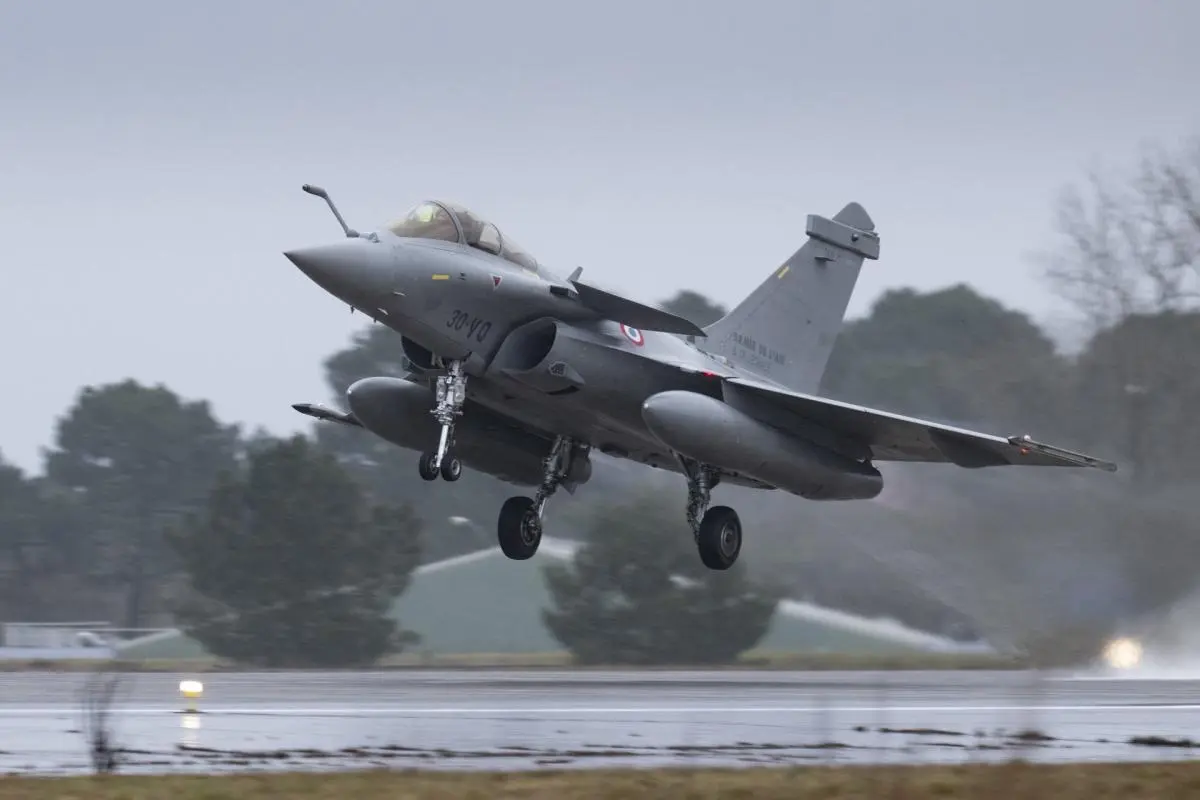
The SPECTRA airborne electronic warfare system on Rafale fighter jets successfully jammed signals from the "Irbis-E" radar stations on Russian Su-35s during simulated air combat exercises in Egypt. As a result, the Russian aircraft were unable to even carry out simulated attacks, which may have been one of the reasons Cairo decided against purchasing these aircraft, according to Defense Express, citing the Arabic-language website Defense Arabic.
This incident was recalled in light of Ethiopia’s announcement that it had received its first 12 Su-35S aircraft, likely manufactured under the unfulfilled “Egyptian” contract. Iran, meanwhile, is not expected to receive these aircraft until 2028. Another drawback for the Su-35 was the poor technical condition of the Russian aircraft compared to the Rafale.
Why the outcome should not be overestimated
Arab sources do not specify exactly when these engagements took place (it is known only that they occurred before 2021), how many aircraft participated, or at what ranges they operated. Furthermore, Egypt has its own equivalent of the Link 16 data-link system and seven E-2C Hawkeye long-range early-warning aircraft, so this represents a comprehensive technological advantage in which onboard equipment is just one component.
Cairo ordered the Su-35s in 2018 for $2 billion, despite warnings from the U.S. about possible sanctions. Subsequently, according to media reports, the Egyptian side was dissatisfied: Russian aircraft are equipped with radars featuring passive phased-array antennas rather than the more modern active ones, and during tests against electronic warfare systems, the “Irbis-E” easily outperformed the Rafale, writes Middle East Eye.
A particular challenge for the Egyptian Air Force was integrating Western and Russian aircraft into a single fleet.
“Egypt has faced significant difficulties integrating the MiG-29s and Su-35s it received from Russia into its predominantly Western networks and command-and-control systems,” notes Justin Bronk, a senior research fellow at the British Royal United Services Institute (RUSI), Justin Bronk.
What does this mean for Ukraine?
Ukraine is set to receive Rafale jets from France in 2028, and the fact that SPECTRA is an integrated system rather than an externally mounted pod is of great importance to the Armed Forces of Ukraine. At the same time, Defense Express believes that airborne electronic warfare systems alone—no matter how sophisticated they may be—will not be enough. A sufficient stockpile of long-range Meteor air-to-air missiles and, possibly, additional Western radar surveillance aircraft are needed.
SPECTRA’s capabilities have already been proven in actual combat: during the operation in Libya, the system effectively replaced France’s specialized air defense suppression squadron by detecting Libyan radars in a matter of minutes. According to Defense-Aerospace, the F4.1 standard added digital autonomous jamming units to SPECTRA.