
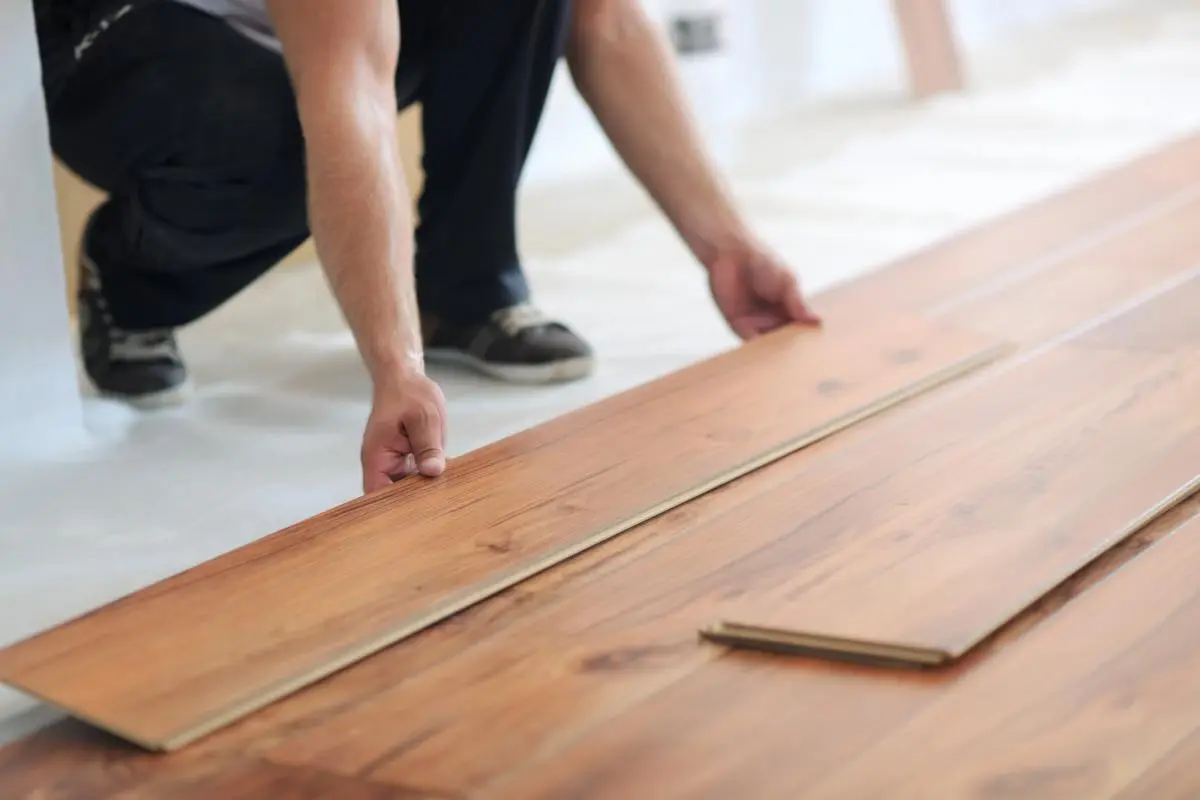
Poles are increasingly choosing vinyl flooring panels over traditional laminate. The main reasons cited by buyers are water resistance, durability, and scratch resistance, according to Deccoria.
Visually, these floor coverings may look almost identical, but their construction differs. Laminate flooring is based on compressed wood fibers, while vinyl panels have a multilayer structure made primarily of PVC. Spilled liquid can seep into the core of laminate flooring, causing the edges to swell and warp. Vinyl withstands contact with water much better, making it a more practical choice for kitchens and entryways, and some models are even suitable for bathrooms.
Vinyl flooring is also easier to clean, feels nicer underfoot, and better dampens the sound of footsteps. It can be used with underfloor heating if the model is designed for it. Depending on the collection, the planks mimic wood, stone, concrete, or marble and are installed using a click-lock system or adhesive.
Water resistance depends on the specific product, so before purchasing, it’s important to check the manufacturer’s recommendations, the use class, and the durability of the wear layer. Installation and subfloor preparation are also important: the subfloor must be dry, stable, and level. Heavy furniture, sharp objects, or chair casters can leave marks.
Fastest Growth in the European Market
The trend in Poland aligns with the pan-European trend. According to analysts’ forecasts, the vinyl flooring segment will grow by an average of 7.65% per year through 2031, while ceramic tile—which accounted for 51.38% of the market in 2025—is growing more slowly in regions where renovations are the primary focus. The entire European flooring market is estimated at $4.29 billion in 2026 and $5.12 billion in 2031. Demand for vinyl is also supported by click-lock systems, which can be installed by consumers themselves amid a shortage of professionals, notes Mordor Intelligence.
Laminate Flooring’s Weakness
Experts interviewed by the American publication point out laminate flooring’s vulnerability in damp rooms. “Laminate flooring is not waterproof and can warp if exposed to excessive moisture. If it swells or warps due to water damage, these areas are often impossible to repair and will have to be replaced,” warns Zach Clavin, an expert at the Swedish company Bona, as quoted by Architectural Digest.
“When it comes to water resistance, vinyl is the clear winner. It can be installed in bathrooms, basements, and kitchens without the risk of warping,” emphasizes Justin Olewak, president of BOLT Builders.
At the same time, designer Terry Brian advises taking the climate into account: in hot regions, vinyl panels can expand due to temperature fluctuations, so a larger expansion gap should be left near the walls, and transition strips should be installed in long hallways.