
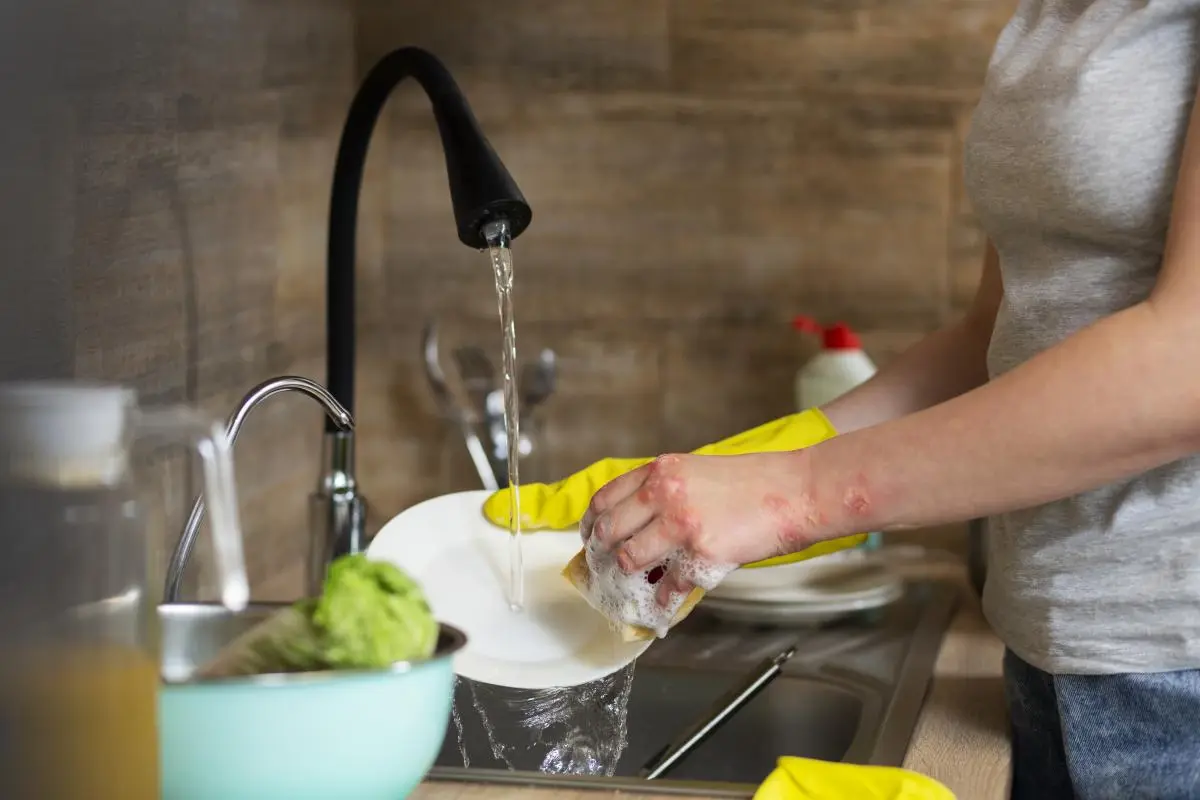
Washing dishes with hot water after cooking fish without first cleaning them only intensifies the unpleasant odor in the kitchen. To prevent the odor from lingering on plates, pans, and in the sink, fish residue should first be wiped away, and the dishes should be rinsed with cold water, according to El Español.
The characteristic fishy odor is caused by trimethylamine and other amines. If their residues remain on the dishes, hot water promotes the release of volatile substances and accelerates the formation of trimethylamine, causing the odor to spread throughout the kitchen.
Trimethylamine forms after fish are caught, when trimethylamine oxide—found in saltwater fish and shellfish—breaks down. At low temperatures, this substance is largely broken down by bacteria, and the decomposition products give off a characteristic “fishy” odor of spoilage. In 51 species of New Zealand commercial fish, the trimethylamine oxide content ranged from 8 to 789 mg per 100 g, with the highest levels found in deep-sea species, according to a study published on Taylor & Francis Online.
First, paper towels and cold water
Before turning on the faucet, collect fish scraps with paper towels and dispose of them in the organic waste bin. This reduces the amount of organic matter in the sink and drain, which also contributes to unpleasant odors.
After that, rinse the dishes with cold water, and then wash them with warm or hot water and dish soap to dissolve the grease. If the odor persists, lemon juice or vinegar will help: they chemically neutralize the amines. Damaged plastic and wooden cutting boards easily absorb odors, so they should be washed immediately and dried thoroughly.
You should also clean the drain strainer and ventilate the kitchen during and after cleaning. Do not mix chlorine bleach with vinegar or ammonia, as this produces highly toxic gases.
Germs Are Unaffected by Temperature
The effectiveness of hot water in fighting bacteria is often overestimated. This was demonstrated in an experiment on the BBC Two program “Trust Me, I’m a Doctor”: biomedical researcher Niki Milner from England Ruskin University took samples from dishes before and after washing them using various methods, according to the BBC report.
“It’s really all about mechanical friction. Studies have shown that water temperature doesn’t actually matter,” Milner noted.
As before, the dish soap plays an important role, but a kitchen towel that has been used for several days adds bacteria to clean dishes. Therefore, air-drying turned out to be the best option.
Scientists at Ohio State University, Jason Lee and Melvin Pascall, reached similar conclusions. They studied hand-washing dishes in restaurants and found that even in water colder than the FDA-recommended 110 °F (about 43 °C), the number of bacteria dropped to an acceptable level, according to Ohio State University.
“Food residue on cutlery and dishes can easily lead to bacterial growth, especially if they are damp. The best thing to do is to wash the dishes right away, before the food dries,” advises Pascall.