
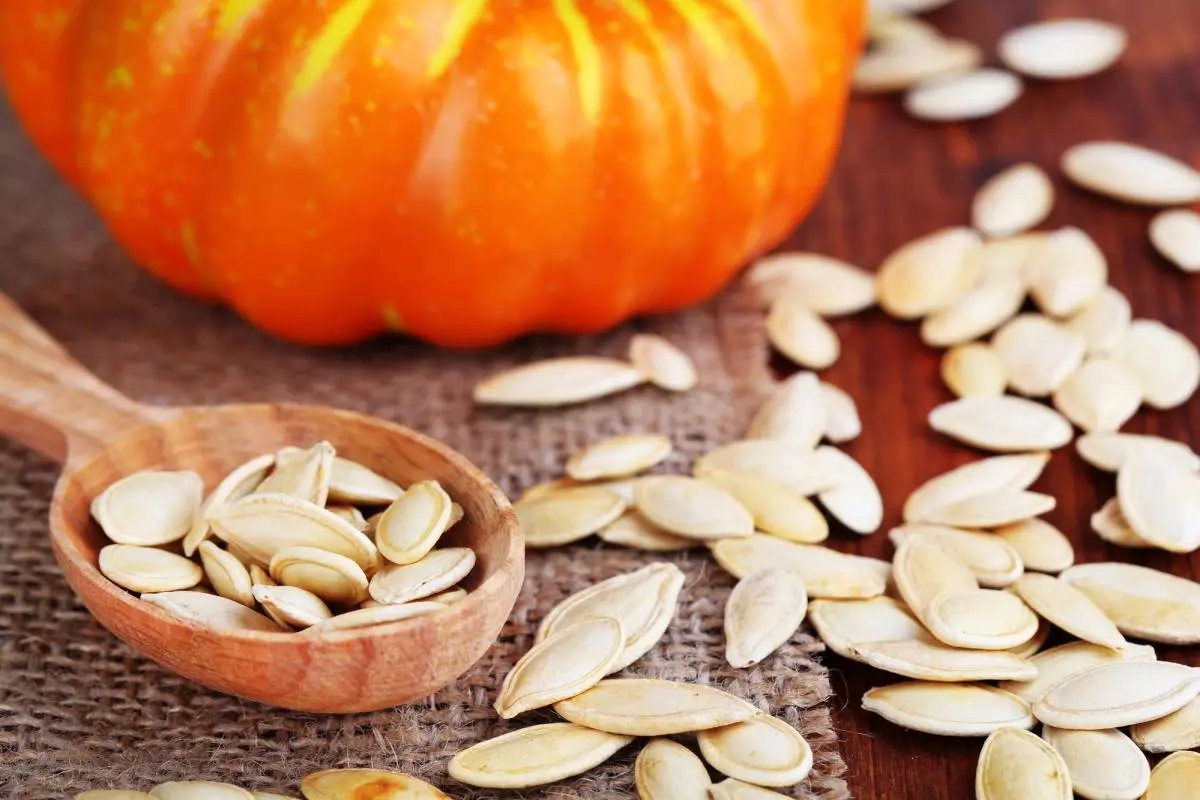
This season, buyers in the Nizhyn district are purchasing pumpkin seeds for 55 hryvnias per kilogram, whereas they previously paid 70–80 hryvnias. Some buyers are even offering 50 hryvnias. This was reported by Lyubov Gonchar, a resident of the village of Rozdolne, who sells seeds from her garden every year, according to “Visnyk Ch.”
They began accepting seeds on September 9. In Rozdolne, buyers from Nizhyn arrive every Friday at 8:30 a.m., and in the neighboring village of Selyshche—on Tuesdays, Thursdays, and Fridays.
The woman splits the pumpkins with an axe, selects the seeds, and always rinses them so they don’t clump together. She then dries them on a cart in the yard, finishes drying them on the stove, and turns them in the next day. The leftover pumpkin pulp is used as fertilizer in the garden.
“Whenever I have three free hours, I’m busy with the pumpkins. I fill a 15-liter bucket at a time. I try to finish sorting the seeds before the frost sets in,” says Lyubov Gonchar.
The family set aside 25 sotkas for pumpkins, and her husband brought another 10 cartloads from a distant garden. Two of her grandchildren have each planted two hectares with pumpkins: they cultivate them with a tractor and harvest them with a combine, and her son built a seed dryer specifically for this purpose.
How Much Does the Garden Bring In?
The pumpkin business doesn’t bring in much income, since most of the work on the plot has to be done by hand.
“Last year we calculated it came to 20,000 hryvnias. It seems like money. But you have to plow, plant, weed, and harvest,” the woman emphasizes.
The farmer doesn’t know exactly where the harvested seeds end up. “Our job is to sort them, turn them in, and collect the money. They say it goes abroad. Supposedly for medicine,” she says. The red pumpkin seeds sown by her grandchildren, she says, are bought for oil production.
Global Demand and Prices for Farmers
The company “Ukravit” confirms that global demand for pumpkin seeds for oil production has increased, which is why the number of people willing to grow this crop is also growing in Ukraine. Bogdan Shaldenko, a farmer from the Cherkasy region, estimated the price of seeds at 121,000 hryvnias per metric ton in early 2025, with a net profit of 80,000 hryvnias per hectare and planting costs of $500–600. At the same time, he warns against attempting to grow pumpkins without knowing the proper techniques, according to Kurkul.
Pumpkins are also considered a good preceding crop for wheat, which has already been planted in Rozdolne on the site where the pumpkins were harvested. “If you plow the pumpkins under in September or October and plant wheat, the yield will be 0.5–0.6 metric tons per hectare higher than on fallow land,” notes Volodymyr Zavertayluk, acting director of the Dnipropetrovsk Research Station of the Institute of Vegetable and Melon Growing at the National Academy of Agrarian Sciences of Ukraine.