
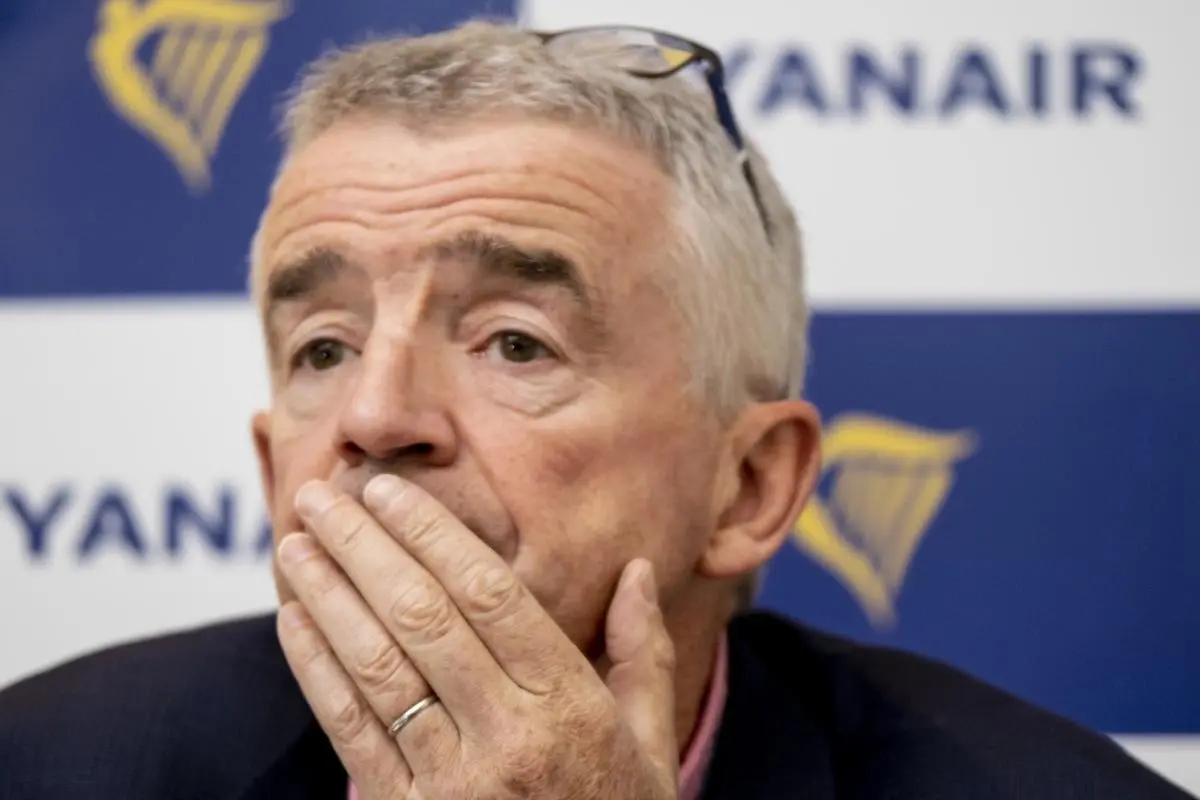
Ryanair is considering freezing salaries, reducing the number of crew members on flights, and making greater use of artificial intelligence to offset the sharp rise in fuel costs caused by the conflict in the Middle East. Such plans threaten to spark labor disputes for Europe’s largest low-cost carrier, according to The Guardian.
The company expects its jet fuel costs to rise by approximately 2 billion euros in the next fiscal year, which ends in March 2028. According to Ryanair’s forecast, European airlines will raise ticket prices by up to 20%, but even that will not fully cover the losses.
Ryanair CEO Michael O’Leary notes that starting in March, several collective bargaining agreements on wages will begin to expire and will need to be renegotiated.
“To address this issue, we are reviewing all costs across the group’s airlines, with a particular focus on negotiations with airports, agreements with staff whose terms are expiring (which may require a temporary wage freeze), lower crew-to-passenger ratios, and greater use of artificial intelligence,” O’Leary said.
The British union Unite, however, insists that its agreements with the company are already in place through 2027.
“Unite has not been informed of any such proposals, and we have a multi-year wage agreement that covers the coming year. A number of unions across Europe have the same. Our agreement was not tied to the company’s performance and did not depend on it,” emphasized Unite national representative Oliver Richardson.
In addition, Ryanair is significantly slowing down the recruitment of pilots and flight attendants. According to O’Leary, artificial intelligence has already helped increase the fleet’s capacity by 4% thanks to more efficient schedule planning.
“Cost Collapse” in 2027
In an interview with CNBC, O’Leary predicts that airfares in Europe will rise by 10%, and possibly as much as 20%, next year. Ryanair’s profit in the first half of the fiscal year fell by 15% to 2.15 billion euros, as the price of the company’s 20% unhedged fuel doubled, CNBC reports.
The airline’s CEO explains why passengers have not yet seen the impact of rising fuel costs on ticket prices.
“Customers in the market have been protected over the past 12 months… but these hedges are expiring. There is still no resolution in the Middle East. Today, jet fuel costs $170 per barrel. That’s a very significant cost spike that we’ll all face next year,” O’Leary warned.
Ryanair has hedged 80% of its fuel needs for the current year at $67 per barrel and at least 25% for 2028 at $95. Back in September, the company lowered its annual passenger traffic target from 216 million to 214 million, and this winter, for the first time in many years, it will not increase its traffic volume compared to last year.
Despite this, Ryanair’s stock rose 3.7% on Monday. eToro analyst Adam Vetesse believes that investors have already factored in the impact of rising fuel prices, and the company’s results were in line with market forecasts.