
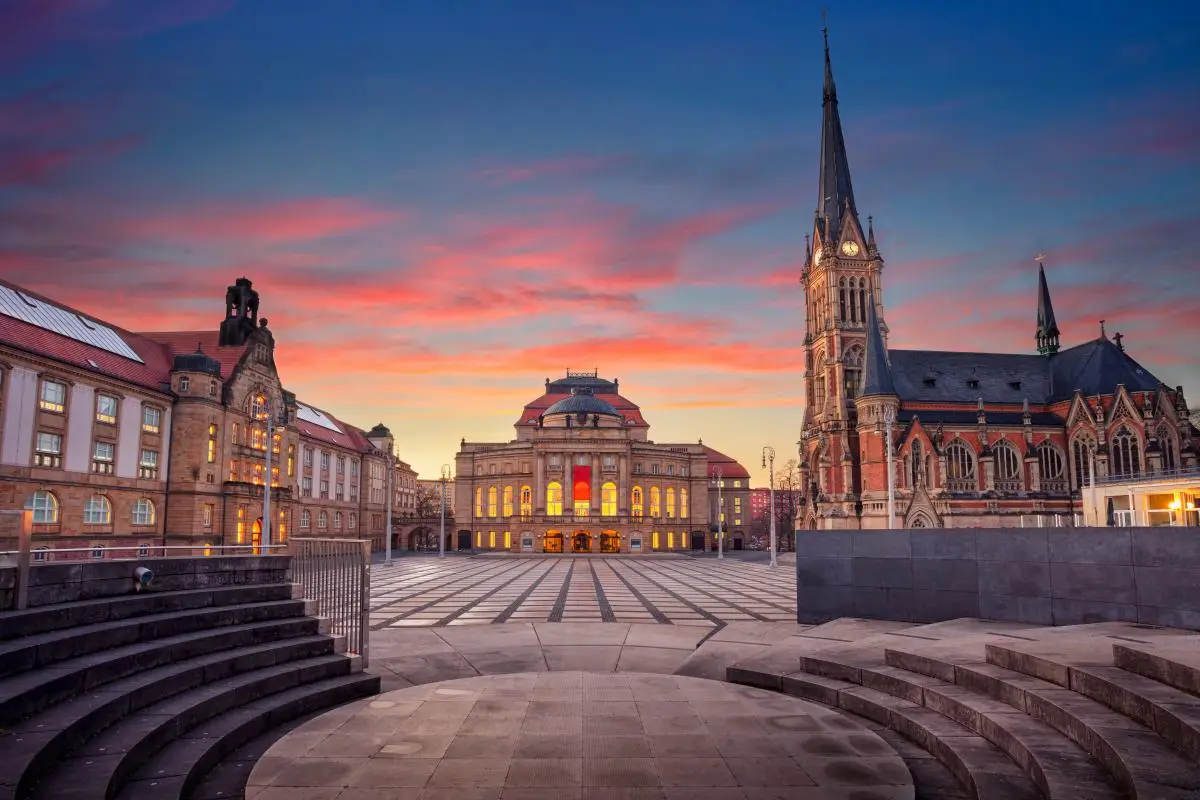
Chemnitz, in Saxony—which held the title of European Capital of Culture in 2025—set an all-time record for tourist visits: the city recorded approximately 743,000 overnight stays over the course of the year, a 24% increase from the previous year. According to Travel Off Path, the city’s popularity is largely attributed to its medieval landmarks, relatively low prices, and the absence of crowds.
The city, with a population of about 247,000, was awarded the title of European Capital of Culture for 2025 alongside Gorizia, Italy. According to the publication, half a liter of local draft beer costs about $4.48 here, a cappuccino costs $4, a night’s stay at a budget hotel costs approximately $90, and admission to most attractions is about $8.
The author of the article, Vinicius Costa, considers Chemnitz a rare exception among expensive German destinations: “probably one of the few German cities where a weekend trip won’t have you anxiously checking your banking app,” he notes.
A Record in Numbers
City officials confirm that the year as a Capital of Culture was the most successful in the history of tourism in Chemnitz: the number of visitors increased by 22%. The tally also included small lodging facilities and private accommodations based on tourist tax data, so the city welcomed a total of about 370,000 overnight guests. Mastercard analytics show a noticeable increase in tourist spending, and for every overnight guest, there were approximately four day-trippers, according to Chemnitz’s official website.
Over the course of the program year, more than 2 million people participated in events in Chemnitz, the cultural capital, and in 38 municipalities across the region. The program included about 2,000 events—twice as many as planned. The opening ceremony drew 80,000 guests, and the KOSMOS festival attracted 115,000. Chemnitz’s art collections welcomed nearly 230,000 visitors by October, compared to 60,500 during the same period in 2024, and the Industrial Museum experienced its best year ever, according to the city’s final report.
The former Karl-Marx-Stadt without the crowds
During the GDR era, Chemnitz was known as Karl-Marx-Stadt and was a major industrial center. Today, many former factories have been converted into cultural spaces, such as the Wirkbau, located on the site of a large textile machinery plant. Key attractions include are the Market Square with the Old and New Town Halls, the 12th-century Red Tower, the Schlossberg district surrounding a monastery founded in 1136, and Rabenstein Castle, which is said to be the smallest in Saxony.
The city’s symbol remains the 7.1-meter-tall monument to Karl Marx—the second-largest bust in the world. Another landmark is the Kasberg district, one of Germany’s largest concentrations of buildings from the Gründerzeit and Art Nouveau eras: since 1991, it has been designated a conservation district encompassing 480 buildings, according to MDR.