
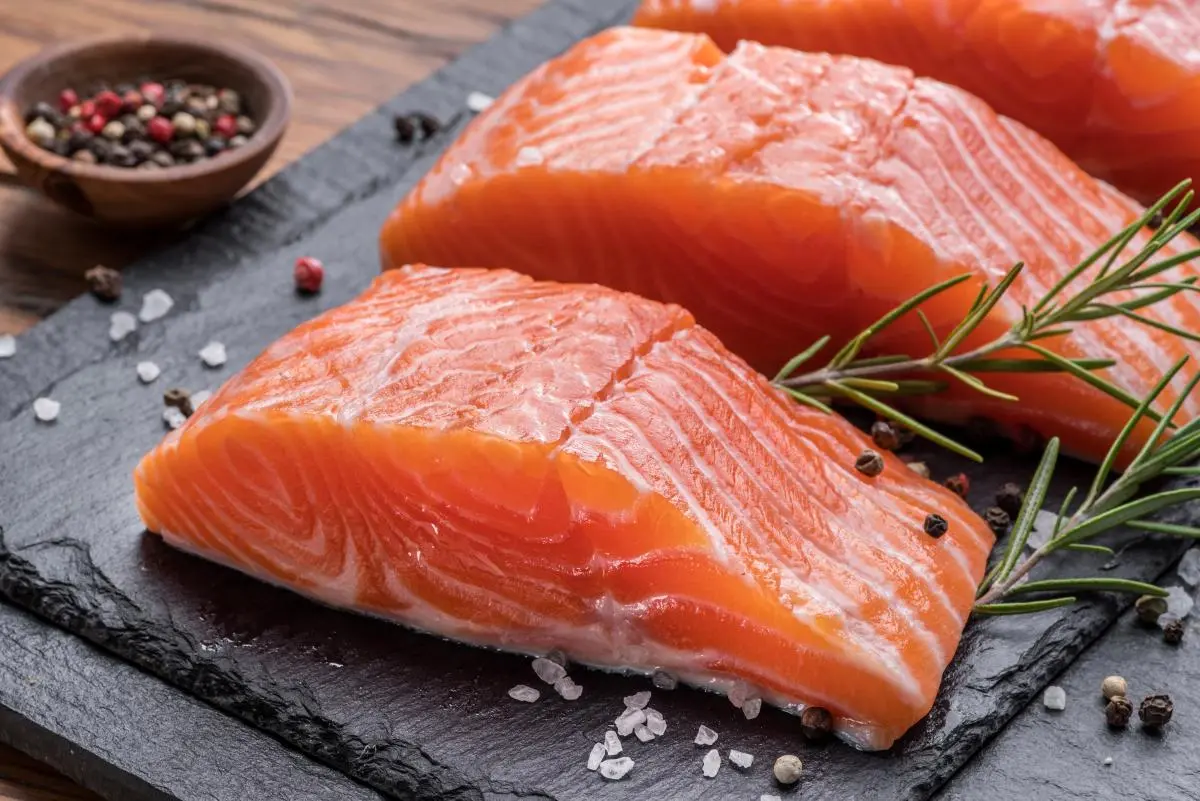
Salmon is a healthier source of protein than chicken, although in terms of protein content, the two foods are nearly equivalent. Fish comes out ahead due to its higher nutrient density, concluded nutritionists Victoria Wittington and Kristen Carley, according to Real Simple.
According to the U.S. Department of Agriculture, an 85-gram (3-ounce) serving of cooked salmon contains 23.3 grams of protein, 6.38 grams of fat, and 156 calories. The same serving of skinless chicken breast provides 25.9 g of protein, only 2.69 g of fat, and 128 kcal.
Fish has the advantage of providing the body with more than just protein. Carli points out that salmon contains vitamins D and B12, selenium, and the antioxidant astaxanthin, which gives the meat its characteristic pink color. Wittington highlights the omega-3 fatty acids, which support brain, heart, and joint health.
“Salmon is a good source of both lean protein and healthy fats, and few other foods can compare,” Wittington emphasizes.
Chicken has its own strengths. According to Carly, chicken breast has a high protein-to-calorie ratio, making it well-suited for building muscle and managing weight. It also contains significant amounts of niacin, vitamin B6, phosphorus, and selenium.
Not all fat is the same
Nutritionist and Today’s nutrition editor Natalie Rizzo believes that in terms of protein, the foods are nearly identical, so the main difference lies in their fat composition. Of the 5 grams of fat in a serving of wild sockeye salmon, less than a gram is saturated fat; the rest is monounsaturated and polyunsaturated fat.
“This is good fat. It’s unsaturated fat,” Rizzo notes, explaining the benefits of salmon, according to Today.
The fish contains docosahexaenoic acid (DHA), which cannot be obtained from other meats, nuts, or seeds. It is being actively studied in the context of brain health and may slow cognitive decline. U.S. dietary guidelines recommend that adults eat at least two servings of seafood per week. According to the publication, wild salmon contains slightly more protein and omega-3s than farmed salmon.
The choice depends on your goal
Wittington recommends eating salmon several times a week for those who want to support heart health or reduce inflammation. If you’re looking for the leanest and most versatile option, chicken breast is the better choice.
“Ultimately, variety is key. Eating both salmon and chicken along with plant-based proteins will help you get the wide range of nutrients your body needs,” the dietitian says.