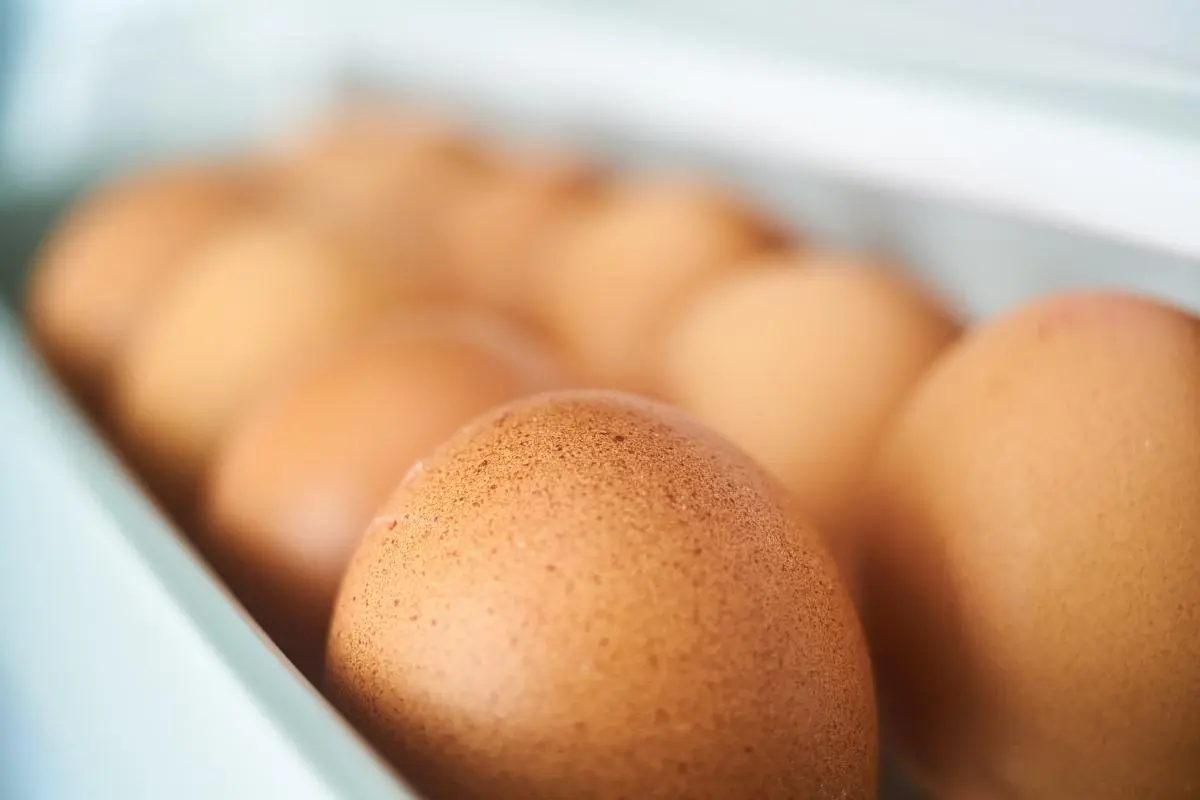
Eggs should not be stored in the special tray on the refrigerator door: the German Consumer Protection Center (Verbraucherzentrale) recommends moving them to the middle shelf, where the temperature is more stable. Temperature fluctuations can damage the shell’s natural protective layer and make it easier for bacteria to get inside, according to Business Insider Deutschland.
Almost every refrigerator has an egg tray, and few people question its usefulness. The organization explains its position on its website.
“The egg tray in the refrigerator door isn’t really suitable for this purpose. Because the door is constantly being opened and closed, the eggs are subjected to temperature fluctuations,” writes the Verbraucherzentrale.
The door is located closest to the opening, so that’s where warm air from the room enters every time. When the temperature rises, condensation can form on the shell, which damages the cuticle—the egg’s natural protective coating. Therefore, the golden rule for storage is: “Once refrigerated, always refrigerated.”
Experts recommend storing eggs at a temperature no higher than 7 °C. At 2–6 °C, raw eggs can be stored for four to six weeks. The original packaging provides additional protection against impacts. Eggs should not be washed before storage, as this destroys the protective layer. That is why they are sold unwashed in German stores.
An Invisible Threat
Proper storage is important primarily because of the risk of salmonellosis. As noted by the German Federal Center for Nutrition (BZfE), salmonella enters the egg through the hen’s ovaries or a contaminated shell. Contamination cannot be seen or tasted. If stored improperly, the bacteria “can multiply rapidly and cause gastrointestinal illnesses in humans, including diarrhea and fever,” the center warns.
Infants, young children, the sick, the elderly, and pregnant women are most vulnerable to infection. After the expiration date, it is recommended to use eggs only in dishes that undergo thorough cooking.
American scientists also disagree
Experts in the U.S. share a similar view: according to them, the door is the warmest part of the refrigerator with the least stable temperature.
“Opening and closing the door creates these fluctuations, and there are many places in the door where heat can seep through the gaps,” emphasizes food scientist Brian Quok Le, author of the book “150 Food Science,” as quoted by Prevention.
The U.S. Food and Drug Administration (FDA) states that a temperature of up to 4 °C reduces the risk of salmonellosis. South Dakota State University professor Kasiviswanathan Mutukumarappan advises placing eggs on the middle or bottom shelf, as these are the coldest spots in the refrigerator.
“Once you start cooling them, the cooling process must continue throughout the entire supply chain, from the farm to the store. Because if the chain is broken—that is, if cold eggs are exposed to a warm environment—they will start to sweat,” says Vincent Guionnet, a veterinarian and scientific advisor to the International Egg Commission, as quoted by WAMC.