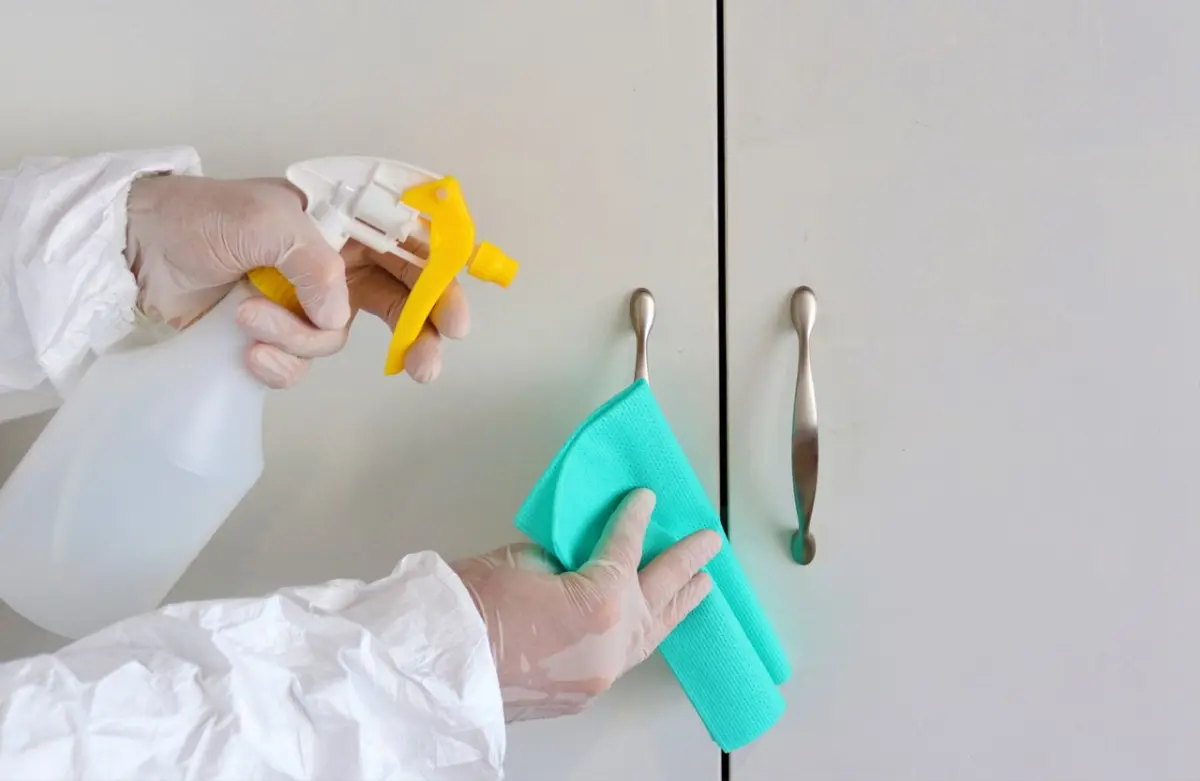
Sticky grease buildup on wooden kitchen cabinets should be cleaned not with all-purpose cleaners, but with warm water and a few drops of liquid dish soap. This gentle method does not damage the wood’s protective finish, according to Southern Living.
Dampen a sponge or microfiber cloth in the solution, wring it out thoroughly, and then wipe down the cabinet fronts. Use a toothbrush to reach into grooves and corners. Remove any soap residue with a clean, damp cloth, then immediately wipe the wood dry. For stubborn grease, add a quarter to half a glass of white vinegar to the solution.
Always test any cleaning solution on an inconspicuous area first. Vinegar can damage some finishes, and the protective layer on old cabinets may have worn off over time. Finally, you can treat the surface with a small amount of olive oil or beeswax: these will add shine and protect against new buildup.
It’s recommended to wipe down cabinets weekly with a damp microfiber cloth, especially those near the stove. A thorough cleaning should be done once or twice a year. When cooking, it’s best to turn on the range hood and cover pots and pans with lids to prevent grease particles from settling on the furniture.
The Greatest Risk to Wood
Cleaning experts interviewed by Martha Stewart emphasize that wood is porous and sensitive to water. If a cloth becomes too wet while wiping, replace it immediately with a dry one.
“It’s very important not to leave wood wet for too long, as this can cause the wood itself to warp or swell. Always dry the cleaned area immediately and make sure no water marks remain, as they can also cause stains,” warns Melissa Popping, founder of The Chemical Free Home.
What to Avoid
Painted cabinets should not be cleaned with Mr. Clean Magic Eraser melamine sponges. They act like fine sandpaper and strip the sheen from the surface.
According to experts, harsh household chemicals can strip away the protective coating on cabinets. “Do not use any products containing ammonia, bleach, solvents, strong detergents, soap, nail polish remover, or paint thinner,” advises Molly Mok, president of the cleaning company Molly Maid.
She also warns against using plastic brushes, metal scouring pads, and abrasive sponges, which can strip away varnish or paint and damage the cabinets.