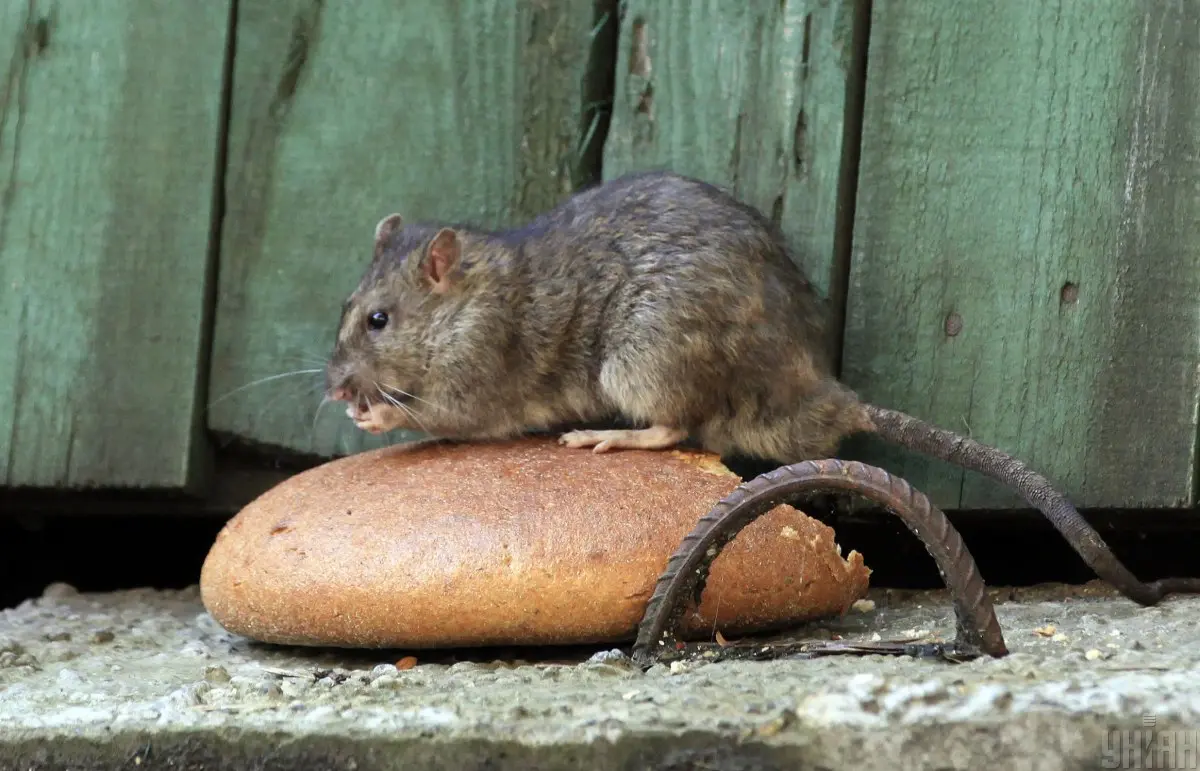
Gray, or Norwegian, rats dig burrows in yards that are 5–7.5 cm wide, with smooth, tightly packed walls and a slightly oval entrance. This opening doesn’t end immediately but leads into a tunnel and a nest, which expands into a system of chambers as the colony grows. Southern Living explains how to identify a rat burrow and get rid of rodents.
It’s hard to spot a burrow in the middle of a lawn. Gray rats hide their entrances under bushes, near firewood and piles of brush, in weeds, under decks, and next to foundations and concrete slabs. As good swimmers, they also dig burrows along the banks of streams. Signs of rodents include gnaw marks on wood and plastic, cylindrical droppings about 1.3 cm long, dirty greasy streaks on walls and fences, and torn cardboard, fabric, or nesting material. Black rats do not live underground: they are good climbers and settle higher up.
The walls of rat burrows become smooth from constant use. The rodents themselves are secretive and rarely seen during the day. If they are visible in daylight, there are already many of them on the property, warns the Internet Center for Wildlife Damage Management.
Traps, Poison, or Removal
Before filling in a burrow, you must get rid of its inhabitants. Mechanical traps or live-capture traps are recommended for this purpose. Rats are wary of new objects, so it’s best to leave the traps set without bait for a few days. Glue traps should be avoided: they kill slowly and catch other small animals. Poison poses a threat to pets, and relocating captured rats is prohibited in many cities.
An alternative is to remove anything that attracts rodents. Clear away weeds, brush, and firewood; seal any holes and pipes leading into the house; and trim bushes so that there is about 45 cm of space between the house and the vegetation. You should also remove bird feeders, securely cover containers and food, harvest crops, and block access to water. It’s easy to check if it worked: fill the burrow with dirt. If a rat is still there, it will dig its way out during the night.
Michael Parsons, an urban ecologist and research associate at Fordham University, notes that rats are intelligent and afraid of new sights, sounds, and smells, which is why they are very difficult to catch, according to Mongabay.
The researcher is convinced that the key to solving the problem lies beyond individual households. “Our practice of leaving trash on the side of the road all night actually benefits the rats. But if the city managed its trash better at night, rats would have fewer food sources. This is a city-wide problem, not an individual’s,” Parsons emphasizes.
The authors of a review of 121 publications on urban rat control spanning more than a century reached similar conclusions. Researchers identify the removal of food, water, and shelter as the most effective way to reduce the rodent population. If measures are short-term or incomplete, rats—thanks to their high fertility—quickly return to their previous numbers, according to Frontiers in Ecology and Evolution.