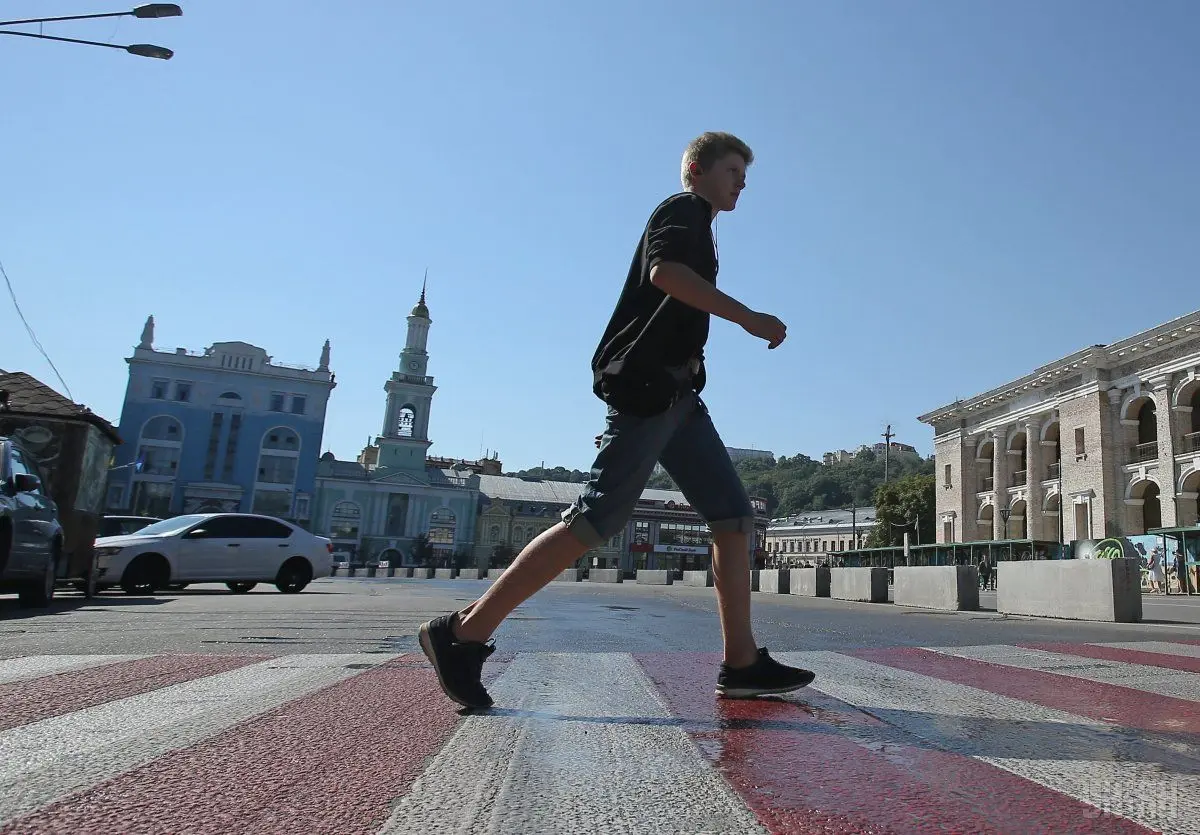
The habit of thanking a driver with a raised hand when he lets you merge onto the road is not just a sign of good manners. Such a person notices small gestures of kindness from others, and this says a lot about their outlook on the world. This is the conclusion reached by Sylvain Barère, a writer for the French health magazine Sain et Naturel, based on a series of psychological studies, according to Kertészkedj.hu.
Barère cites a 2010 review in *Clinical Psychology Review*, in which gratitude is described not as a fleeting emotion but as a way of life. People who are prone to gratitude notice the small positive moments of the day: a door held open, a smile from a cashier, or a driver who gives up their seat. In a traffic jam, it’s much easier to notice the person who cut in line than the one who silently let you go first.
The author also cites a 2003 diary study published in the *Journal of Personality and Social Psychology*. Participants who wrote down what they were grateful for each week were more satisfied with their lives after ten weeks and viewed the coming week with greater optimism. They also complained less about physical ailments and were more physically active than those who wrote down negative or neutral events.
Kindness That Spreads
The gesture is also important for the person on the receiving end, as it sends a signal that their action was noticed. According to experiments conducted by Adam Grant and Francesca Gino in 2010, people who are thanked are more willing to help again because they feel valued. Moreover, this willingness extends even to requests from strangers.
In a series of studies published in PNAS in 2010, James Fowler and Nicholas Christakis found that the effect of an altruistic decision extends three steps out. It even reaches people who did not witness the gesture itself.
At the same time, none of these studies specifically examined gratitude toward drivers, so the link between the gesture and a character trait remains the author’s interpretation rather than a proven fact. A reverse correlation is also possible: those who are naturally more grateful are more likely to wave. Furthermore, a 2016 meta-analysis in the *Journal of Counseling Psychology* showed that the impact of gratitude practices on psychological well-being is modest.
An Emotion Born in Relationships
Jo-Ann Tsang, a professor of psychology at Baylor University who has been researching this topic for over twenty years, also emphasizes the social dimension of gratitude. In her view, gratitude strengthens relationships and promotes well-being, and is something far greater than a mere courtesy, according to Baylor University.
“In psychology, we view gratitude as a positive emotion you feel when someone else does something kind for you. After all, gratitude ultimately has to do with other people,” Tsang notes.
At the same time, the researcher cautions against the extremes promoted by social media and self-help guides.
“We shouldn’t think that we have to be positive all the time. Gratitude doesn’t erase the fact that negative things exist,” Tsang warns.