
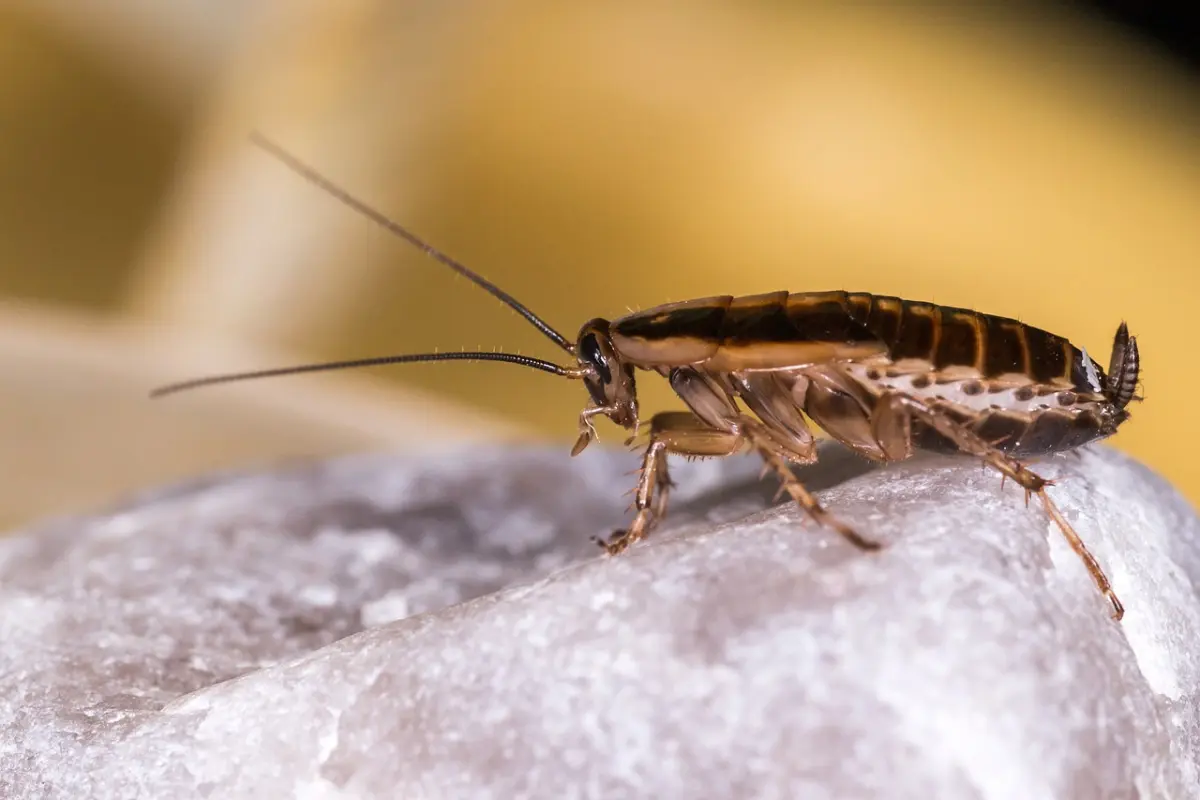
As the weather gets colder, cockroaches begin to invade homes more frequently. Unlike shield bugs or maple bugs, they pose a health risk: numerous pathogens that cause foodborne illnesses have been found on them, and the allergens they leave behind are a major trigger for asthma. Southern Living reports this, citing entomologists from the universities of Florida and Clemson.
Most often in the fall, homes are infested with smoky-brown cockroaches, which are called “palm beetles” in the U.S. They live in mulch, bushes, and trees near homes, so they get inside not only from under doors but also through the attic.
“You can see any kind of cockroach this time of year, but smoky browns are particularly prone to coming inside. When the weather changes, it’s just a short hop for them to your warm home,” says Eric Benson, professor emeritus at Clemson University.
These insects need high humidity, so they hide near unnoticed leaks: around the chimney, in the kitchen, or in the bathroom. American, Australian, Asian, and forest cockroaches are less likely to enter homes. The red cockroach, the most common in the world, doesn’t come from outside: it lives only near people and remains a problem year-round.
Faith Oi, an entomologist at the University of Florida, explains why cockroaches choose human dwellings. “If it’s comfortable for you, it’s comfortable for them, too. They’re most active at temperatures of 70 degrees Fahrenheit and above—which is exactly how most of us keep our homes,” the researcher notes. That’s about 21°C.
Does Cold Weather Get Rid of Cockroaches?
You shouldn’t count on freezing temperatures to kill most cockroaches. According to Benson, these insects have existed for millions of years and are well-adapted to nature’s whims.
However, tropical species are vulnerable to prolonged cold. In an unheated building, all American cockroaches died at air temperatures of 0°C and below, even though they had access to mulch that did not freeze. At a constant 8–10°C, about 40% of the insects died within 72 hours, and adults could not survive more than a few days at 10°C and below, according to a study published in the *Southwestern Entomologist*.
Georgia University entomologist Dan Saiter adds that the population of smoky-brown cockroaches peaks in the fall: one egg case contains 15–18 eggs, and a female lays one egg case per week over the course of her six-month lifespan. “It’s usually a moisture problem. If you have a lot of pests in your attic, you probably have a leak,” Siter emphasizes in a comment for the UGA CAES Field Report.
How to Keep Out Uninvited Guests
Experts advise trimming branches and bushes that touch the walls, avoiding a thick layer of mulch near the foundation, check that weatherstripping is intact, avoid leaving pet food bowls out overnight, and keep trash cans clean. It’s best to store Christmas tree ornaments in plastic containers rather than cardboard boxes.
“Look at your doors and windows from the side. If you can see daylight, there’s enough space for them to get inside,” warns Oi.
A few cockroaches in the fall have most likely just accidentally wandered into your home. However, if the insects are congregating in one place or are present at all stages of development, the problem should be addressed immediately, the entomologist emphasizes.