
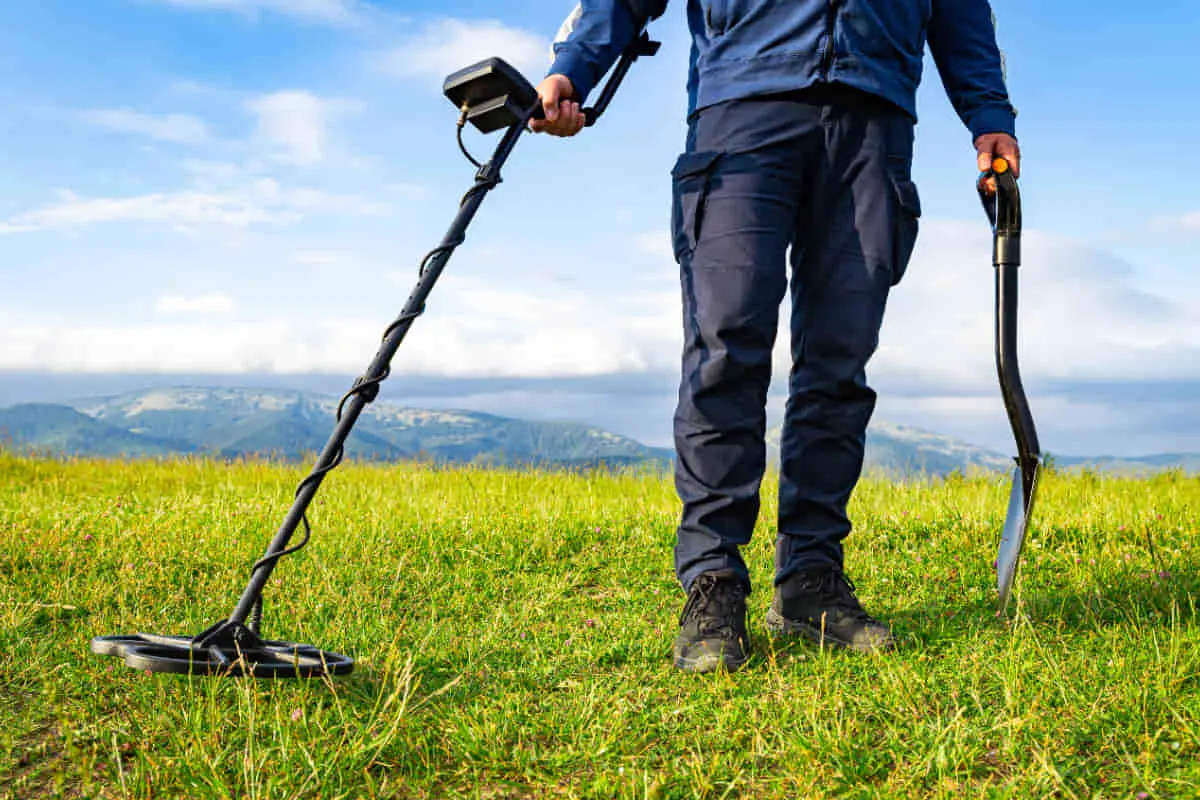
On June 14, 2026, Polish archaeologist Marcin Wiśniewski discovered a bronze sword sticking vertically out of the ground in a forest near Gdańsk. According to the Pomeranian Provincial Conservator of Monuments, the weapon was made between 900 and 700 B.C., that is, during the fifth period of the Bronze Age according to regional archaeological chronology. This was reported by Futura-Sciences.
Wisniewski was conducting an authorized search. Prior to this, his metal detector had only picked up bottle caps and tin cans. The long object, covered in green patina—which forms over time on copper alloys—was partially protruding from the ground.
The discoverer did not attempt to extract the artifact himself, so as not to damage either the sword or the archaeological context around it. He halted the excavation, covered the site with branches to shield it from prying eyes, and notified the heritage preservation authorities. Archaeologists from the Provincial Office for the Protection of Cultural Heritage in Gdańsk extracted the weapon using professional methods while working in heavy rain.
Decorative details and notches are visible on the blade. The hilt was likely made partly of organic materials, such as wood or bone, which is why it did not survive. The exact construction and history of the sword will be determined following further research.
Ritual, Hiding Place, or Coincidence
The greatest mystery of the find is its position. The sword may have been deliberately thrust into the ground during a ritual; its owner may have hidden it with the intention of returning later; or the weapon may have ended up there under circumstances that can no longer be reconstructed. None of these theories has been confirmed, and the vertical position alone does not allow us to determine whether the weapon was placed there intentionally or was later displaced by natural processes.
At the end of the Bronze Age, the Baltic region was part of extensive trade networks connecting Northern and Central Europe. One of the key commodities was amber from the coast. The production of a bronze sword required access to copper and tin, metallurgical skills, alloy preparation, blade casting, and surface finishing.
Such weapons served not only for combat and defense but also emphasized the owner’s status, power, or wealth. In some prehistoric European communities, weapons were ritually deposited in bogs, rivers, and other locations. The condition of the blade, soil composition, associated archaeological finds, as well as conservation and metallurgical analyses can help answer questions about the Gdańsk sword.
Lost Predecessors and the Sword’s Future Fate
The find is particularly valuable for the region, as earlier bronze swords from this area disappeared in the turmoil of the 20th century. In the 1920s, two bronze swords with antenna-like hilts were found in a peat bog near Rynarzewo, within the territory of what is now the Gdańsk Forest District. They were transferred to the Provincial Museum in Gdańsk, but both artifacts disappeared during World War II.
It is not yet known where the artifact will be stored. Marcin Timinski, press secretary for the Gdańsk Provincial Office for the Protection of Historical Monuments, notes that experts will be able to provide more information about the weapon only after it has been examined. Until then, the sword will remain under professional supervision.