A pink meteorite found in 2022 in the Sahara Desert in Mali turned out to be a fragment of Mars approximately 4.1 billion years old. It ranks among the three oldest Martian meteorites ever discovered on Earth, according to CBS News, citing a NASA study.
The rock weighs nearly 0.9 kg. It was named Teghaza 001 after the salt flat where it was found. Scientists confirmed its Martian origin by comparing the sample’s chemical and mineral composition with data from NASA’s Mars missions. Teghaza 001 has become one of approximately 435 known meteorites from the Red Planet.
The researchers did not immediately realize the significance of the find. Yang Liu of NASA’s Jet Propulsion Laboratory, the lead author of the paper on the meteorite’s dating, explained how the assessment of the sample changed.
“It wasn’t until we started looking more closely that we realized this meteorite is truly unique. One of the article’s reviewers called it the Rosetta Stone for Mars,” Liu noted.
Traces of Ancient Martian Water
Previous ancient Martian meteorites provided only a limited insight into the planet’s history. Teghaza 001 reveals how Mars’s crust formed from solidifying magma and how it was subsequently altered by water on the surface. The meteorite consists of a unique mixture of volcanic minerals, including zircon crystals. Their composition matches that of samples the Mars Reconnaissance Orbiter has imaged in the planet’s southern highlands.
For their analysis, the scientists used an innovative dating method developed by Francis Tissot, a professor of geochemistry at the California Institute of Technology. The method allowed them to examine individual mineral grains in a fragment smaller than a fingernail. The analysis showed that Martian water altered the rock about 4.1 billion years ago, while the rock itself may have formed even earlier. The data also suggest that the water cycle on early Mars may have been more dynamic than previously thought.
Study co-author Lee Seiper of NASA’s Ames Research Center believes that the meteorite has preserved traces of the interaction between water and rock and, possibly, even a snapshot of the Martian atmosphere during the period when the planet was losing its water.
“This is truly our first piece of Martian crust from a part of Mars where we’ve never had a sample before,” Seaper emphasized.
According to Liu, research on the meteorite will most likely continue. “We’ve only scratched the surface,” she said.
How Mars Debris Reaches Earth
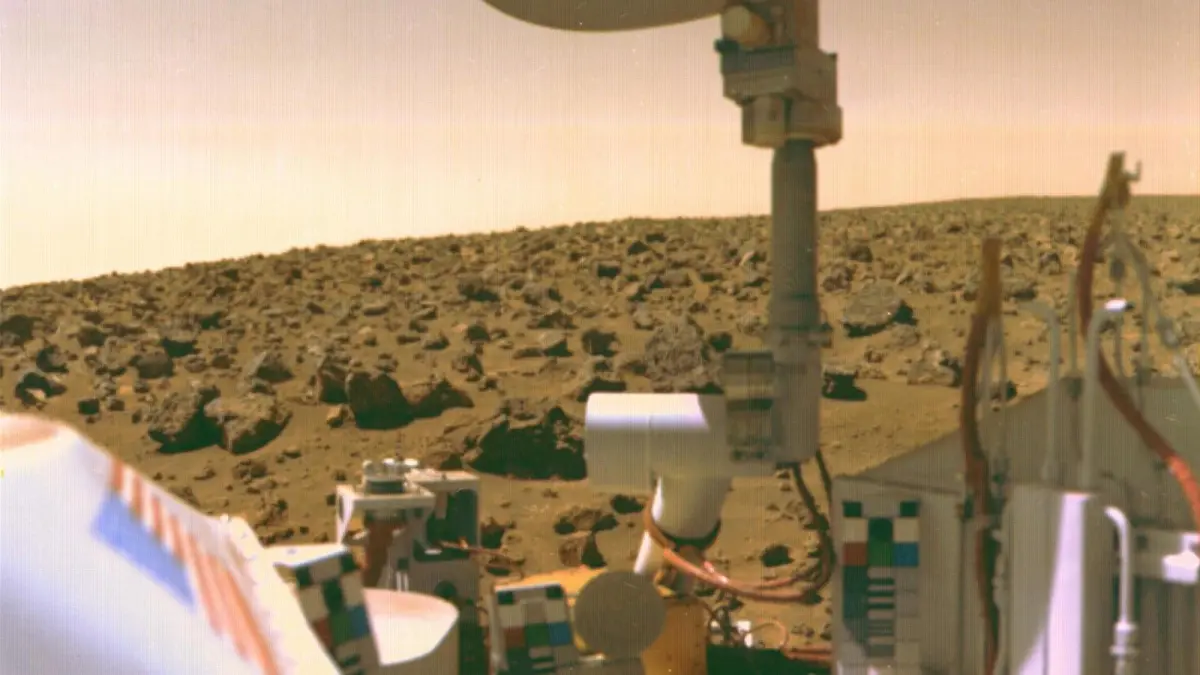
Only an asteroid or comet impact can eject rock from Mars into space. This is easier than on Earth, since Mars’s gravity is about one-third that of Earth’s, and its atmosphere is about 125 times thinner. Before falling to Earth, these fragments can orbit the Sun for over a million years. The Martian origin of such meteorites was definitively confirmed by the gases preserved within them: their composition matches that of Mars’ atmosphere, as measured by the Viking landers, according to the American Museum of Natural History.
Martian meteorites remain a rarity: as of 2025, there were only about 400 among more than 77,000 officially recognized meteorites. The largest known fragment of Mars on Earth, the 25-kilogram NWA 16788, found in 2023 in Niger, was put up for auction by Sotheby’s with an estimate of $2–4 million, according to CBC.