
Archaeologists have discovered traces of a temporary camp for the first time on the island of Estados in the far south of Argentina. It may have belonged to sailors who survived the sinking of the sailing ship Espora in 1873, according to CNEWS.
The ship belonged to Argentine navigator Luis Piedrabuena. After the disaster, he and his crew found refuge on a deserted island, where they spent about two months. During that time, they built a new ship, the Luisito, on which they reached Chile.
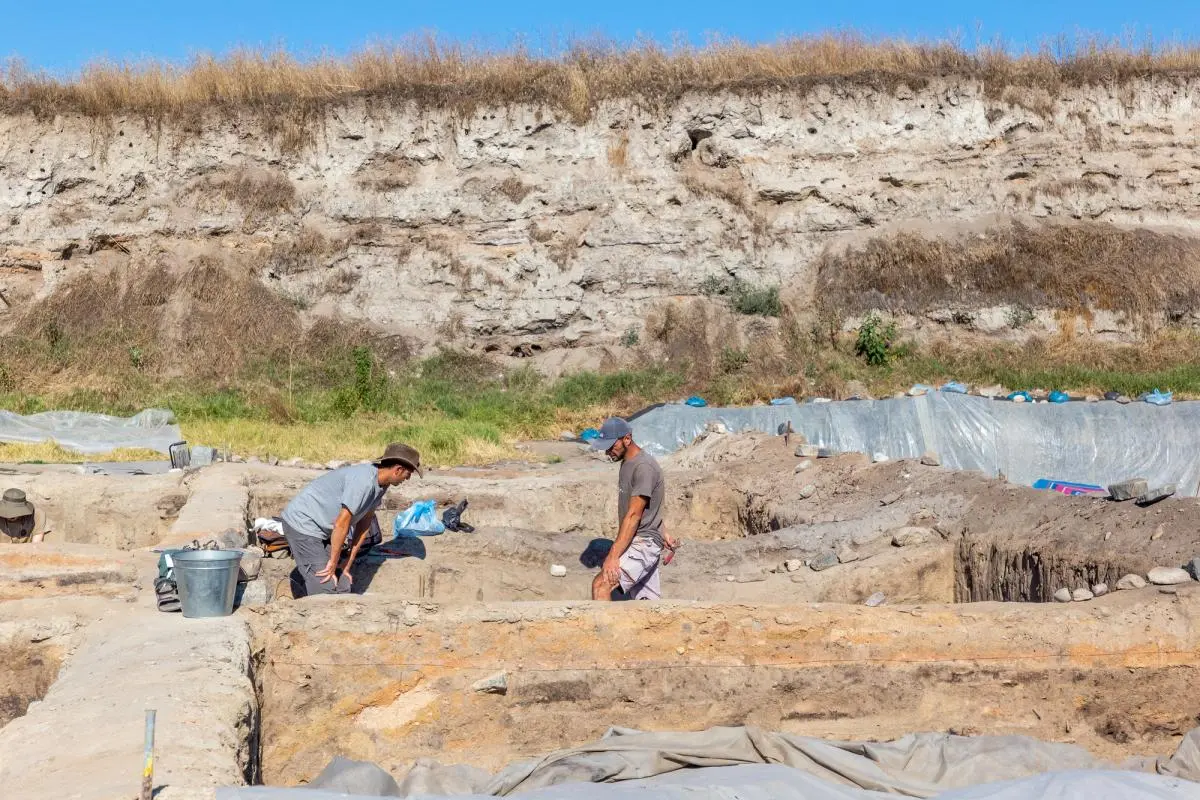
The findings are described in a study published in the journal Antiquity. An interdisciplinary team, supported by the Argentine Navy, conducted excavations in Lacroix Bay in Franklin Sound in January 2026. At the foot of a steep hill, near a stream, archaeologists found glass beads, ceramic buttons, corrugated galvanized sheets, and a bottle. Navigational items were also found there: a deck prism for illuminating the hold and a small rudder loop, according to Antiquity.
The remains of three wooden ship hulls were also documented in the cove. The camp is located approximately 150 meters from two of them. According to the researchers, this location suggests a connection between the settlement and the shipwrecks.
The study’s lead author, Cádiz University archaeologist Nicolás Charlo, considers the prism a key find. It helped identify who lived in the camp and link it to the nearby shipwrecks.
“The deck glass found on the surface is one of the most telling artifacts,” Charlo told Discover magazine.
A Mystery Without a Definitive Answer
Scientists caution that there is still no consensus on where the Espora sank, although Piedrabuena’s records point to Franklin Bay. Historical sources contradict one another regarding the extent to which the ship was dismantled for materials. At the same time, one of the structures has survived down to deck level, and no traces of the shipyard where the Luisito was built have yet been found.
“Establishing the identity of the Espora, as with other shipwreck sites, is like putting together a puzzle. It relies not on a single piece of evidence, but on critical analysis and the combination of multiple lines of evidence,” Charlo emphasizes.
Researchers hope that analyzing wood samples will help determine the ship’s age, dimensions, and origin. Moving forward, the team plans to excavate the camp and the ship’s remains.