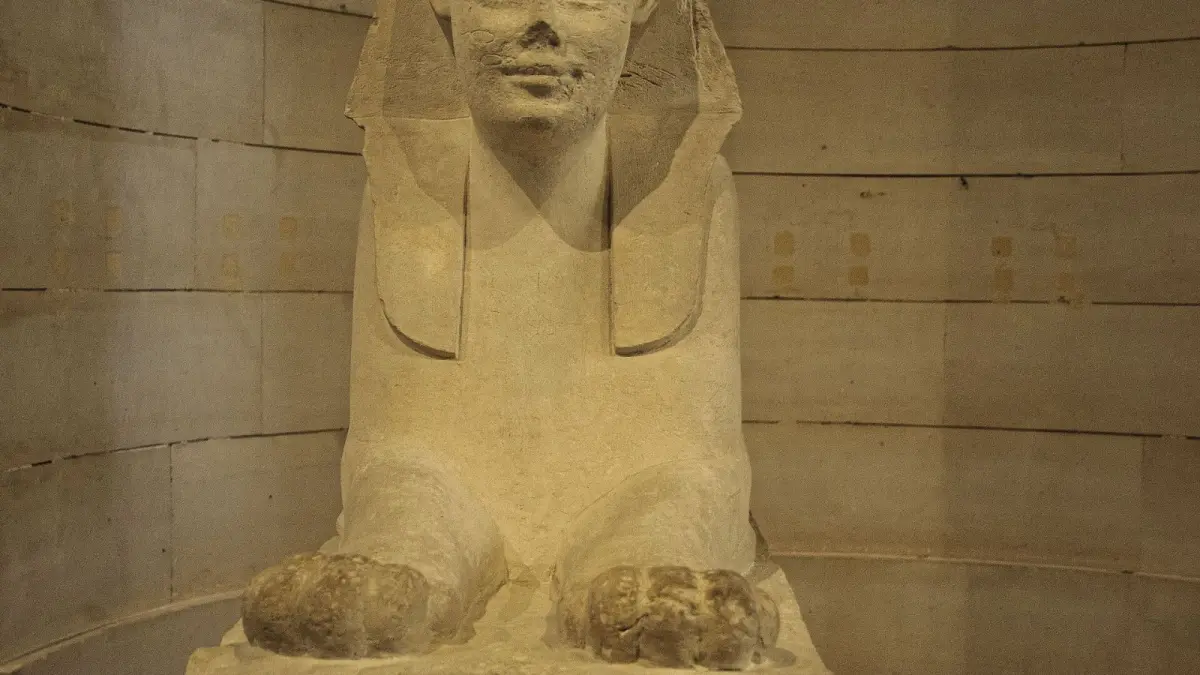
Two granite statues found in a tomb in Saqqara may indicate the burial site of Imhotep, the legendary architect of Djoser’s step pyramid. Archaeologists have been searching for his tomb for several generations. A new analysis of the finds, published in *The Journal of Egyptian Archaeology*, was conducted by Egyptian archaeologist Zahi Hawass, according to the *Greek Reporter*.
The statues were discovered in a tomb at the Teti Necropolis, north of the pyramid. The tomb dates to the Fifth Dynasty, but Hawass is convinced that the figures were created earlier, during the Third Dynasty, when Imhotep served Pharaoh Djoser. The researcher bases this dating on the statues’ appearance, materials, and inscriptions.
The black granite statue bears the name of the priest Tp-m-ankh, while the gray granite statue depicts the official Aym-rn-khp, who held the titles “Prince of El-Kab” and “Chief Judge.” According to Hawass, the first of these statues preserves some of the earliest known examples of priestly and administrative titles that were later used in the Fifth Dynasty.
Red granite sculptures of Djoser, his wife, and his ten daughters were found near these figures. Such a concentration of ancient artifacts, according to the archaeologist, strengthens the case for searching for Imhotep’s tomb specifically in northern Saqqara.
However, the study does not provide a definitive answer. None of the inscriptions on the statues mention Imhotep, and scholars do not directly link them to his burial. Other researchers suggest that Djoser’s sculptures may have been moved from a neighboring ceremonial site or even crafted several centuries after his reign.
Foreign Statues in the Prince’s Tomb
The finds come from the mastaba of Prince Userefry, son of the first pharaoh of the Fifth Dynasty, Userkaf. Its discovery was announced in April 2025. In the multi-chambered tomb, researchers discovered a nearly 4.5-meter-tall false door made of pink granite bearing the owner’s name and titles, including “heir apparent.” In another chamber, they found a statue dating to the 26th Dynasty. This indicates that the tomb was reused nearly 2,000 years after the prince’s burial. Hawass speculated at the time that it was during that period that Djoser’s sculptures were moved here from a chamber near the step pyramid, according to *Archaeology*.
A Decades-Long Search
Zahiri Hawass’s team has been working intensively in this area since at least 2022. At that time, the archaeologist gave a lecture in Berlin on new discoveries in Egypt.
“We are currently searching for Imhotep’s tomb in Saqqara, and the mission has already begun work in this area,” Hawass said at the time, as reported by Daily News Egypt.
Long before him, British Egyptologist Walter Bryan Emery had been searching for a tomb in northern Saqqara. In the 1930s, he noticed late-period pottery there containing mummies of sacred ibises and speculated that pilgrims had left it near Imhotep’s tomb. During excavations from 1964 to 1971, Emery stumbled upon a vast animal necropolis containing millions of mummies, but he died without ever finding the architect’s tomb, according to World Archaeology.