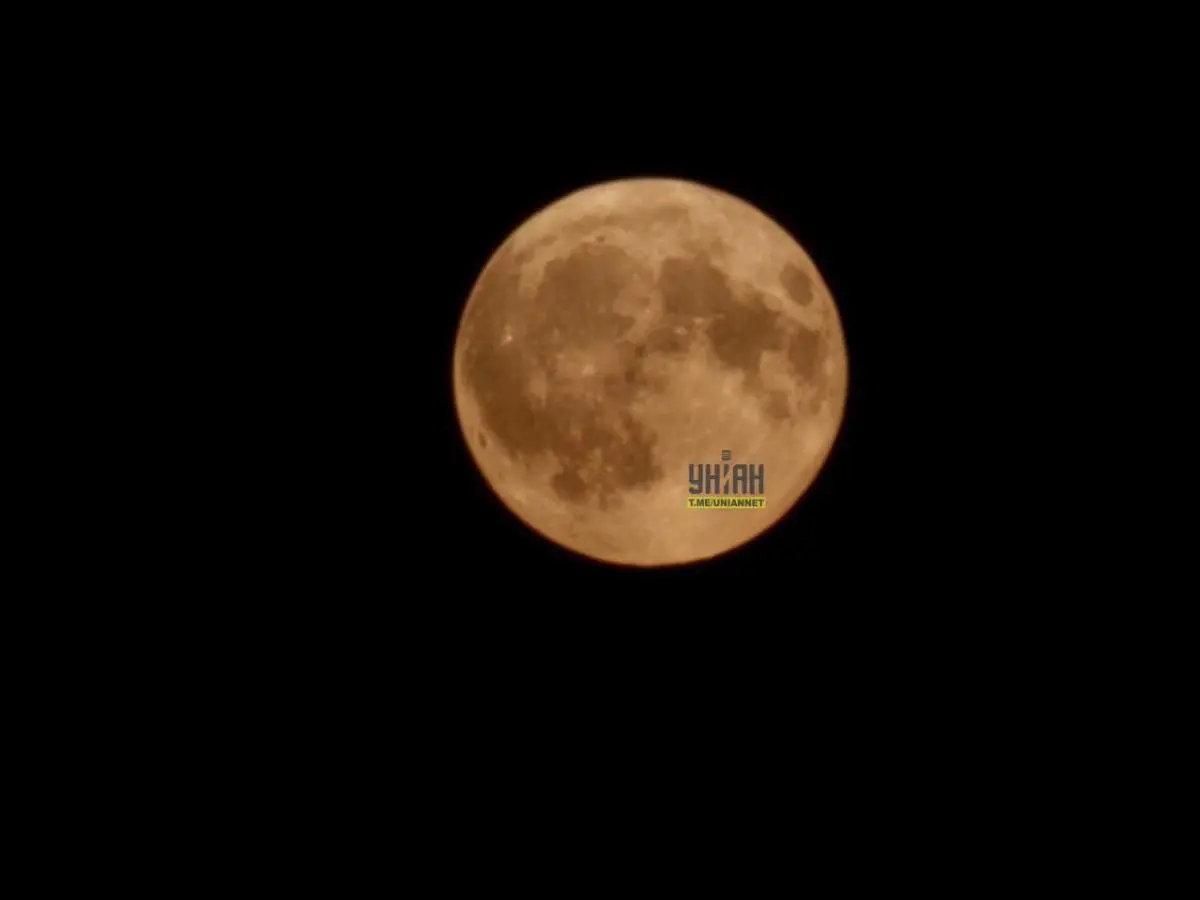
In November 2026, the night sky will feature a supermoon on November 24 and a close conjunction of Mars and Jupiter on November 16, when the distance between the planets will be just 1.2 degrees. In addition, this month will bring the peak of the Leonid meteor shower and the best morning visibility of Mercury until the end of 2027, according to Forbes.
The best time to look for Mars and Jupiter is in the east, about an hour before dawn. Jupiter will shine much brighter, but Mars is easily recognizable by its reddish hue. The Leonids will peak on the night of November 17. The Moon, near its first quarter, may interfere with observations, but the chances of seeing fast “shooting stars” remain high.
The morning of November 2 will begin with a chain of the Moon, Mars, Jupiter, and the star Regulus. On November 30, these celestial bodies will line up again, this time in a tighter formation. On November 7, a thin crescent Moon will approach Venus, and on November 20, Mercury will reach its greatest distance from the Sun in the sky, so it will be visible below Venus. On November 25, Uranus will be in opposition, but it will only be visible through binoculars or a telescope.
This apparent closeness of the planets is merely an optical illusion: in space, Mars and Jupiter remain separated by an enormous distance. Jupiter orbits the Sun in about 12 years, and Mars in about two, so from time to time they appear to be neighbors when viewed from Earth, according to Astronomy.
What Makes a Full Moon “Super”
A supermoon is a full moon that coincides with the point in its orbit closest to Earth, known as perigee. This is approximately 363,300 km, compared to 405,500 km at apogee. On such nights, the Moon can appear 14% larger and 30% brighter than the dimmest full moon of the year. It can also cause stronger-than-usual tides. The next supermoon is expected as early as December 24, according to NASA.
The November full moon will reach its peak at 14:53 UTC and will shine in the constellation Taurus, near the Pleiades star cluster. It is traditionally called the Beaver Moon, as beavers are actively building dams in preparation for winter at this time. For the first time in 15 years, timeanddate.com has revised its criteria and now also considers this full moon to be a supermoon, according to timeanddate.
Previously, the site recognized only those full moons as “supermoons” when the distance from Earth to the Moon did not exceed 360,000 km. Because of this, its assessments often differed from those of other sources.
“Our new rule is more widely used in the astronomical community—which is good—and it also gives us more supermoons—which is also good! On the other hand, it involves a complex calculation based on three different numbers, each of which varies from month to month,” notes the service’s astrophysicist, Graham Jones.