On the morning of Sunday, November 15, Mars and Jupiter will come within 1.2 degrees of each other in the sky, and the pair will be easily visible to the naked eye. The best time for observation will be at 5:30 a.m. Central European Time, when both planets will be high above the southern horizon, according to the Hungarian publication Rakéta, citing the Schwabe Observatory.
Jupiter, with a magnitude of −2.1, will shine at an altitude of 56 degrees near Regulus, the brightest star in the constellation Leo. Above the gas giant, reddish Mars will be visible at a magnitude of 0.7, while Regulus will be located 4.4 degrees to the left of Jupiter.
The celestial bodies will also stand out by color: Jupiter will appear whitish, Mars orange-red, and Regulus bluish-white. Since the planets will rise high above the horizon, they will be visible even from a south-facing window until the onset of civil twilight.
A second chance for those hindered by clouds
Bad weather in mid-November won’t ruin your chances of observing them, as the conjunction will last for several mornings. On November 14, the planets will be 1.4 degrees apart, and at dawn on November 16, they’ll be 1.2 degrees apart again.
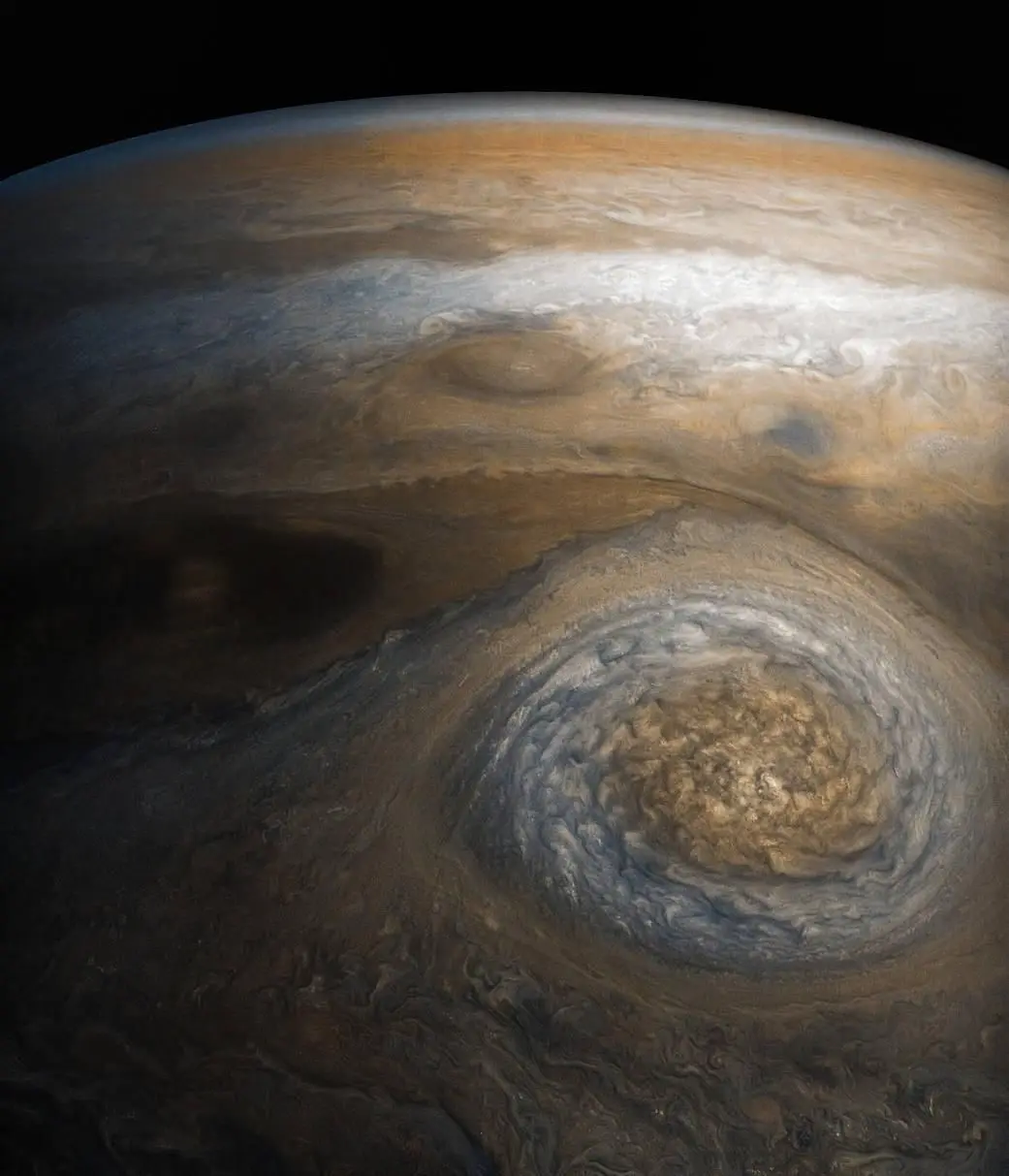
Those with binoculars or a telescope will be able to see Jupiter’s disk with its cloud bands and the Great Red Spot, as well as the four Galilean moons: Io, Europa, Callisto, and Ganymede. Due to its small apparent size, Mars will look like a star when viewed through binoculars.
NASA recommends looking for the pair before dawn on November 15 and 16 in the southeastern part of the sky. The distance between the planets will be slightly greater than the width of two full Moons placed side by side. The agency also suggests watching the sky for several mornings in a row to see how the planets converge and then drift apart, according to NASA Science.
“They are still far apart in space, but from Earth they appear to be almost side by side,” NASA notes.